

Gold Candelabra Pair
A gold candelabra pair brings commanding illumination and sculptural presence to a room, drawing the eye with rich metallic warmth and period craftsmanship.
Gold Candelabra Pair
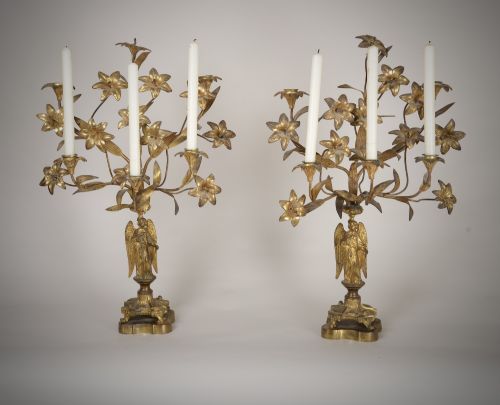
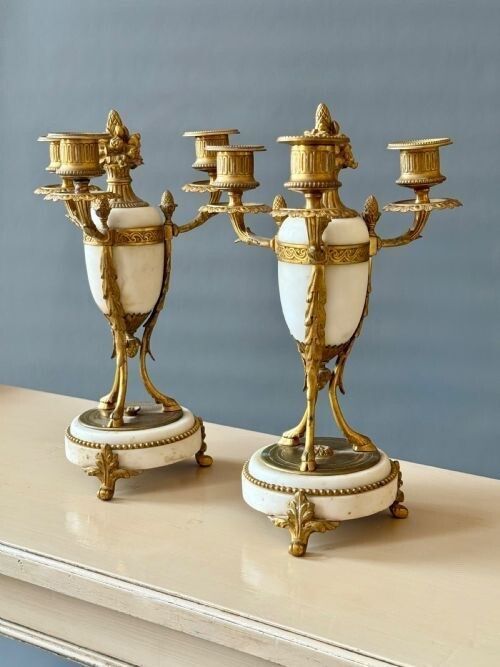
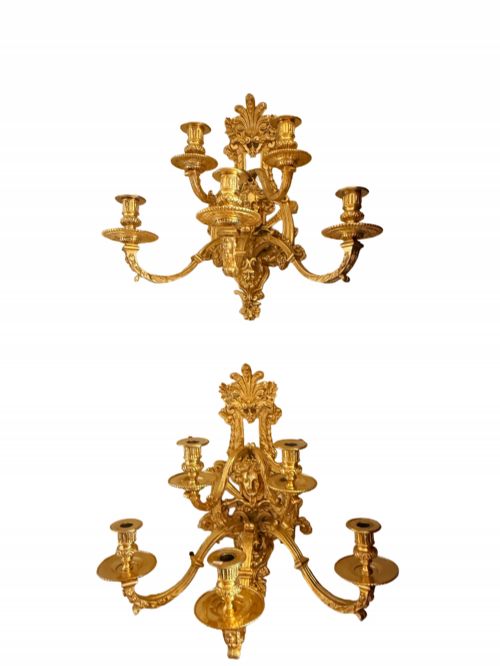
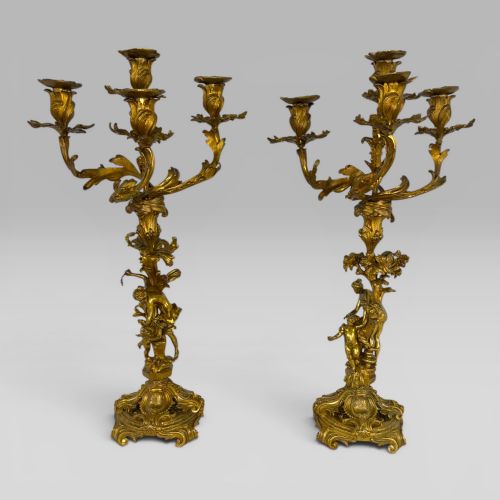
A gold candelabra pair comprises matched multi-light candleholders created to balance a mantelpiece, sideboard or console table with symmetrical light. These pieces emerge predominantly from the nineteenth century, alongside eighteenth-century examples and early twentieth-century interpretations.
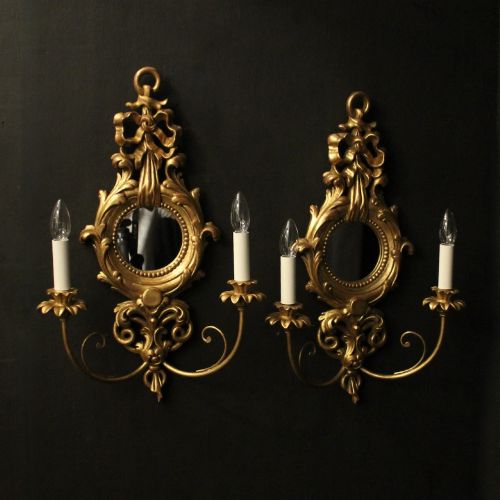
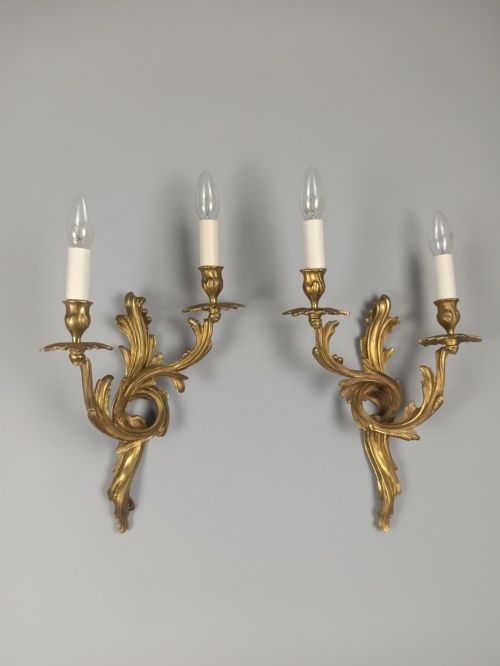
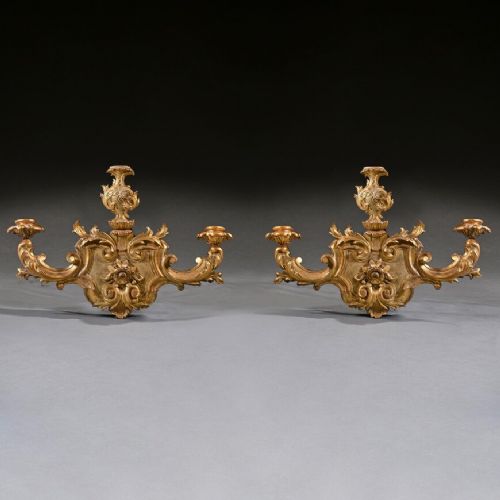
The selection ranges from robust French Empire and Rococo revival designs to delicate Italian giltwood wall lights and English brass works. Buyers encounter freestanding table models alongside wall-mounted sconces and girandoles designed to reflect candlelight.
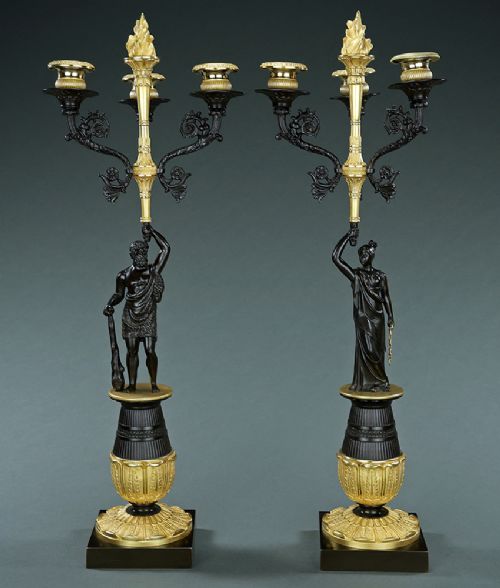
Makers utilised diverse materials to achieve gilded finishes, resulting in works that span opulent figural bronzes to restrained wooden frames. Each pair reflects the prevailing decorative taste of its epoch, from Gothic revival severity to ornate Louis XVI flourishes.
Materials and construction methods
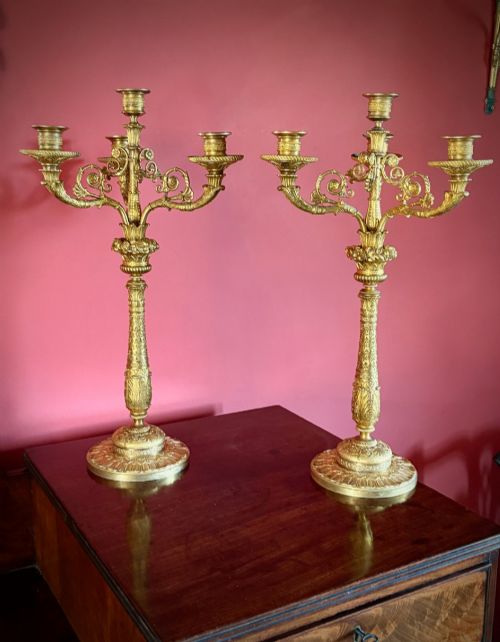
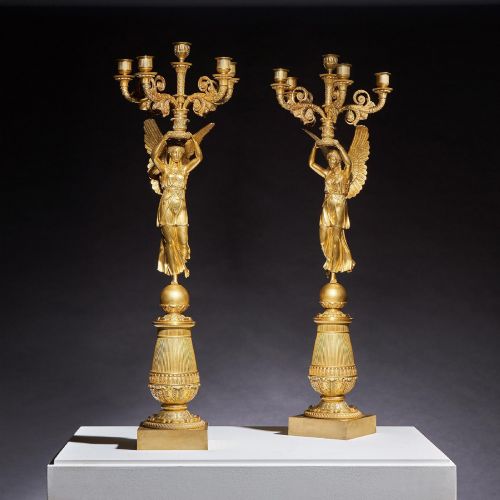
Casting forms the structural basis of metal pieces, utilising bronze, brass and ormolu that workers then chased by hand to sharpen intricate leafwork and figural details. Ormolu application involved mercurial gilding on bronze, producing a deep, lasting lustre unique to earlier periods.
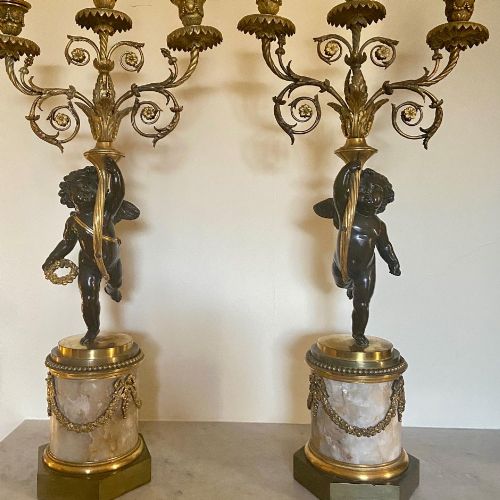
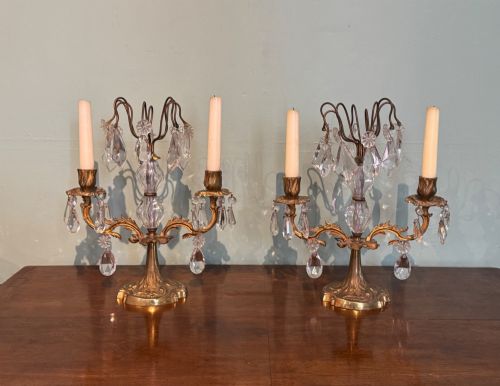
Carved timber provides the foundation for giltwood varieties, where artisans applied thin layers of gold leaf over prepared gesso surfaces. Combinations of white marble bases, cut glass pendants and patinated bronze introduce textural contrast to the dominant metallic sheen.
Listings feature pieces spanning the eighteenth to the twentieth centuries, utilising gilt bronze, ormolu, marble, brass, and giltwood across French, English, and Italian origins.
Distinctions in craftsmanship and design
The architectural harmony of the branches and the stability of the heavier marble or bronze bases indicate superior workshop production. Signed pieces or works attributed to known founders demonstrate the elevated design standards commanded by top-tier makers.
Francois Redmond·Pierre Philippe Thomire·Rabiat·Thomas Hope·Goldsmiths & Silversmiths
The Gold Candelabra Pair Glossary
- Ormolu
- Gilded bronze produced by applying an amalgam of gold and mercury to a bronze base, followed by heat treatment to drive off the mercury. This technique creates a distinctive warm finish found on many nineteenth-century pieces.
- Girandole
- A branched wall-mounted candleholder incorporating a mirror or polished backplate to multiply the reflected light. These fixtures frequently feature carved giltwood or gilt bronze frames.
- Chasing
- The manual refinement of a cast metal surface using small hammers and punches to sharpen details and textures. High-end pieces show precise toolwork that distinguishes them from plain commercial castings.
- Retour d'Egypte
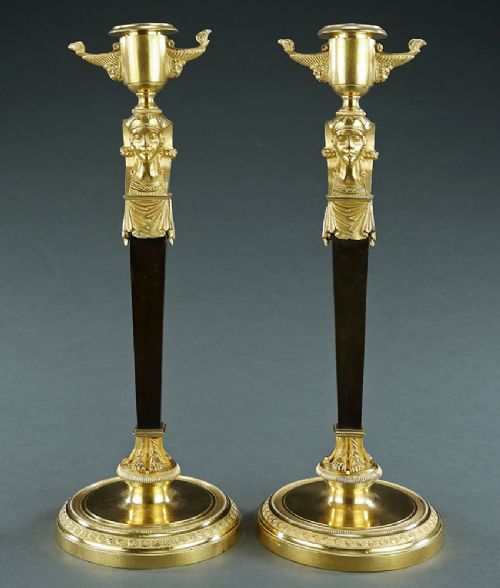
- A decorative style popular in the early nineteenth century influenced by archaeological discoveries in Egypt. Pieces incorporate sphinxes, pharaohs and classical motifs into the bronze and ormolu structure.
- Patinated bronze
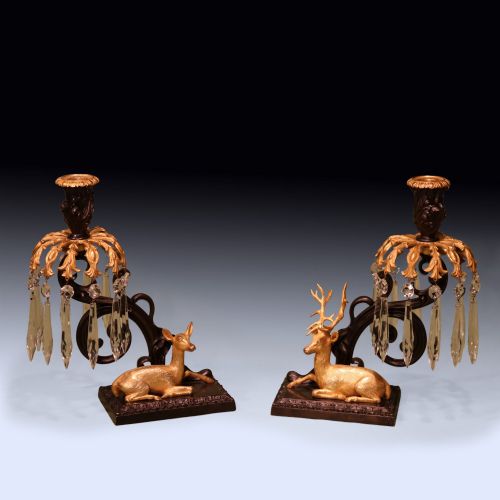
- Metal treated chemically to produce a dark, stable surface layer rather than a bright golden finish. It frequently contrasts with gilt bronze highlights on figural candelabra.
Gold Candelabra Pair: Frequently Asked Questions
How do I clean an antique gold candelabra pair?
Dust surfaces gently with a soft, dry brush to prevent accumulation in recessed chasing. Avoid commercial metal polishes, which can strip thin gilt layers or damage patinated bronze.
For stubborn grime, consult a professional conservator rather than using liquids. Moisture can seep into marble bases or degrade old fixings within the branches.
Were these candelabra converted to electricity?
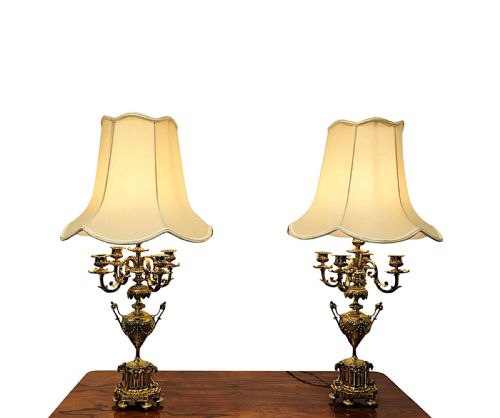
Several pieces show conversions to table lamps, reflecting changing domestic habits during the twentieth century. These alterations often involve wiring run through the central column while retaining the original candle nozzles.
Buyers should inspect the wiring method to determine whether original components remain intact. Reversible conversions preserve the underlying antique structure for future display.
How do I distinguish Rococo Revival from Empire style?
Rococo Revival pieces display asymmetrical scrollwork, naturalistic flowers and flowing organic curves derived from mid-eighteenth-century French models. The surfaces bustle with energetic movement and rich textural contrast.
Empire style relies on strict symmetry, martial iconography, classical figures and crisp geometric framing. These works project authority and architectural restraint through polished and patinated metal.
Where should I place a heavy bronze candelabra pair?
Position these substantial pieces on sturdy furniture such as a marble-topped sideboard, a heavy timber console or a secure mantelpiece. Their significant weight requires stable support to prevent tipping.
Keep them away from direct heat sources and high-traffic edges where accidental knocks might occur. Adequate clearance allows the arms and hanging drops to be viewed safely.