

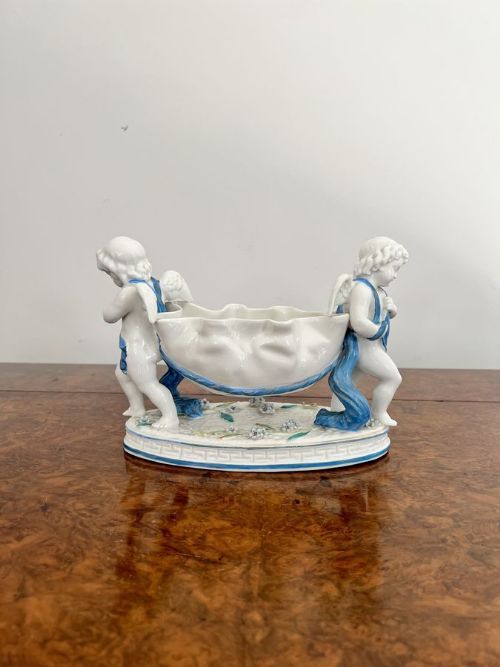
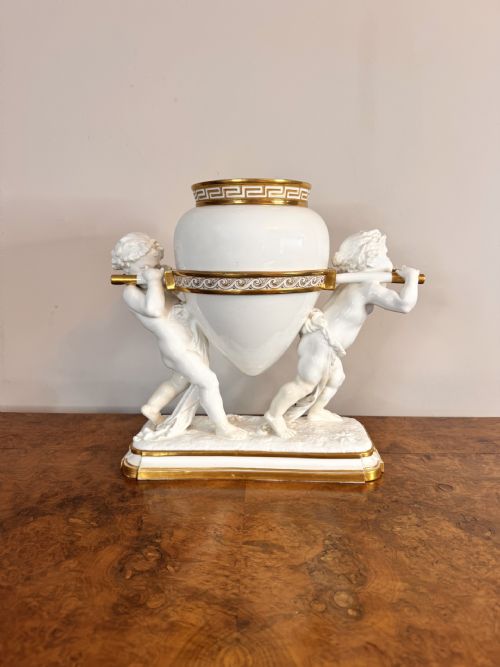
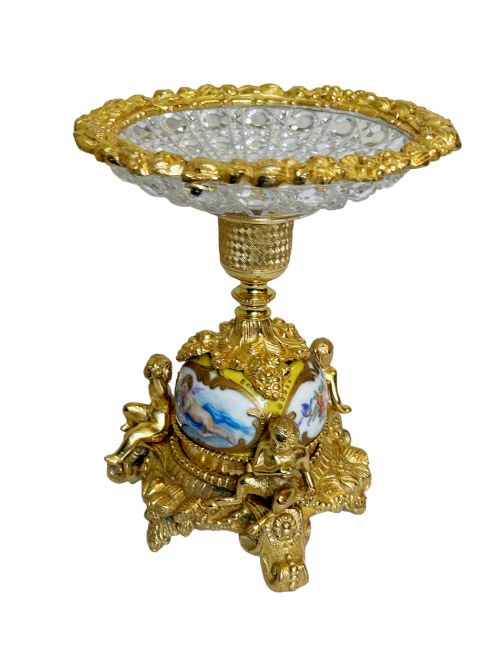
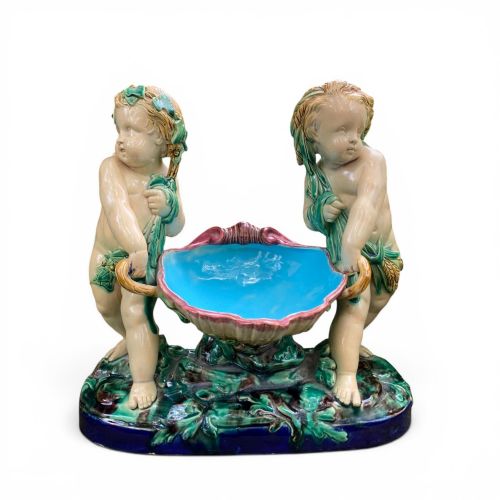


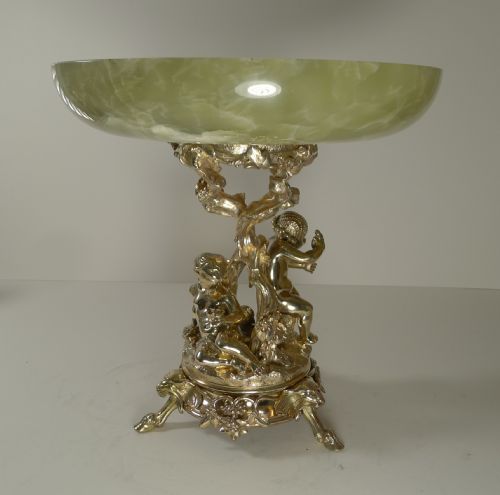


Putti Centrepiece Bowl
These putti centrepiece bowl designs combine sculptural figures with functional vessels, making them striking focal points for a dining table.
Putti Centrepiece Bowl
A putti centrepiece bowl functions as an elaborate table decoration, frequently taking the form of a basket, tazza, or shallow dish supported or surrounded by winged cherubic figures. The pieces found here span the nineteenth and early twentieth centuries, capturing periods from the Regency era through to Edwardian production.
Continental porcelain and majolica factories dominate the selection, often featuring German porcelain works such as Plaue Schierholz alongside English makers like Minton. Buyers encounter various configurations, from classical bronze and cut crystal arrangements to brightly glazed ceramic comports and sweetmeat dishes.
The decorative vocabulary draws heavily on Rococo Revival and Renaissance Revival styles, emphasising ornamentation such as applied roses, gilt bronze mounts, and mythological or youthful figures. These items served as grand table garnitures for formal dining, designed to hold fruit, sweetmeats, or floral displays.
Materials and construction methods
Porcelain and earthenware components are shaped, glazed, and hand-painted, often incorporating applied floral elements or modelled figures fixed to baskets and bowls. German and English potteries utilise mould-casting for the main body and figures, followed by careful hand-finishing and gilding.
Metalwork versions combine cast bronze, ormolu, and silver plate with cut crystal, malachite, blue john, or mother-of-pearl dishes. Artisans assemble these multi-material pieces using threaded rods and screws, uniting heavy metal bases with delicate glass or stone vessels.
Putti Centrepiece Bowl Retail Price Guide 2026
Typical asking prices for putti centrepiece bowl among the pieces listed under this phrase on Sellingantiques today, from the lower quarter to the upper quarter. They describe what is for sale here now, not the wider market.
Object forms include sweetmeat dishes, tazzas, comports, and large fruit bowls supported by sculptural cherubs and putti.
Distinctions in craftsmanship and design
The choice of materials dictates the standing of the piece, with works combining gilt bronze, cut crystal, or semi-precious stones representing the more ambitious end of the scale. Integrity of construction, particularly in multi-part metal and glass assemblies, also separates standard production from notable studio output.
Minton·Plaue Schierholz·Volkstedt·Christofle Paris
The Putti Centrepiece Bowl Glossary
- Putti
- Plumed or unwinged male child figures used in classical and revival art. They appear frequently supporting bowls or clambering over the edges of baskets.
- Tazza
- A shallow bowl or cup mounted on a stem and foot. These elevated vessels often form the central platform of a table garniture.
- Compote
- A pedestal dish used for serving fruit or sweets. In these selections, they incorporate sculptural cherubs into the stem or base.
- Majolica
- A type of earthenware decorated with opaque coloured glazes over a white ground. This technique allows for vibrant, glossy surface treatments on nineteenth-century pieces.
- Ormolu
- Gilded bronze applied to furniture and decorative objects. It provides a bright golden finish that contrasts with porcelain or stone elements.
Putti Centrepiece Bowl: Frequently Asked Questions
What were putti centrepiece bowls used for?
These decorative objects served as formal table garnitures during grand dinners in the nineteenth and early twentieth centuries. Hosts filled them with fresh fruit, sweetmeats, or flowers to create an impressive focal point.
Beyond their dining function, they acted as status symbols reflecting the host's taste and means. The elaborate sculptural elements were meant to be admired closely by seated guests.
How do I care for a porcelain centrepiece?
Gentle dusting with a soft brush helps maintain delicate applied elements like porcelain roses and outstretched wings. Moisture can harm older glazes and gilding, so cleaning should be done dry without harsh chemicals.
For metal and glass combinations, separate the components if possible to clean each material appropriately. Ensuring the display surface is stable protects the heavy base and fragile appendages from accidental knocks.
How can I tell Victorian pieces from Edwardian ones?
Victorian examples often favour heavier Rococo Revival forms with deep colouring, rich gilding, and dense applied decoration. The manufacturing leans towards ornate, high-relief detailing and classical mythological motifs.
Edwardian pieces sometimes show a lighter touch in their colour palettes and porcelain bodies, reflecting shifting tastes around the turn of the century. Maker marks and registration numbers, where present, help pinpoint the exact decade of manufacture.
Are bronze and crystal centrepieces harder to maintain?
Metal and crystal arrangements require attention to both the patinated or gilded bronze and the glass vessel. Ormolu and bronze benefit from occasional gentle dusting, while avoiding abrasive polishes that strip the surface finish.
Cut crystal bowls can be lifted out and washed cautiously in lukewarm water if they are not permanently fixed. The stability of the central connecting rod should be checked periodically to ensure the heavy materials remain secure.