







Putti Candlestick Holders
Putti candlestick holders combine classical figures with functional lighting, bringing sculptural elegance to mantelpieces and dining tables.
Putti Candlestick Holders
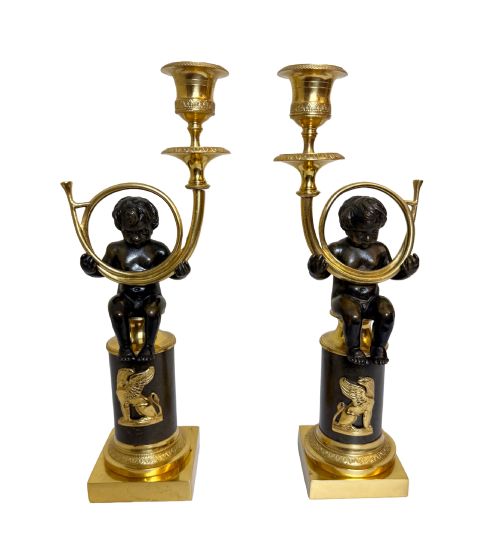
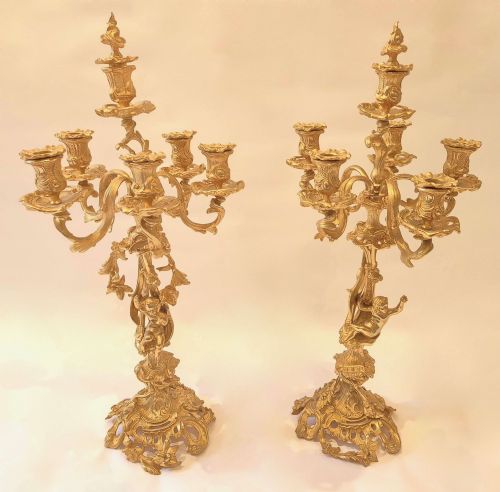
Putti candlestick holders depict winged cherubs or children supporting sockets for wax tapers, drawing on classical iconography that persisted through the Georgian and Victorian eras. These figural works appear most frequently as matched pairs, designed to balance symmetry on side tables and mantelpieces.
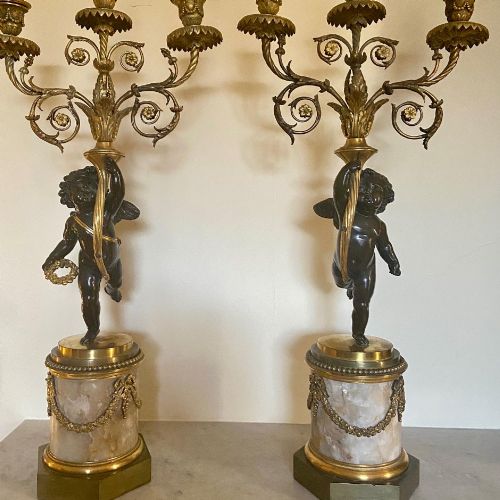
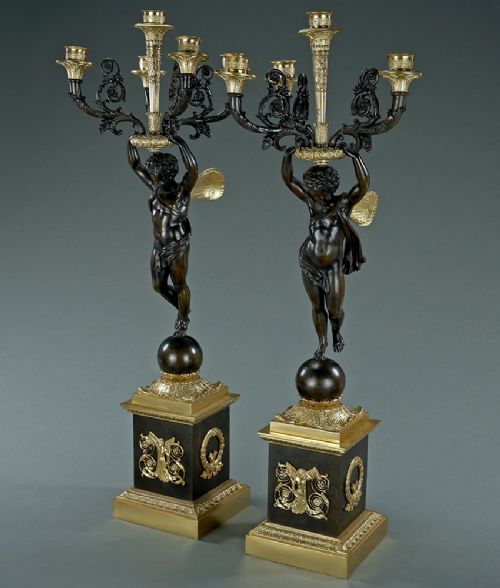
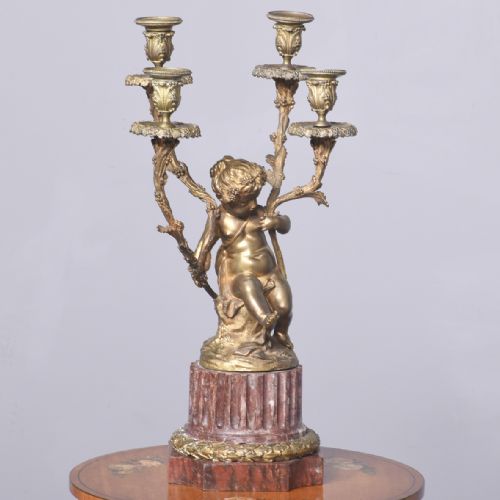
The selection ranges from single-light desk candlesticks to elaborate multi-arm candelabra holding several branches. Figures stand, dance, or recline upon plinths of marble or metal drums, often incorporating floral motifs alongside the central cherub motif.
Materials and construction
Foundry workers cast these pieces in bronze, brass, or spelter, frequently applying surface treatments such as gilt bronze, ormolu, or dark patination to create textural contrast. Many examples anchor the metal figures onto heavy bases of white or variegated marble.
Ceramic versions utilise porcelain, blanc de chine, and enamel techniques. Factories shaped these bodies by hand before applying delicate glazes and painted details.
Putti Candlestick Holders Retail Price Guide 2026
Typical asking prices for putti candlestick holders among the pieces listed under this phrase on Sellingantiques today, from the lower quarter to the upper quarter. They describe what is for sale here now, not the wider market.
Materials span gilt bronze, marble, patinated bronze, ormolu, porcelain, enamel, and gold leaf, often combined within a single pair.
Assessing craftsmanship
The integration of mixed materials dictates overall refinement. Heavy, stable marble plinths paired with substantial gilt bronze or carefully modelled porcelain denote superior workshop output.
Francois Redmond·Chelsea·Minton·Triebner, ENS & Eckert Volkstedt·Sitzendorf·Claude Clodion
The Putti Candlestick Holders Glossary
- Ormolu
- Gilded bronze produced by applying a mercury-gilding amalgam to cast bronze. This technique creates a rich golden surface that resists tarnish over centuries.
- Putti
- Plural of putto, representing plump, winged male infants in classical art. They resemble cherubs and appear frequently in Renaissance revival decorative metalwork.
- Candelabra
- A branched candlestick holding multiple lights. These branch out from a central stem, often supported by figural bases.
- Patination
- The surface sheen or colour developed on metal through age or chemical treatment. It distinguishes the original metal tone from later paint.
- Blanc de chine
- White porcelain produced in China and later emulated by European factories. The smooth glaze highlights moulded figural details without added colour.
Putti Candlestick Holders: Frequently Asked Questions
How do I identify French Empire style putti holders?
French Empire pieces rely on classical antiquity, displaying formal symmetry, heavy ormolu mounts, and strict architectural bases. The putti on these works often hold neoclassical attributes or stand beside military trophies.
They date primarily from the nineteenth century and reflect the revived interest in Roman and Greek design motifs.
Are these candle holders made of solid bronze?
Most metal examples combine cast bronze or brass figures with weighted bases of marble or secondary metals for stability. Some nineteenth-century items utilise bronzed spelter, a cheaper zinc alloy finished to imitate true bronze.
Examining the underside and weight helps distinguish solid metal casting from plated or alloy alternatives.
How should I clean antique ormolu and marble?
Dust ormolu gently with a dry, soft brush to protect the delicate gold leaf or mercury gilding. Avoid chemical polishes that strip historical surface finishes.
Marble bases require only a damp cloth followed by immediate drying. Keep moisture away from any exposed metal joints or porcelain sections.