


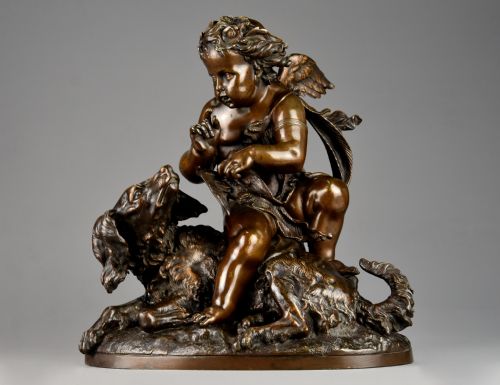


Putti Bronze Sculpture
A putti bronze sculpture captures the mischievous charm of mythological childhood, prized for centuries to bring classical narrative into domestic interiors.
Putti Bronze Sculpture
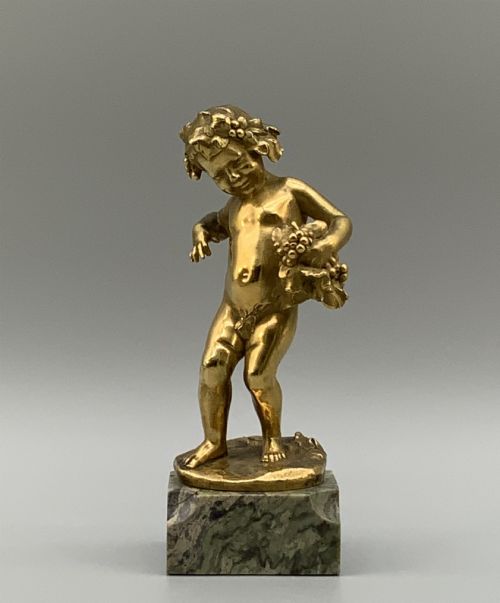
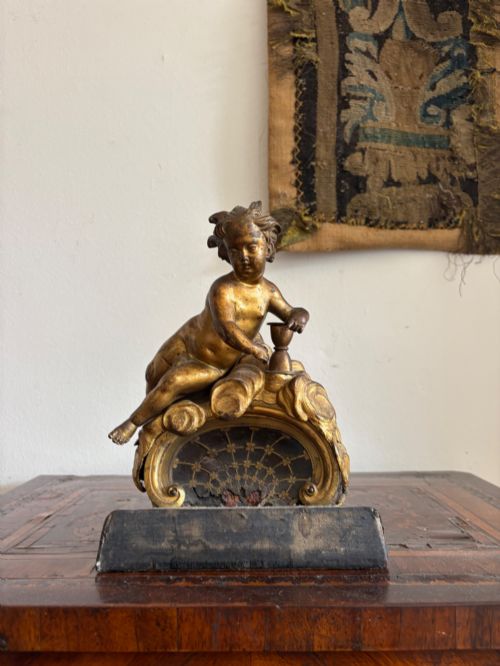
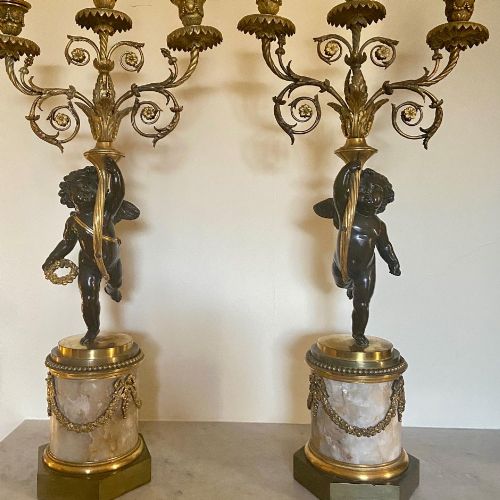
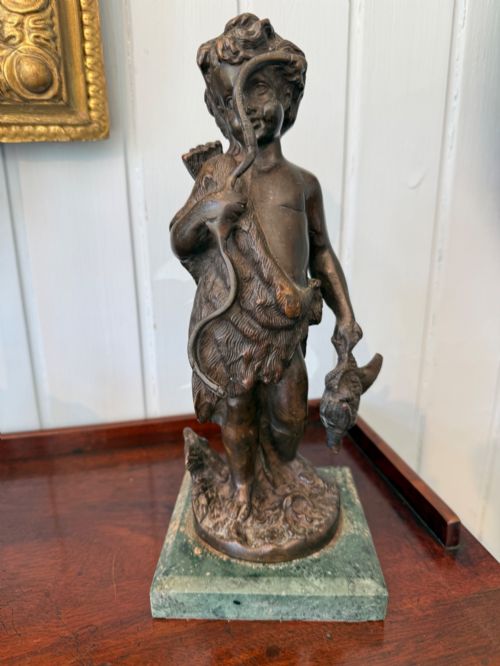
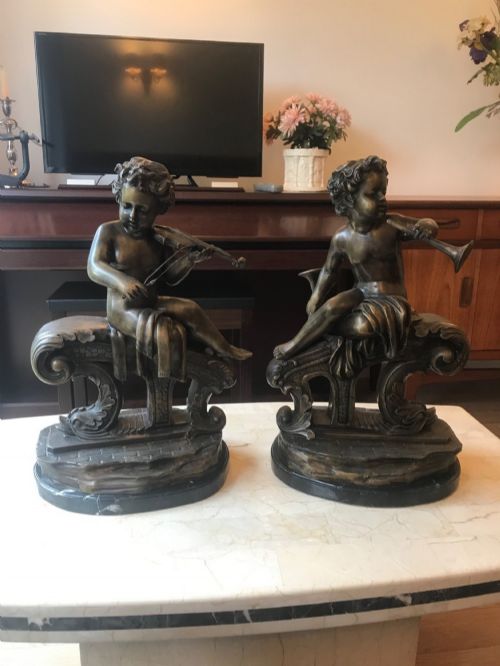
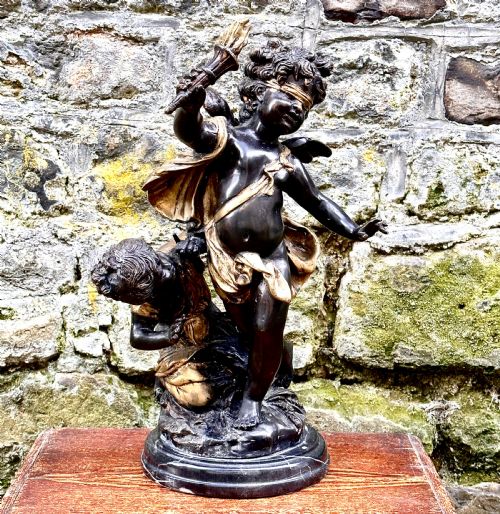
A putti bronze sculpture portrays winged infants, cherubs or cupids engaged in playful, allegorical or musical pursuits. These figures appear frequently as standalone decorative figures, furniture mounts, candelabra components, or functional bookends.
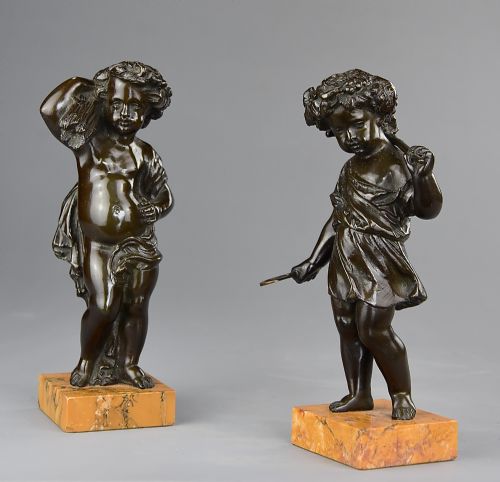
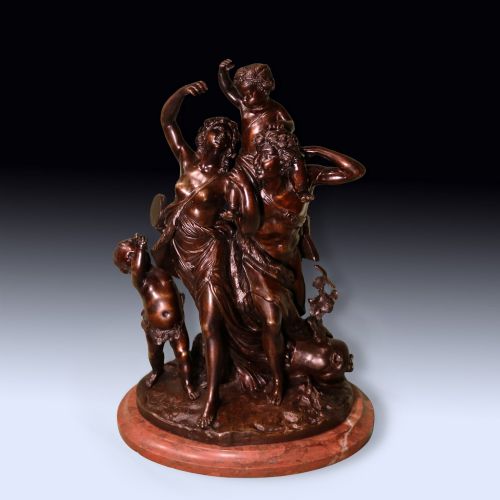
Most examples seen here originate from nineteenth-century France and Italy, reflecting sustained enthusiasm for Neoclassical, Rococo Revival, and Grand Tour aesthetics. Makers cast them singly or in symmetrical pairs, often depicting seasonal harvests, musical scenes, or Bacchic revelry.
Beyond traditional sculptural groups, the form adapts readily to domestic objects such as table lamps, doorstops, and decorative finials. The figures interact with everyday items, holding grapes, playing instruments, or resting against natural elements.
How they were made
Foundries produced these works using the lost-wax casting method or sand casting, capturing intricate details in the metal before finishing the surface. Artisans then applied rich patinas, ranging from deep dark browns to warm golden tones, or added fire-gilding known as ormolu.
Many sculptures incorporate contrasting materials, mounting the heavy bronze figures upon bases of white, sienna, or black marble. Certain specialised pieces integrate natural mineral accents like fluorspar alongside the metalwork.
Listings here feature nineteenth-century French and Italian bronze sculptures, frequently combining patinated surfaces with marble and ormolu.
What varies in quality
Quality rests primarily upon the crispness of the chase work, where skilled artisans manually refined the cast metal to define hair, facial expressions, and drapery. Softer, blurred contours indicate worn moulds or hurried secondary production.
The sophistication of the surface treatment distinguishes finer castings, as depth of patina and precision in mercury gilding create natural play of light across the form. Heavier metal gauge and stable integration with stone bases further separate workshop standards.
Charles Louis Malric·Susse Frères·Claude Michael Clodion·Francois Redmond·K&O·Leon Message·Jollet et Cie·Louis Auguste Moreau·Georges Van De Voorde·Charles Cumberworth·Carrier·Ferrand
The Putti Bronze Sculpture Glossary
- Putto
- A plump, naked male infant, frequently winged, derived from classical art and Renaissance sculpture. Singular of putti, these figures symbolise divine or secular love.
- Ormolu
- Finely ground high-carat gold mercury-gilded to a bronze object. This technique imparts a brilliant, durable golden finish common on luxury French decorative items.
- Patina
- The surface coloration and sheen developed naturally over time or applied chemically to bronze. It protects the underlying metal and adds visual depth.
- Grand Tour
- A cultural journey undertaken by wealthy young Europeans visiting classical antiquities. Souvenirs from these travels included small-scale bronzes modelled after ancient statues.
- Lost-wax casting
- A traditional manufacturing process where a molten metal is poured into a mould created by means of a wax model. This method allows for complex, undercut sculptural details.
Putti Bronze Sculpture: Frequently Asked Questions
What is a putto?
A putto is a representation of a chubby, often winged toddler originating in classical mythology and art. Artists frequently employed them to personify abstract concepts like love, music, or harvest.
Over subsequent centuries, European sculptors revived the motif extensively, adapting the figures into both freestanding decorative ornaments and functional household items.
How were grand tour bronzes used?
Grand tour bronzes served as sophisticated souvenirs for travellers exploring the artistic heritage of Italy and France. Collectors displayed these miniature sculptures in studies and libraries to demonstrate classical learning.
They often replicated famous antique monuments or sculptural fragments on a smaller scale, mounted securely for domestic display.
How do I care for antique bronze?
Antique bronze requires minimal intervention, needing only occasional dusting with a soft, dry cloth to prevent grime accumulation. Avoid applying commercial polishes or liquids that might strip the historic patina.
Keeping the pieces away from excessive moisture and direct heat sources preserves the stability of both the metal and any underlying marble bases.
Are these pieces signed?
Many nineteenth-century bronzes bear signatures, foundry stamps, or cast monograms on the base or integral plinth. These markings identify the sculptor who modelled the piece or the commercial foundry responsible for the casting.
Unsigned works remain common, as smaller decorative items and furniture mounts were frequently produced without artist attribution.