
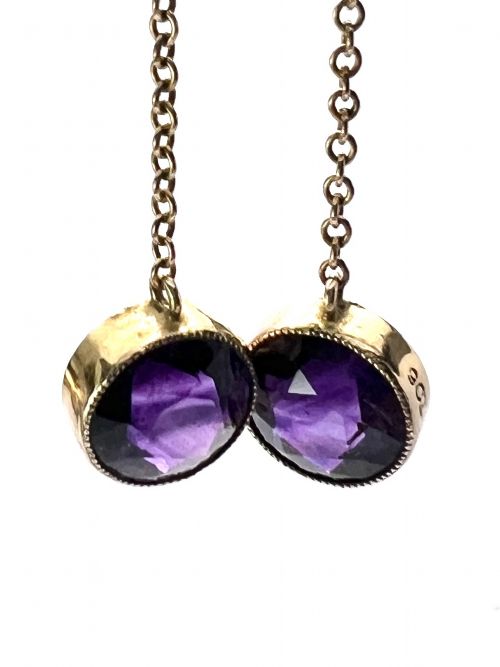


Purple Gold Earrings
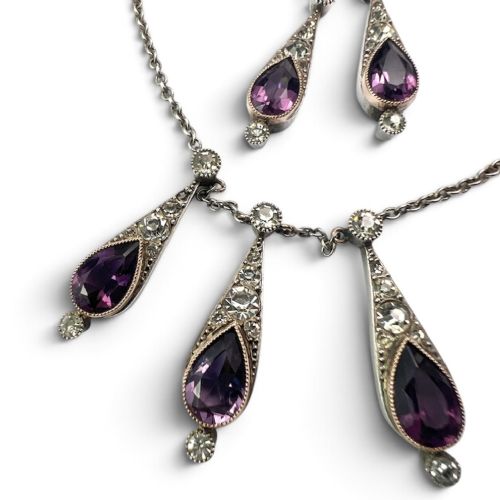
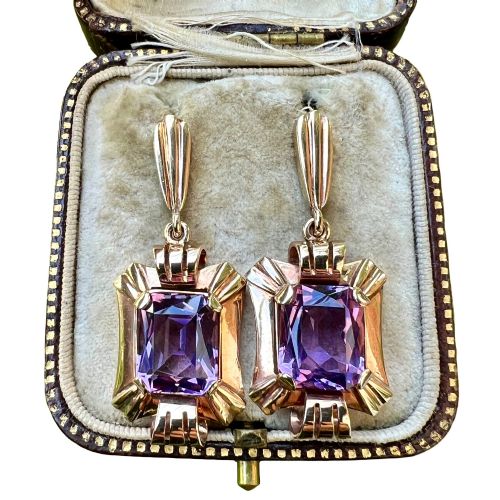
These purple gold earrings span Georgian work through to 1960s drops, combining deep amethyst stones with gold and silver settings.
Purple Gold Earrings
Purple gold earrings bring together rich amethyst stones and precious metal settings, appearing in forms ranging from simple studs to elaborate drop designs. When searching for purple gold earrings, buyers encounter pieces from the Georgian, Victorian, and Edwardian eras alongside mid-century examples.
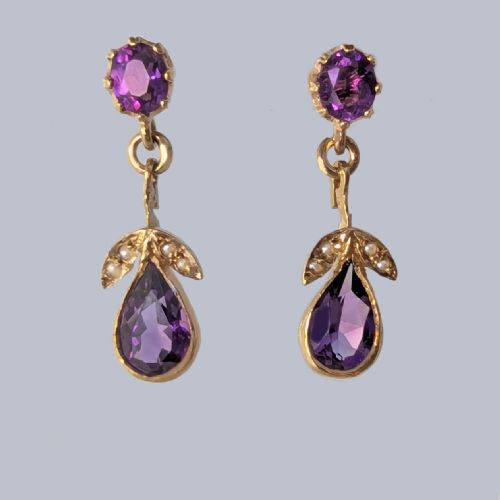
Drop earrings and cluster studs dominate the selection, often incorporating secondary materials like seed pearls or paste glass to accent the central purple stones. These items reflect changing design preferences across decades, from early flat-cut Georgian stones to later emerald-cut and cabochon amethysts.
How they were made
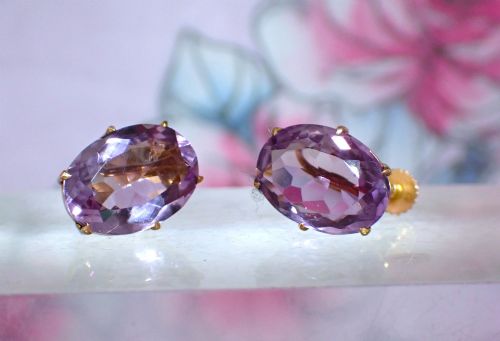
Goldsmiths utilised nine-carat and eighteen-carat gold, alongside silver, to construct settings that secure various cuts of amethyst. Faceted stones sit alongside flat-cut amethysts and smooth cabochons, held by claws or enclosed in bezels.
Makers integrated seed pearls and paste glass into the metalwork using traditional wire-working and soldering techniques. Hallmarks appear on later pieces, whilst earlier examples rely on regional construction methods.
Some Edwardian screw-on studs ensure that even non-pierced ears can dangle purple quartz.
What varies in quality
The clarity and saturation of the amethyst stones dictate the visual impact of each pair, alongside the precision of the stone-cutting. Deeper purple hues and clean facets separate superior specimens from simpler paste glass alternatives.
Metalwork execution defines the structural integrity of the earrings, from screw-back mechanisms to secure post fittings. Heavier gold gauges and intact seed pearl surrounds distinguish more elaborate examples.
The Purple Gold Earrings Glossary
- Amethyst
- A purple variety of quartz used extensively as a gemstone in antique jewellery. Its colour ranges from pale lilac to deep violet.
- Cabochon
- A gemstone shaped and polished with a smooth, rounded surface rather than faceted edges. This style highlights the natural tone of the quartz.
- Paste glass
- A heavy, highly refractive glass used historically to imitate gemstones. It appears in period pieces alongside genuine minerals.
- Seed pearl
- A very small natural pearl, often unperforated or half-drilled, used to create delicate floral or geometric borders around central stones.
Purple Gold Earrings: Frequently Asked Questions
How do I date these earrings?
Dating relies on metal fineness marks, stone cuts, and setting styles that align with specific periods like the Edwardian era or the 1950s. Flat-cut stones point towards earlier Georgian work, whilst hallmarked pieces give precise years of production.
Changes in clasp types, such as the shift from screw-backs to standard posts, also help narrow down the decade of manufacture.
Are all purple stones amethysts?
Most purple stones in these settings are amethysts, though paste glass and synthetic materials like corundum also appear in the inventory. Each material reflects light differently and possesses distinct physical properties.
Examining the stone under magnification reveals natural inclusions that separate genuine quartz from glass imitations.
How should I clean antique earrings?
Gentle cleaning with warm water, mild soap, and a soft brush removes surface dust from the gold and the amethyst stones. Harsh chemical dips risk damaging delicate seed pearls or loosening glued components.
Secure settings allow for safe washing, but pieces with foiled backs or pearl elements require careful wiping rather than complete submersion.
What is the difference between studs and drops?
Stud earrings sit directly on the earlobe, whereas drop earrings hang below the lobe, often incorporating chains or swinging stone elements. Drop designs offer more movement and frequently feature multiple amethysts.
Studs provide a restrained profile suited to daily wear, whilst dangling versions draw the eye with suspended weight.