




Oval Gemstone Studs
Oval gemstone studs bring colour and secure everyday wear to the earlobe, spanning vintage decades and classic gold settings.
Oval Gemstone Studs
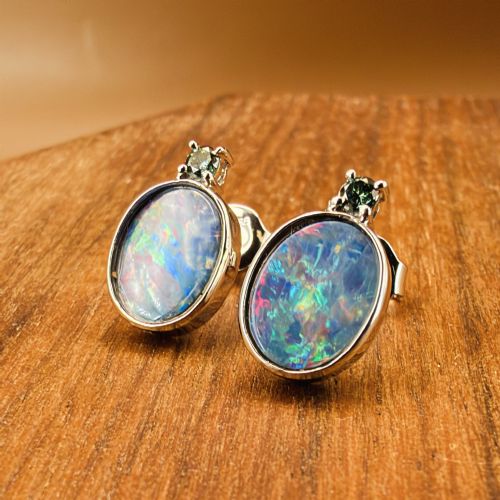
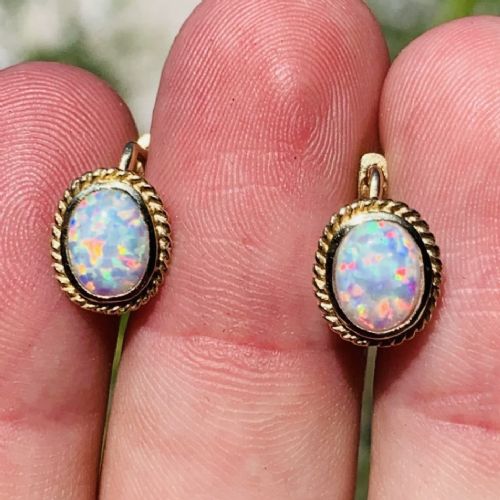
When you search for oval gemstone studs, you encounter earrings designed to sit directly on the earlobe with a central oval stone. The selections span periods from the Victorian era through Edwardian, Art Deco, and mid-century modern designs up to the nineteen-sixties and later.
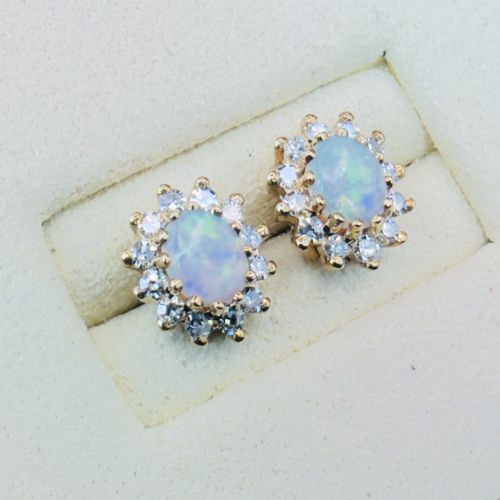
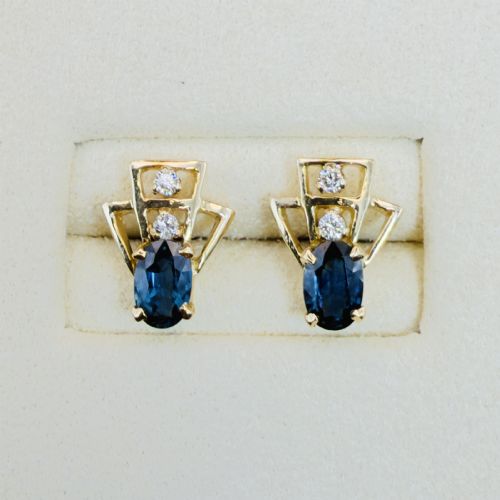
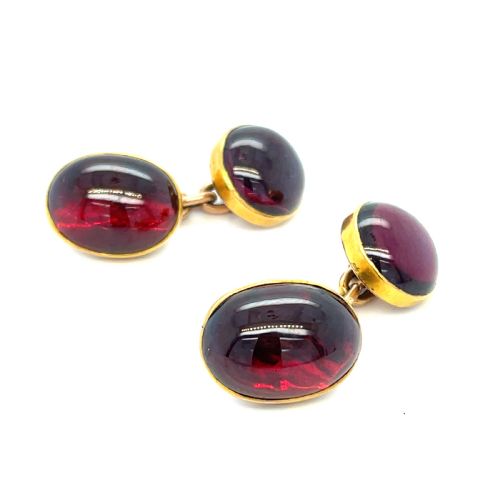
Most examples you meet utilise nine-carat or fourteen-carat gold housings, frequently paired with opals, amethysts, garnets, and sapphires. Styles range from simple solitaire cabochons to intricate halo clusters set with supporting diamonds or split pearls.
Materials and construction methods
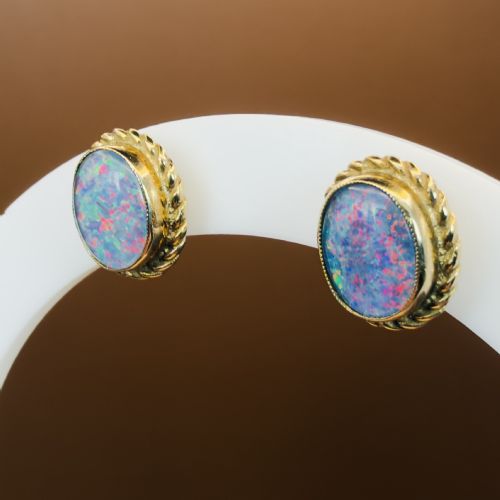
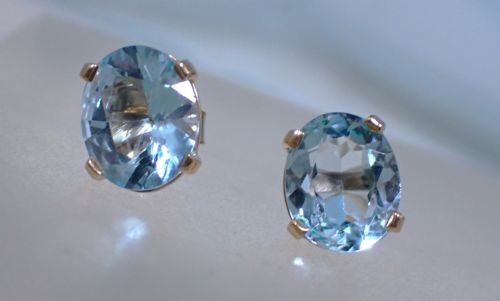
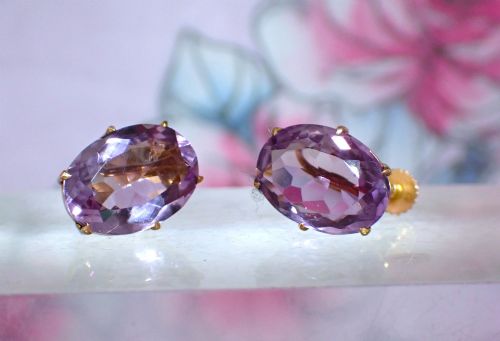
Goldsmiths constructed these earrings primarily using yellow or white gold, shaping bezels, claws, and screw backs to secure each stone safely. Gemstones were cut into oval facets or shaped as smooth cabochons depending on the optical properties of materials like opal, turquoise, and tiger's eye.
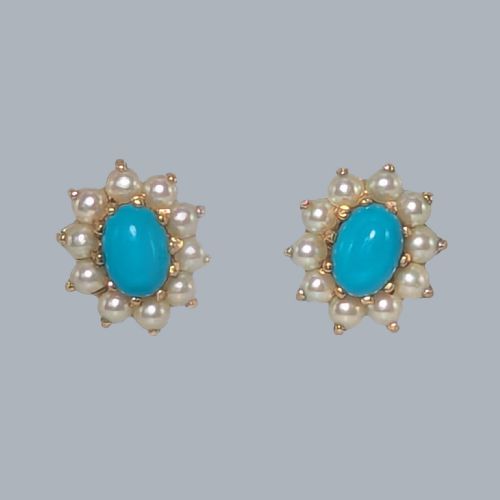
Clusters incorporate smaller accent stones such as diamonds or pearls surrounding the central oval gemstone. Filigree work and stamped gold frames appear frequently in mid-century and vintage pieces.
Sleeping Beauty turquoise stones make an appearance here, bringing bright desert blue straight from Arizona into mid-century gold cluster settings.
Assessing quality in gold and stones
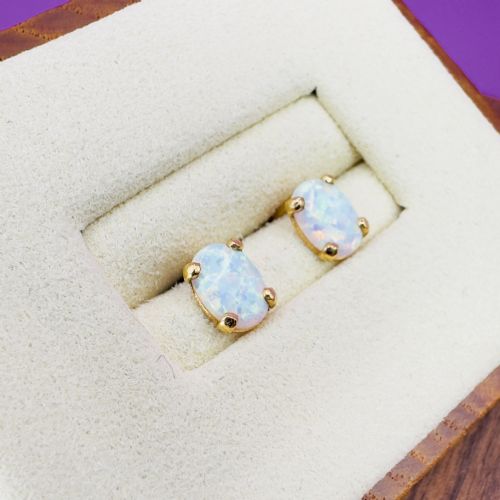
The distinction between standard commercial pieces and finer examples rests on the depth of colour and clarity within the gemstone. High-grade opals display vibrant play-of-colour across the cabochon surface, while superior sapphires and rubies exhibit saturated hues without heavy inclusions.
Metalwork finesse also separates tiers of production, where hand-finished filigree and robust claw settings outlast thin stamped metal. Maker attribution, such as signed pieces by known designers, elevates a pair beyond unmarked workshop output.
Andrew Grima
The Oval Gemstone Studs Glossary
- Cabochon
- A gemstone shaped and polished with a smooth, rounded surface rather than faceted edges. This cut is common for opaque or chatoyant stones like opal, turquoise, and garnet.
- Doublet
- A composite gemstone made by fusing a thin layer of precious material, such as opal, to a darker backing base. This technique strengthens fragile stones and deepens perceived body colour.
- Halo cluster
- An arrangement of small accent stones encircling a larger central gem. Diamonds are frequently used to form this bright perimeter boundary.
- Screw back
- A mechanical earring fastening utilising a threaded post and a small nut rotated into position. This design provides adjustable security for non-pierced or pierced ears alike.
Oval Gemstone Studs: Frequently Asked Questions
How do I date oval gemstone studs?
Dating relies on hallmarks stamped into the gold, fastener types like screw-on backs, and overall design characteristics. Mid-century items often show distinct cluster arrangements, whereas Edwardian pairs utilise delicate filigree.
Examining the cut of the stones and the gold purity marks provides further chronological clues.
What metals are used in these earrings?
The listings show items created predominantly in nine-carat yellow and white gold, alongside fourteen-carat and eighteen-carat gold variations. These metals provide the structural durability needed for daily wear.
Gold colour choice often reflects the prevailing fashion of the decade in which the earrings were made.
Are all opals in these studs solid?
Not all opals are solid stones, as some examples utilise opal doublets. A doublet pairs a thin slice of natural opal with a darker backing layer to enhance stability and colour play.
Examining the side profile helps determine whether a stone is solid or composite.
How should I clean vintage gold studs?
Cleaning requires warm soapy water and a soft brush, taking care with softer organic stones like opal or turquoise. Harsh chemical dips should be avoided to protect both the metal polish and the gemstone integrity.
Professional inspection helps ensure fragile settings remain secure over time.