


Purple Gemstone Gold Necklace
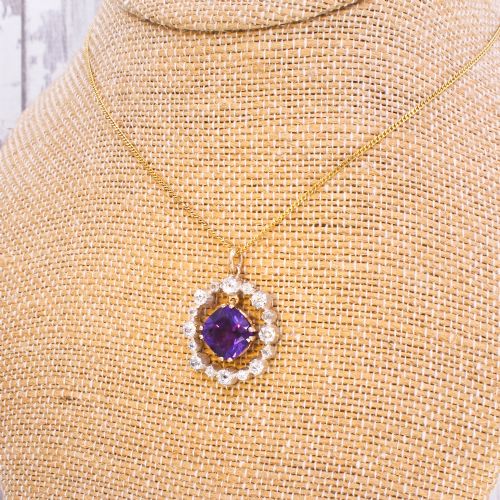
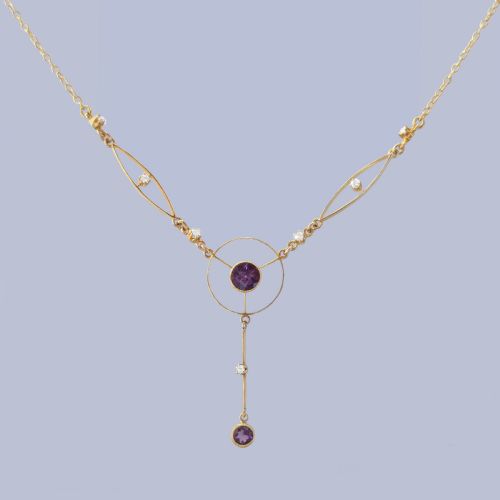
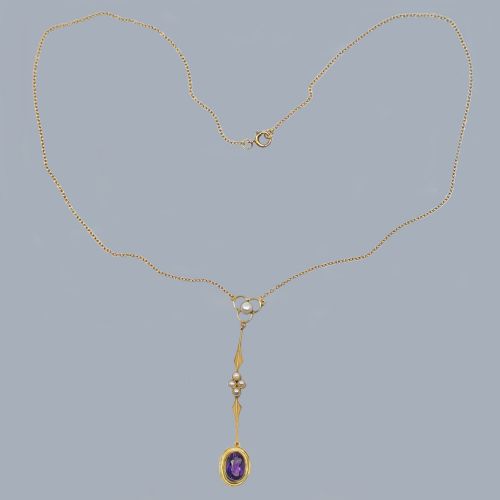
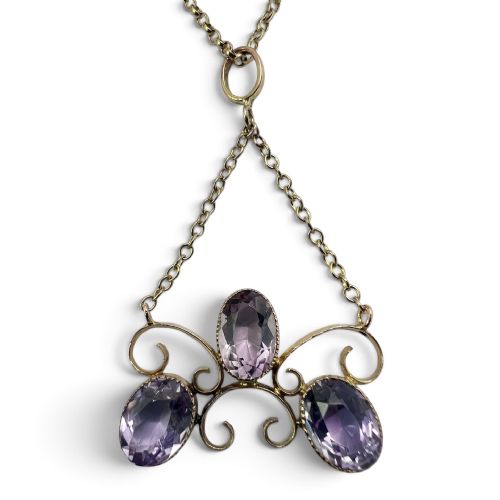
A purple gemstone gold necklace brings together the deep violet of amethyst and the warmth of yellow or white gold in pendant and chain forms.
Purple Gemstone Gold Necklace
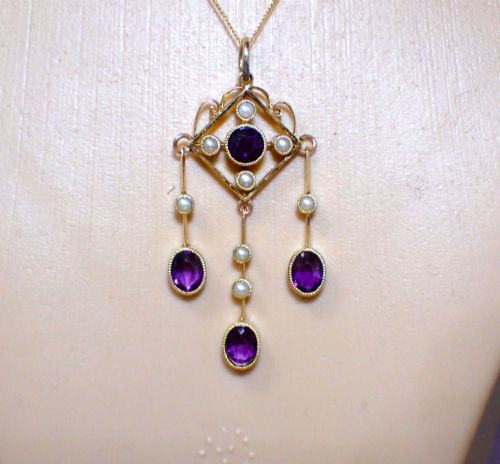
Makers and designers of the late nineteenth and early twentieth centuries utilised these materials to create characteristic floral, foliate, and Art Nouveau motifs. Buyers meet both delicate drop pendants on fine chains and substantial cluster necklaces featuring large faceted amethysts.
The selection ranges from early Victorian yellow gold mountings to later vintage designs incorporating paste or alternative violet stones like lolite. Each piece demonstrates how jewellers adapted purple gems across changing stylistic movements.
Materials and construction
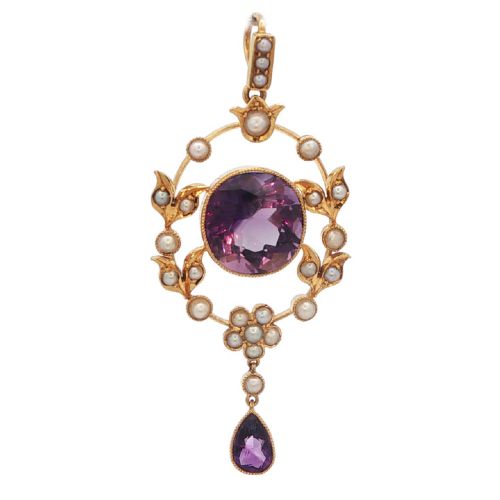
Goldsmiths constructed these necklaces using nine, fifteen, and eighteen karat gold, alongside silver gilt and platinum in specific periods. Amethysts formed the central purple gemstone, shaped into oval, pear, and large faceted cuts.
Seed pearls and natural pearls were integrated using fine wirework and claw settings, often complementing the purple stones in foliate arrangements. Art Nouveau examples additionally incorporate enamel techniques such as plique-à-jour to support the stones.
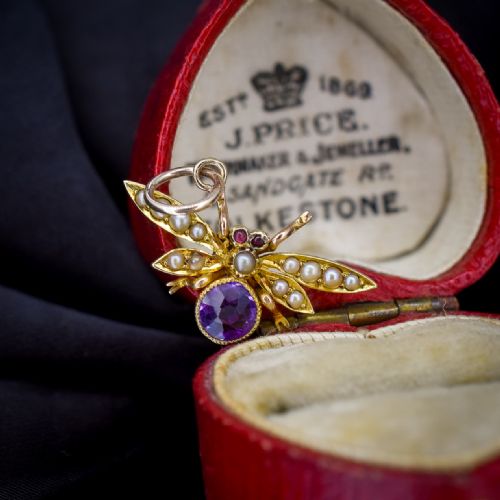
One unexpected insect fly charm pendant brings a touch of Victorian entomological enthusiasm straight to the neckline.
Assessing the pieces
The distinction between tiers rests upon the depth of colour in the amethyst, the regularity of the goldwork, and the integration of supporting gems like diamonds. Higher grade items display matched natural pearls and substantial gold weight rather than hollow stampings.
Design complexity also separates standard productions from finer examples, particularly where hand-formed Art Nouveau curves or articulated drop fringes are present. Original boxes and documented maker attributions elevate certain historical pieces above unmarked items.
S. Blanckensee & Son·Hamilton & Co
The Purple Gemstone Gold Necklace Glossary
- Lavalier
- A pendant necklace featuring a central drop suspended below the main decorative section, popular during the Edwardian era.
- Seed pearl
- A very small, naturally occurring pearl, often drilled and strung or set in clusters around a larger gemstone.
- Negligé necklace
- A style featuring two asymmetrical drops hanging from a central connector, characteristic of early twentieth-century fine jewellery.
- Plique-à-jour
- An enamelling technique where enamel is applied to open cells without a backing, allowing light to shine through transparent colours.
- Foliate
- A decorative motif incorporating leaf and plant-like forms, frequently seen in Victorian and Art Nouveau jewellery.
Purple Gemstone Gold Necklace: Frequently Asked Questions
What periods do these necklaces come from?
The available selection spans from the early Victorian era through the Edwardian period and into mid-century decades. Pieces from around nineteen hundred and the Art Nouveau years appear frequently.
Each period brought distinct mounting styles, moving from heavy yellow gold settings to delicate platinum and lower karat gold combinations.
How do I care for an antique gold necklace?
Store your necklace flat in a lined box to prevent chain kinks and gemstone contact. Clean the gold and amethyst gently with a soft cloth.
Avoid chemical dips, ultrasonic cleaners, and prolonged exposure to water, particularly if the piece contains seed pearls set with historical adhesives.
Are the pearls natural or cultured?
Victorian and Edwardian pieces commonly incorporate natural seed pearls or freshwater pearls gathered during that era. Later mid-century designs may utilise cultured varieties.
Examining the drill holes and nacre under magnification helps determine the pearl type used in the construction.
How can I tell Victorian from Edwardian pieces?
Victorian necklaces generally feature heavier yellow gold mountings with deep claw settings and closed-back elements. Edwardian pieces tend to use lighter eighteen karat gold, platinum, and delicate openwork.
Art Nouveau and foliate motifs bridge both eras, but the integration of whiplash lines usually points towards the turn of the twentieth century.