


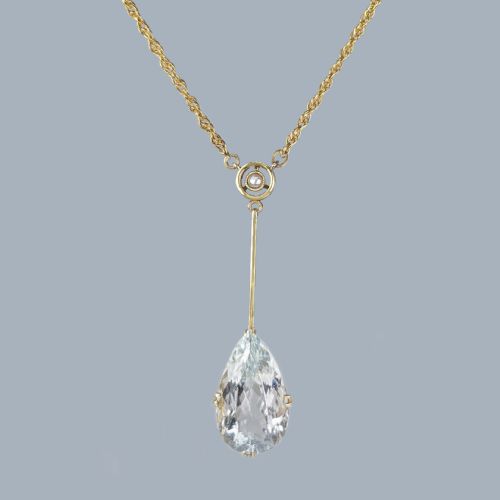
1910s Gold Pendant Necklace
A 1910s gold pendant necklace brings delicate Edwardian grace and fine gemstone work to the neckline, offering a tangible piece of early twentieth-century artistry.
1910s Gold Pendant Necklace
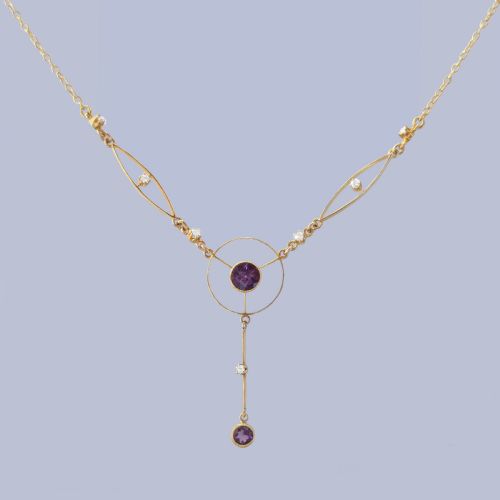
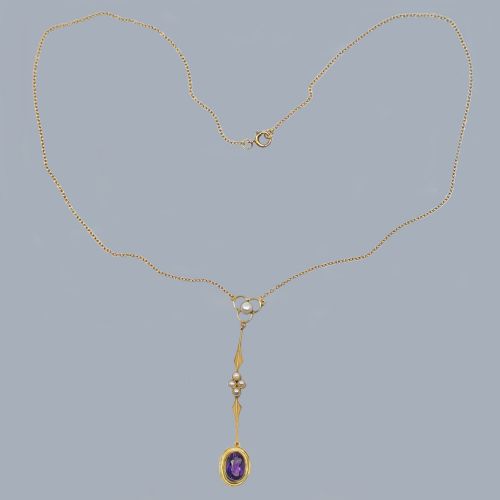
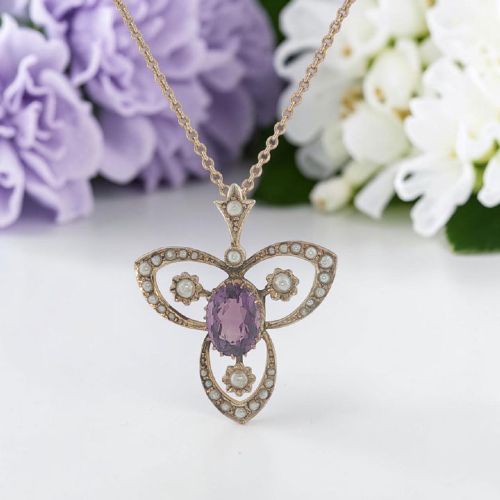
A 1910s gold pendant necklace represents the refined aesthetics of the Edwardian period, often incorporating intricate drop configurations and delicate chains. These pieces combine yellow or rose gold in various purities with graceful design motifs typical of the early twentieth century.
The versions most commonly met on this page combine gold with amethyst, seed pearls, and diamonds, frequently taking the form of lavalier necklaces, drop pendants, or convertible pendant brooches. Both Edwardian and Art Nouveau stylistic influences appear across the selection.
How They Were Made
Goldsmiths of the era worked primarily with nine-carat, fifteen-carat, and eighteen-carat yellow and rose gold, occasionally integrating platinum to securely mount diamonds in delicate claw or bezel settings. This variety in metal composition allowed workshops to cater to different budgets while maintaining structural integrity.
Gemstones such as amethysts, pearls, seed pearls, aquamarines, and garnets were hand-cut and meticulously arranged alongside old-cut diamonds. Techniques included fine filigree work, hand engraving, and articulated drop joints that permitted gentle movement when worn.
Listings feature periods from 1910 alongside the Edwardian era, utilising materials such as amethyst, aquamarine, black opal, and platinum.
What Varies in Quality
Quality also depends on the preservation of original components, such as integrated drops, matching chains, and secure convertible mechanisms that allow a pendant to function additionally as a brooch. Subtle hand-engraving and balanced proportions distinguish the finer examples.
The 1910s Gold Pendant Necklace Glossary
- Edwardian
- A stylistic period spanning the reign of King Edward VII, characterised by light, airy jewellery designs using platinum and gold. These pieces often feature floral motifs and delicate filigree.
- Lavalier
- A necklace style featuring a pendant with one or more suspended drops hanging below the main cluster. This form gained immense popularity during the Edwardian era.
- Seed Pearl
- A tiny, naturally occurring or early cultured pearl, frequently drilled and strung in dense clusters. They provide a soft, luminous contrast to polished gold.
- Old Cut Diamond
- A diamond cut by hand before modern machinery, featuring a smaller table and larger facets that catch candlelight warmly. These stones display a distinctive, deep brilliance.
- Convertible Pendant
- A piece designed to serve as both a pendant on a necklace and a brooch to pin to clothing. This versatility was highly prized by Edwardian wearers.
1910s Gold Pendant Necklace: Frequently Asked Questions
How do I care for a 1910s gold pendant necklace?
Store the necklace flat in a lined jewellery box to protect the delicate chain and delicate stone settings from tangling or impact. Clean it gently with a soft, dry cloth, avoiding harsh chemical dips that might harm organic gems like pearls.
Pearls and seed pearls require particular caution regarding moisture and perfumes. Have the prongs and connections checked periodically by a professional jeweller to ensure the stones remain secure.
Were these necklaces worn daily in the 1910s?
Upper-class and middle-class wearers in the Edwardian period selected these delicate gold and gemstone pendants for afternoon calls, dinners, and formal gatherings. The lighter metals and refined drop designs suited the fashionable silhouettes of the era.
While robust enough for careful social wear, their intricate construction means they were not intended for vigorous physical activity. Many survived because they were kept safely in fitted presentation boxes when not in use.
How can I tell an Edwardian piece from later styles?
Edwardian jewellery frequently employs a combination of yellow gold and platinum-topped gold, distinguishing it from the heavier yellow gold of the Victorian era or the geometric abstraction of later Art Deco design. Look for flowing garlands, bows, and openwork lace patterns.
The presence of old-cut diamonds, seed pearls, and vibrant coloured stones like amethyst or aquamarine in delicate drop configurations points directly to the 1910s aesthetic.
Can I wear these pendants on a modern chain?
Many pendant necklaces from this era accommodate modern replacement chains if the original loop or bale is sufficiently wide. Ensure any replacement chain matches the gold colour and carat weight of the pendant for visual harmony.
Some pieces retain their original antique chains, which add considerable historical value. Consult a specialist if you need to adjust or securely attach a vintage pendant to a new support.