




Blue Aquamarine Pendant
A blue aquamarine pendant brings together cool sea-water beryl and precious metal, offering a wearable piece of history designed to draw the eye.
Blue Aquamarine Pendant
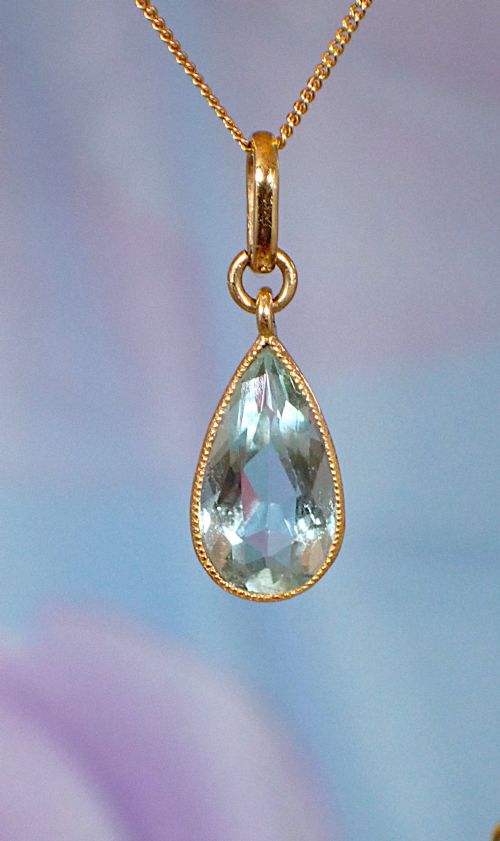
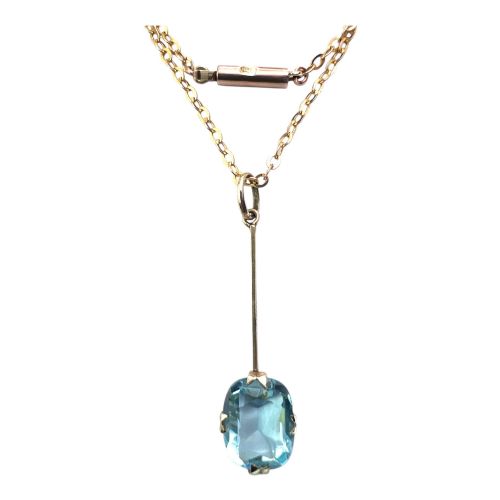
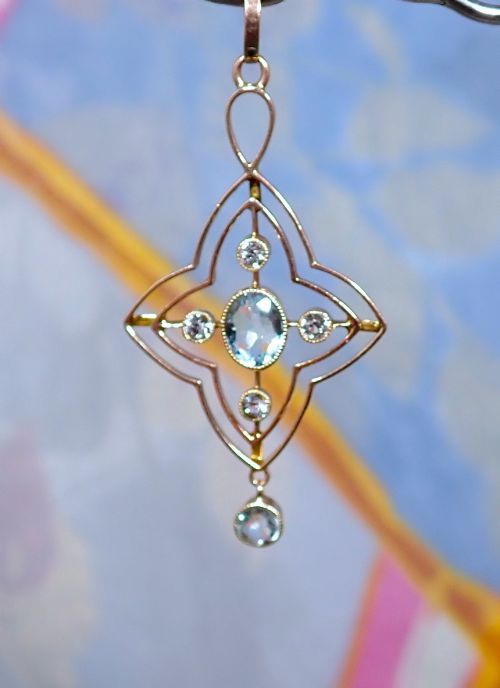
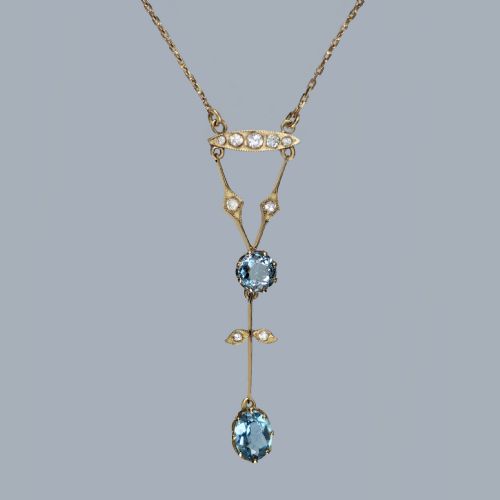
A blue aquamarine pendant centres on the pale or deep blue-green beryl stone, frequently shaped as an oval cut or large drop suspended from a matching chain. These pieces appear across several distinct historical periods, with Edwardian designs and Art Deco geometry dominating the selection.
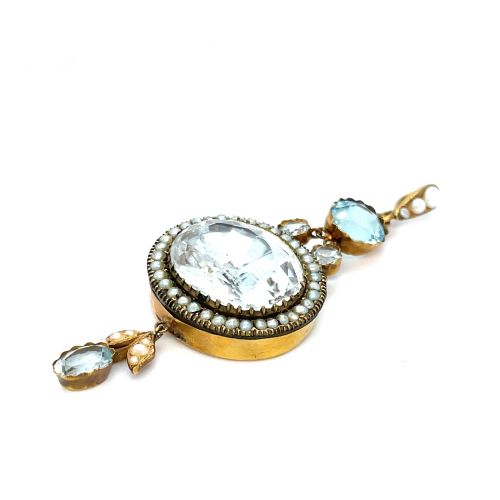
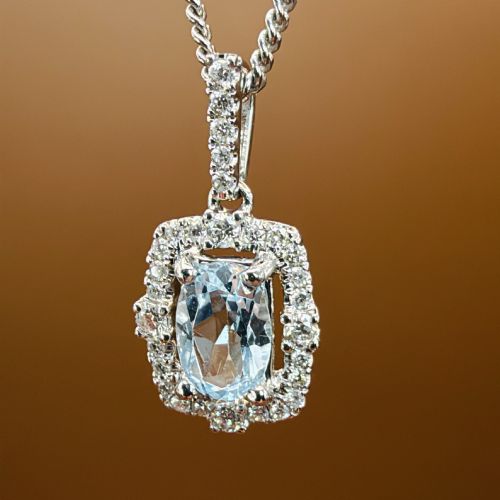
Makers set the stones in platinum, yellow gold, and white gold, often pairing the central beryl with sparkling diamonds or delicate seed pearls. The inventory spans simple drop necklaces to convertible brooch and pendant combinations set with substantial stones.
Materials and construction techniques
Craftsmen mounted aquamarines in precious metals ranging from 9ct and 15ct gold to platinum and 18ct white gold, utilising claw settings and intricate openwork metal galleries to secure the gems. Earlier pieces often incorporate foil backing behind stones or integrate natural pearls to enhance the delicate appearance.
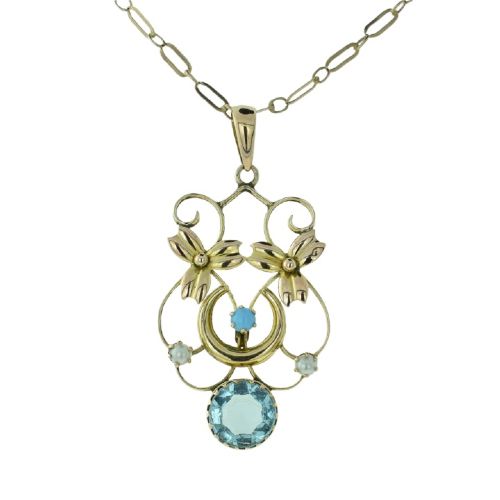
Art Deco examples rely on platinum frames to hold larger carat aquamarines alongside precision-set diamond accents. Edwardian workshops favoured lower-carat yellow gold and rose gold combined with seed pearls and sapphires for a lighter visual weight.
Some Edwardian pieces pack enough seed pearls and beryl to make even a Victorian sea captain reconsider land life.
Distinguishing finer examples
The quality of a blue aquamarine pendant rests upon the depth of the stone's colour, clarity, and the proportion of the setting. Finer examples display clean, crystal-clear beryl with minimal inclusions, mounted in substantial platinum or high-carat gold work.
The refinement of the metalwork also separates standard items from superior pieces, particularly in Edwardian openwork and Art Deco geometric designs. Hand-finished details and balanced proportions between the central aquamarine and secondary diamond accents elevate the overall standard.
C'est Laudier
The Blue Aquamarine Pendant Glossary
- Aquamarine
- A blue to blue-green variety of beryl used as the primary gemstone in these pendants. It derives its name from seawater.
- Beryl
- The mineral family that includes aquamarine, forming the crystalline structure of the gemstone. It shares its chemical grouping with emerald and morganite.
- Seed Pearl
- Very small, naturally occurring or cultured pearls often used in Edwardian cluster arrangements. They provide a soft, creamy contrast to bright beryl.
- Platinum
- A dense, ductile precious metal prized for its strength in secure stone settings. It allows for fine, intricate wirework without bending.
- Foil Backing
- A thin sheet of reflective metallic foil placed behind a gemstone to enhance its brilliance and colour. This technique appears in older Victorian pieces.
Blue Aquamarine Pendant: Frequently Asked Questions
How do I date a blue aquamarine pendant?
Dating relies on the style of the metalwork, the cut of the stones, and the types of precious metals used in the mount. Edwardian pieces often show fine yellow gold and seed pearls, while Art Deco items favour platinum and geometric diamond arrangements.
Examining the clasp and chain can also offer clues, though many older pendants have been paired with replacement chains over the decades.
Are aquamarines durable for daily wear?
Aquamarine measures between seven point five and eight on the Mohs hardness scale, making it reasonably resistant to everyday scratching. However, softer companion stones like pearls require extra care and should be kept away from harsh chemicals.
Removing the pendant during physical activities helps protect the delicate metal settings and any surrounding small diamond accents.
What is the difference between Edwardian and Art Deco pendants?
Edwardian pendants emphasise graceful floral motifs, openwork filigree, and lighter gold or platinum frames often accented with seed pearls. They lean towards romantic, flowing designs characteristic of the early twentieth century.
Art Deco pendants shift towards bold geometric lines, symmetrical platinum settings, and sharper contrasts between the central aquamarine and surrounding diamonds.