




Provincial Timber Sideboard
A provincial timber sideboard brings honest, working-timber character to a room, offering robust storage built for daily country life rather than formal display.
Provincial Timber Sideboard
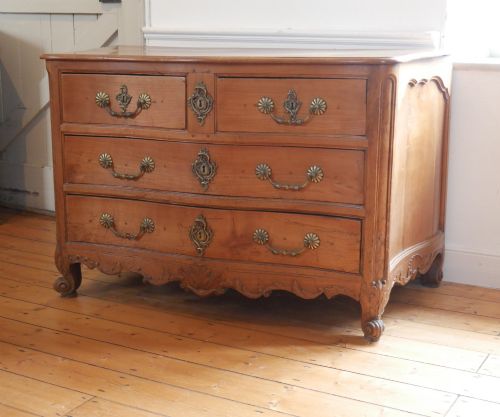
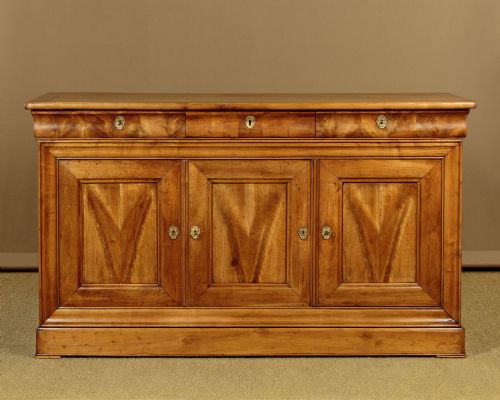
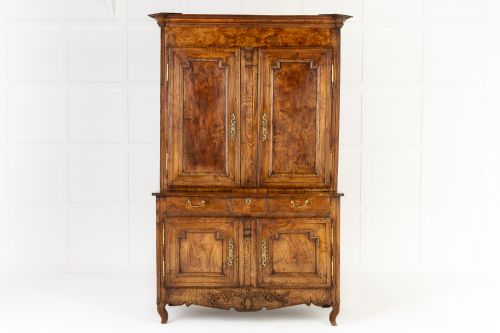
A provincial timber sideboard encompasses practical storage and preparation surfaces originating from regional workshops rather than metropolitan centres. When you search for a provincial timber sideboard, you encounter forms shaped by local traditions, including French enfilades, buffets, serving tables, and dressers.
The inventory on this page draws primarily from 18th-century and 19th-century periods, showcasing regional utilitarian furniture. You find domestic storage pieces such as chests of drawers, commodes, and consoles alongside workshop pieces like workbenches and drapers tables.
Materials and construction
Makers utilised available regional timbers, constructing these pieces from solid woods such as oak, cherrywood, walnut, pine, ash, and beech. Surfaces frequently display the natural grain or carry historic layers of paint.
Hardware typically consists of forged iron and brass fixtures, securing panelled doors, drawers, and pot-shelves. Construction methods rely on traditional joinery suited to heavy domestic or workshop use.
Some workbenches retain generations of carpenter tool marks and paint drips, proving hard work leaves the best decoration.
Evaluating the pieces
Quality rests upon the integrity of the timber and the honesty of the construction, distinguishing daily utility work from finer regional cabinet-making. Pieces retain their original structural timber, drawer configurations, and functional iron or brass fittings.
Surface finish determines character, separating examples with undisturbed historic paint or patinated waxed wood from those stripped down or heavily altered. The balance of regional proportions and utilitarian simplicity defines the better examples.
The Provincial Timber Sideboard Glossary
- Enfilade
- A long low sideboard or buffet featuring multiple doors, traditionally used in European dining rooms for serving food and storing tableware.
- Buffet deux corps
- A tall two-part storage piece comprising a lower cabinet and an upper section, common in provincial dining spaces.
- Potboard
- An open lower shelf fitted beneath a serving table or dresser, originally designed to hold heavy pots and culinary vessels.
- Directoire
- A French neoclassical style spanning the late eighteenth century, marked by restrained lines and simplified classical proportions.
- Commode
- A low chest of drawers or cabinet designed for domestic bedroom or living space storage.
Provincial Timber Sideboard: Frequently Asked Questions
How do I use one at home?
These pieces provide substantial storage and surface space suited to dining rooms, kitchens, or hallways. Their deep drawers and cupboards hold tableware, linens, or household goods.
The sturdy top surface also accommodates lamps, books, or serving dishes during gatherings.
How can I tell the period?
Dating relies on construction techniques, timber choice, and stylistic markers such as Directoire lines or regional vernacular details. Eighteenth-century pieces often display hand-cut joinery and aged burr ash or walnut.
Nineteenth-century examples show variations in pine, cherrywood, and painted finishes reflecting local workshop traditions.
Are painted finishes original?
Many regional pieces carry historic painted finishes that developed through decades of domestic use. Examining the layers reveals whether paint represents a period surface or a later application.
Both painted wood and natural timber finishes remain characteristic of provincial furniture traditions.