
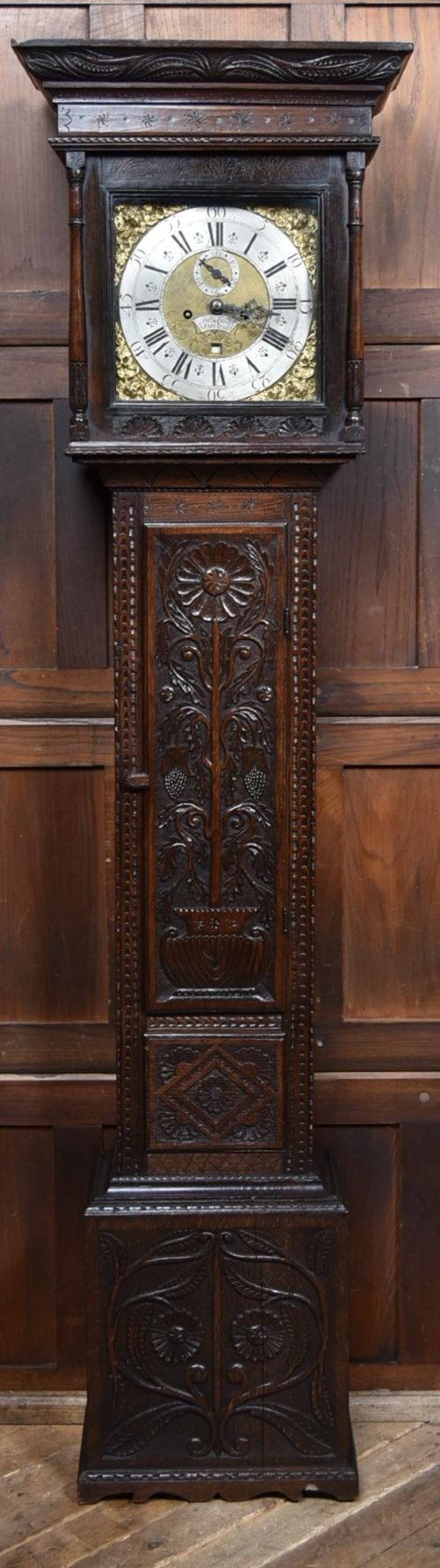


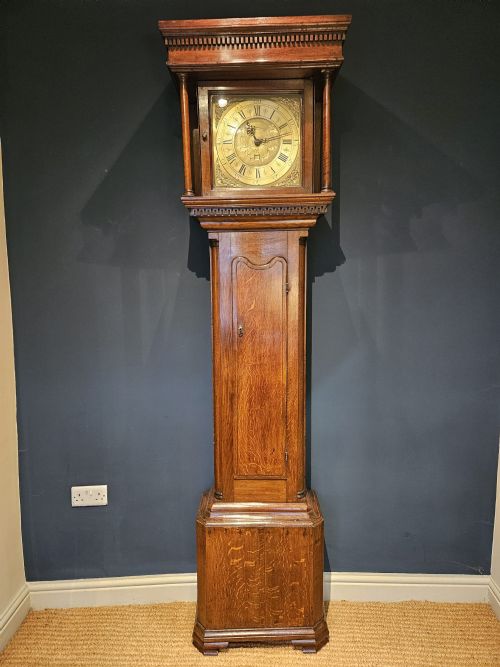


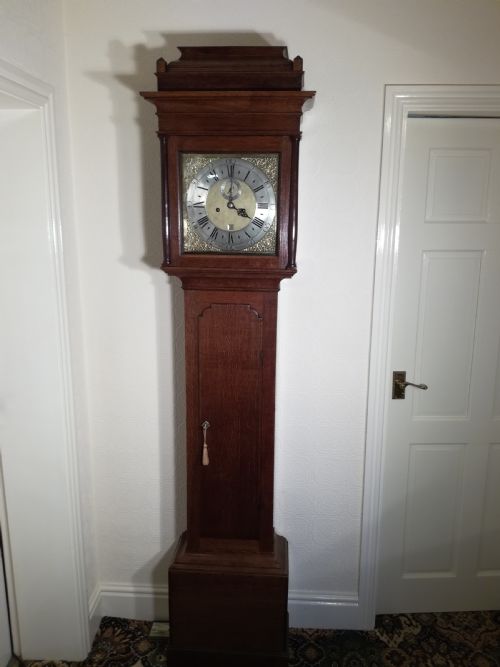
Provincial Oak Clock
A provincial oak clock brings the steady rhythm of regional craft into a room, offering the solid presence of vernacular woodwork.
Provincial Oak Clock
A provincial oak clock is typically a tall longcase timekeeper housed in regional timber cases, frequently termed a grandfather clock or wall clock. The pieces available here span the Georgian era, the eighteenth century, and the nineteenth century, including examples dated specifically to seventeen fifty.
Makers working away from the capital constructed these timepieces in various forms, from small slim grandfathers to imposing country models. Regional variations appear across locations such as Macclesfield, Kirkby Lonsdale, Nantwich, Diss, Wells, Halifax, Worcester, and the Vale of Coleshill.
The objects combine timber cabinetry with mechanical movements, appearing as thirty-hour or eight-day versions. Some incorporate painted iron or enamel dials, rolling moon mechanisms, and mahogany secondary accents.
How they were made
Makers built the cases using solid oak, occasionally combining mahogany or incorporating glass panels into the hoods. Iron and brass formed the underlying gear trains and mechanical components of the movements.
Dials received careful attention through painted iron or enamel surfaces, inscribed with the maker names and regional locations. Carved details appeared on select regional items, such as French country inspired or locally carved oak surfaces.
Makers recorded their names alongside their home turf, leaving permanent signatures from Macclesfield to the Vale of Coleshill.
What varies in quality
The sophistication of the dial work and the precision of the case proportions distinguish different tiers of regional timepieces. Simpler thirty-hour movements contrast with more complex eight-day mechanisms and rolling moon displays.
Regional cabinetry varies from restrained vernacular boxes to imposing architectural longcases with refined proportions and local carving. The presence of named provincial makers adds distinct identity to the construction.
Jn° Smith Macclesfd·Haythornwaite Kirkby Lonsdale·John Salmon Nantwich·Stanyer Nantwich·Samuel Buxton Diss·James Draycot Wells·Herbert of Haversham·Richard Midgley Halifax·J Hummel Worcester
The Provincial Oak Clock Glossary
- Longcase clock
- A tall pendulum timekeeper housed in a wooden case, commonly referred to as a grandfather clock. These floor-standing pieces protect the weights and pendulum within a trunk and hood.
- Thirty-hour
- A movement design requiring manual winding once a day. This simpler mechanical setup was common in regional country clocks.
- Eight-day
- A movement construction designed to run for just over a week between windings. It typically utilises two weights and more complex gearing than a thirty-hour clock.
- Rolling moon
- A dial mechanism tracking the phases of the lunar cycle behind a shaped aperture. It appears on more elaborate regional clock faces.
- Dial
- The visible face of the clock displaying the hours and minutes. These were often painted iron or enamel, bearing the signature of the regional maker.
Provincial Oak Clock: Frequently Asked Questions
What is a provincial oak clock?
It is a tall floor-standing or wall-mounted timekeeper constructed by regional makers outside London, using local timber.
Most examples date from the Georgian period or the eighteenth and nineteenth centuries, featuring brass and iron movements housed in solid oak cases.
How do thirty-hour and eight-day clocks differ?
A thirty-hour clock requires winding daily and relies on a simpler internal gear train.
An eight-day clock runs for over a week before needing attention, typically utilising dual weights and more complex internal mechanics.
What materials did makers use?
The primary structural material is oak, sometimes paired with mahogany accents and glass viewing windows in the hood.
Internal movements combine brass wheels and iron plates, while the visible faces feature painted iron or enamel.