
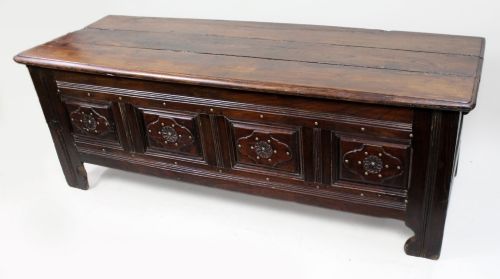
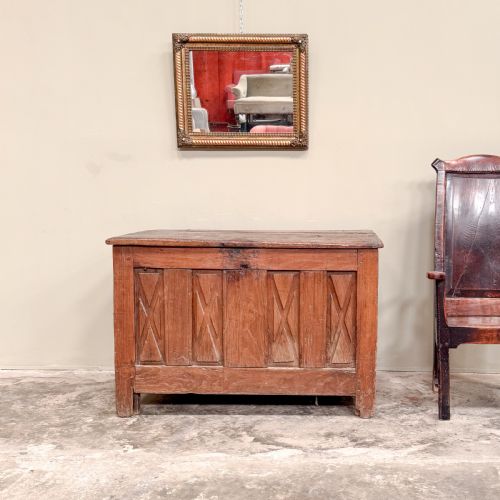


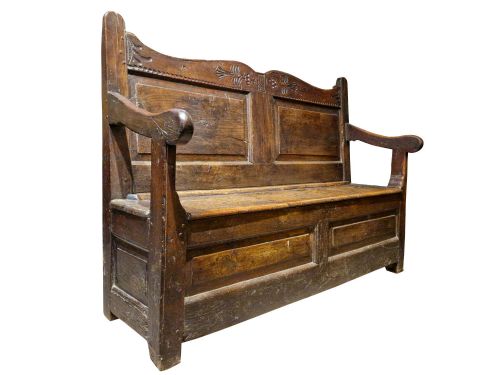


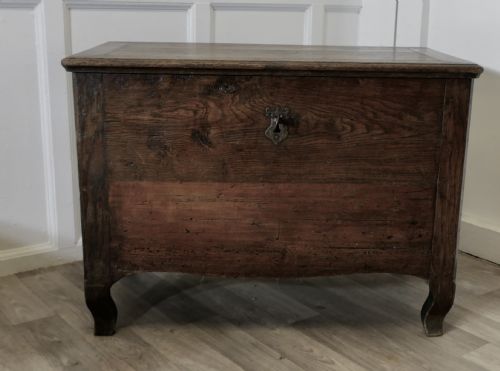


Provincial Oak Box
A provincial oak box brings the honest grain and sturdy build of country workshops straight into a modern interior.
Provincial Oak Box
A provincial oak box represents the sturdy storage vessels created in country workshops across the seventeenth, eighteenth, and nineteenth centuries. These pieces encompass smaller miniature boxes, strong boxes, and larger coffers or chests built for daily utility in domestic settings.
The versions most commonly met on this page span French provincial and English country origins, often displaying the robust proportions typical of Georgian country and rustic farmhouse styles. They serve equally well as tabletop storage or functional accents in a hallway.
Makers constructed these sturdy items from solid timber designed to endure decades of household use. Their straightforward construction prioritises practical containment over delicate ornamentation, making them enduring staples of traditional interior decor.
How they were made
Craftsmen built these pieces primarily from solid oak, sometimes pairing the main timber with secondary woods such as pine or incorporating wood inlay and ebonised wood details. Structural strength relied on heavy planks joined to withstand heavy daily handling.
Iron and wrought iron provided robust hardware, including strap hinges and latches, while brass details occasionally appeared on finer examples. These utilitarian metals ensured the lids and fastenings remained secure through generations of constant opening and closing.
Some chests include a tiny internal compartment designed exclusively for keeping tallow candles safe from mice.
What varies in quality
The standard of a provincial oak box depends largely on the crispness of any carved detailing and the integrity of the original timber. Pieces featuring thoughtful proportions and purposeful integration of iron hardware stand apart from simpler, purely utilitarian containers.
Finer examples maintain their original surfaces and authentic joinery, whereas lesser items often suffer from extensive timber replacement or unsympathetic modern repairs. The presence of internal compartments, such as an integrated candle box, elevates the interest of the piece.
The Provincial Oak Box Glossary
- Coffer
- A large wooden chest traditionally used for storing valuables, linens, or household provisions. These sturdy receptacles often feature hinged lids and heavy iron or wrought iron hardware.
- Settle
- A wooden bench featuring a high back and solid armrests, often incorporating a box seat for additional concealed storage. This form combines seating utility with practical containment.
- Commode armchair
- An upholstered or wooden armchair designed with an integrated seating compartment for sanitary or storage purposes. These unusual seating forms reflect specific domestic habits of past centuries.
- Ebonised wood
- Timber treated with a chemical stain or finish to imitate the dark, dense appearance of ebony. This dark treatment provides striking contrast against lighter oak panels.
- Wood inlay
- The technique of embedding contrasting pieces of wood into the primary surface to create decorative patterns. This ornamental addition appears on select decorative containers.
Provincial Oak Box: Frequently Asked Questions
What is a provincial oak box used for?
These boxes served historical households as secure containers for documents, textiles, and domestic valuables. Today, they function as practical storage vessels for modern living spaces while adding historical character.
Their robust timber construction allows them to sit safely on tabletops or floor spaces, holding everyday items out of sight.
How do I date an antique oak box?
Dating relies on examining the construction methods, tool marks left on the timber, and the style of any hinges or hardware. Seventeenth-century examples often display heavier framing and simpler joined panels compared to later Georgian iterations.
Comparing the timber shrinkage and patina against known period examples helps confirm the age of the piece.
Are these boxes English or French?
The inventory includes both English country and French provincial origins, reflecting distinct regional woodworking traditions. French pieces often exhibit carved motifs typical of French country styles, while English versions align with Georgian country or farmhouse aesthetics.
Both regional traditions utilised native oak and heavy iron hardware to ensure durability.
How do I care for antique oak?
Maintaining antique oak requires keeping the timber away from direct heat sources and sudden humidity changes to prevent splitting. Regular dusting with a dry, soft cloth preserves the natural patina accumulated over centuries.
Applying specialised waxes sparingly helps nourish the dry grain without attracting unwanted dust.