


Printed Pottery Serving Platter
A printed pottery serving platter brings the robust charm of blue and white transfer printing directly to the dining table.
Printed Pottery Serving Platter
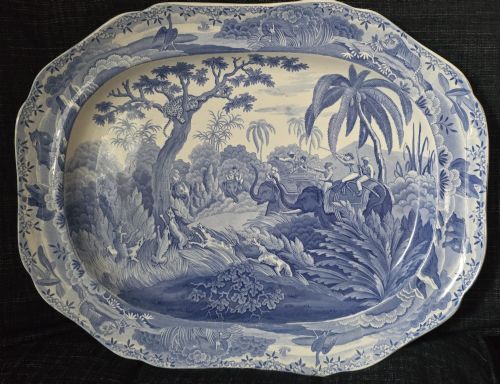
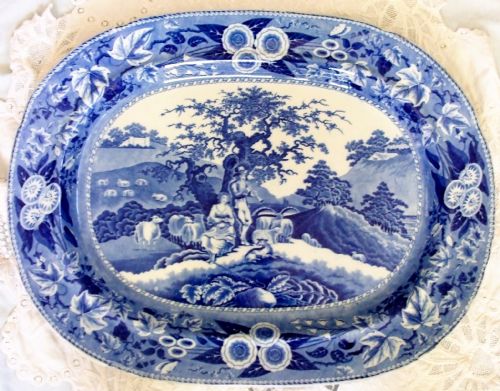
A printed pottery serving platter is a large earthenware or pearlware dish designed for presenting meat, bread or asparagus at the table. These items emerge primarily from the Georgian and Victorian periods, often bearing blue and white transfer prints of landscapes, ruins or pastoral scenes.
The versions most commonly met on this page include large rectangular meat plates and serving dishes stamped or painted with named Staffordshire patterns. Makers such as Spode, Thomas Lakin, Don Pottery and Mason produced these functional vessels in quantity.
The forms range from deep serving dishes and bread stands to expansive platters intended for heavy communal dining. Each piece combines utility with picturesque nineteenth-century design.
How they were made
Potters shaped earthenware, pearlware and ceramic bodies before applying cobalt pigment through engraved copper plates to paper, which transferred the design onto the biscuitware. This transfer printing technique allowed intricate scenes like classical ruins or Chinese gardens to be reproduced with precision.
Once decorated, the vessels received a transparent lead glaze to protect the pigment and create a glossy surface. Firing in kilns fixed the cobalt blue deep beneath the glaze, ensuring durability across daily use.
Sheep and shepherds occasionally wander across pastoral meat platters, quietly supervising the Sunday roast from beneath the gravy.
What varies in quality
The clarity and depth of the transfer print separate standard utility wares from finer collector pieces. Crisp lines in complex patterns like classical ruins or pastoral views indicate a superior pull from the copper plate.
The weight, throwing quality and glaze finish of the underlying earthenware or pearlware establish the foundational standard of the dish. Potteries such as Spode achieved a smoother ceramic body and more even glaze distribution than lesser-known regional works.
Spode·Thomas Lakin·Don Pottery·Mason·Copeland and Garrett
The Printed Pottery Serving Platter Glossary
- Transferware
- Earthenware or ceramic decorated by applying a printed design from a copper plate onto the clay body via tissue paper. This method revolutionized British pottery production in the nineteenth century.
- Pearlware
- A refined earthenware developed in the late eighteenth century featuring a subtle bluish glaze that pooled in recesses to mimic Chinese porcelain. It forms the base of many early serving platters.
- Earthenware
- Porous pottery fired at lower temperatures than stoneware or porcelain and rendered waterproof with a glaze. It serves as the primary material for these heavy serving dishes.
- Lead glaze
- A glossy coating containing lead oxide applied to pottery before a final kiln firing. It provides a smooth, protective finish over cobalt pigment.
Printed Pottery Serving Platter: Frequently Asked Questions
What were printed pottery serving platters used for?
These large dishes served functional roles at the dining table, holding roasted meats, bread stands or asparagus during communal meals. Their robust earthenware construction supported heavy daily service in nineteenth-century households.
Over time, many transitioned from active dining rooms to display pieces on dresser backs and walls. Their pictorial blue and white designs made them decorative focal points even when empty.
How do I care for an antique platter?
Wash these pieces gently by hand using warm water and mild soap rather than placing them in a modern dishwasher. The historical glaze and earthenware body are sensitive to harsh detergents and thermal shock.
Store or display the platter securely on a stable surface or specialised plate hanger. Avoid stacking heavy items directly on top of the transfer-printed surface to prevent scratching.
How can I tell a Georgian platter from a Victorian one?
Georgian platters typically display pearlware bodies with a bluish glaze tint and hand-painted or early transfer-printed patterns like classical ruins or pastoral scenes. Makers active around eighteen hundred often focused on romanticized topographical views.
Victorian pieces frequently utilise denser white earthenware with sharper, more industrial transfer printing techniques. Stylistic indicators like Victorian Chinoiserie point toward mid-nineteenth-century production methods.
Are these platters safe for serving food?
While historically used for dining, nineteenth-century glazes can contain lead that might leach when in contact with acidic foods. Modern collectors generally reserve these items for dry foods, display or decorative presentation.
Inspect the surface for any deep cracks or extensive crazing where moisture or residues could settle. Gentle use for bread or dry presentation minimises modern risks.