




Primitive Vernacular Armchair
A primitive vernacular armchair brings honest rural craft into a room, fashioned by country joiners using local timber.
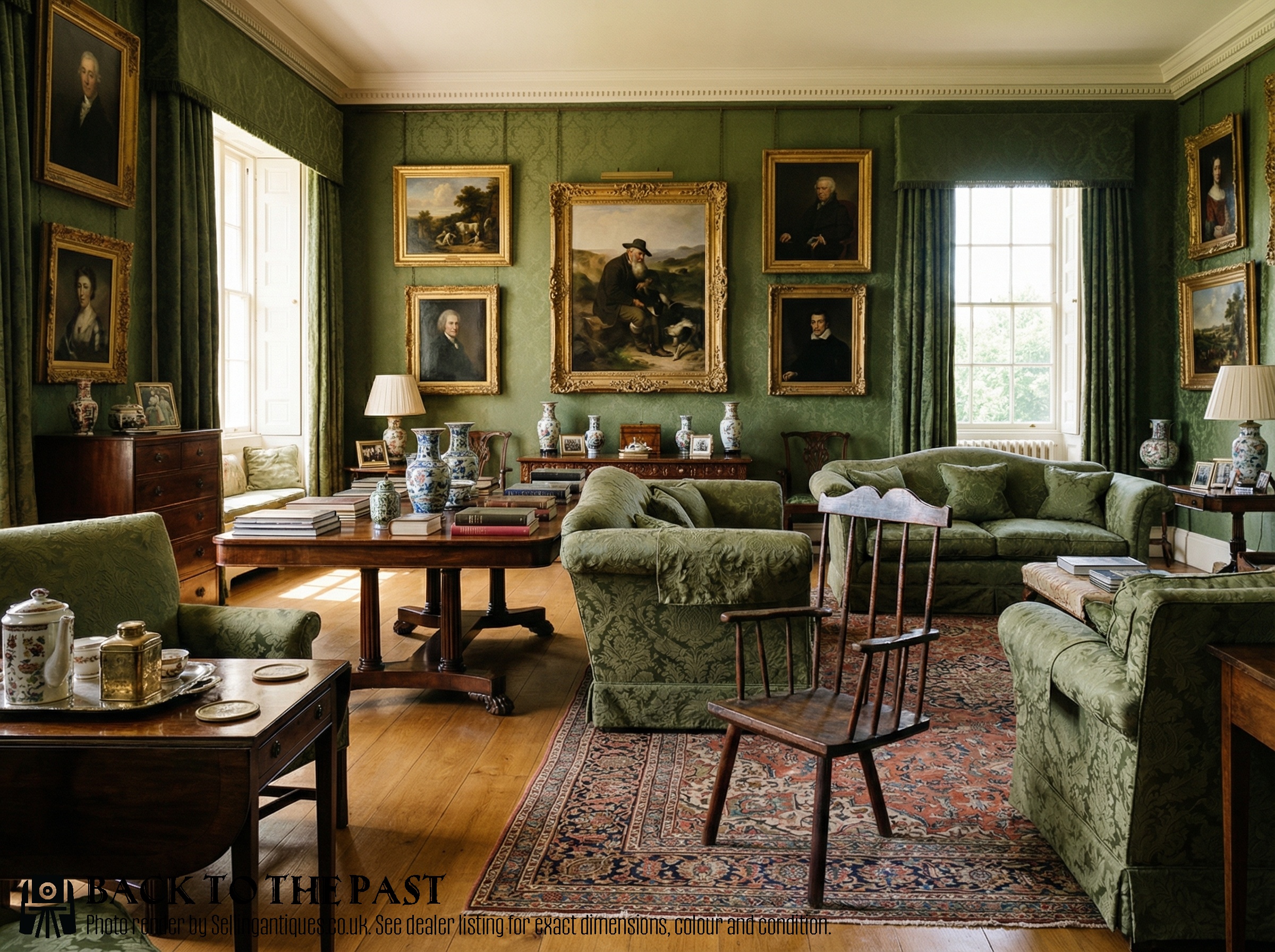
Primitive Vernacular Armchair
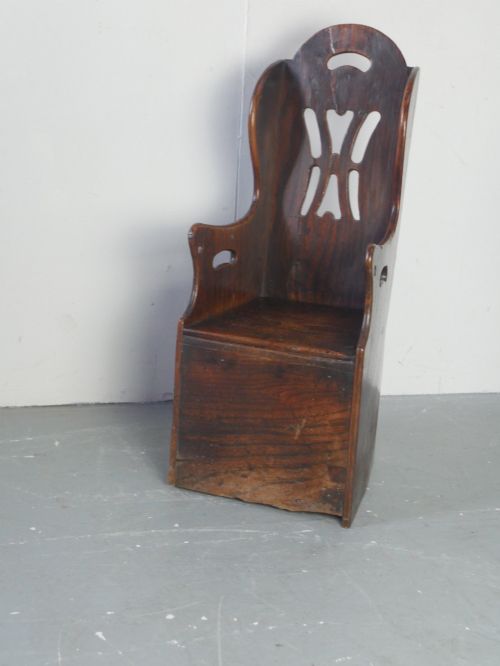
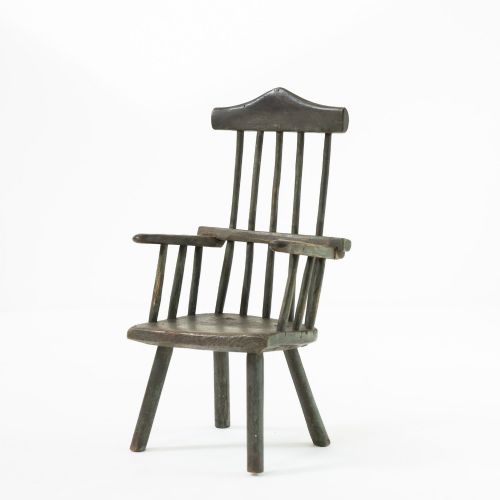
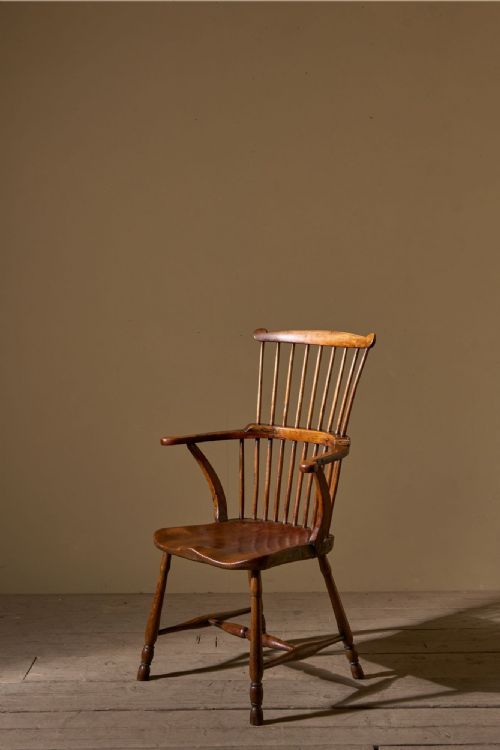
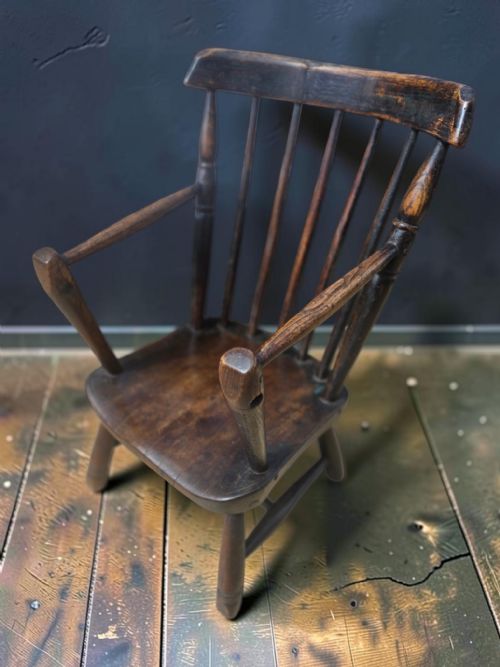
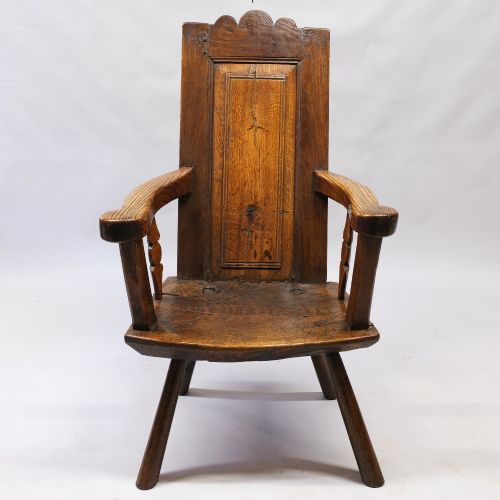
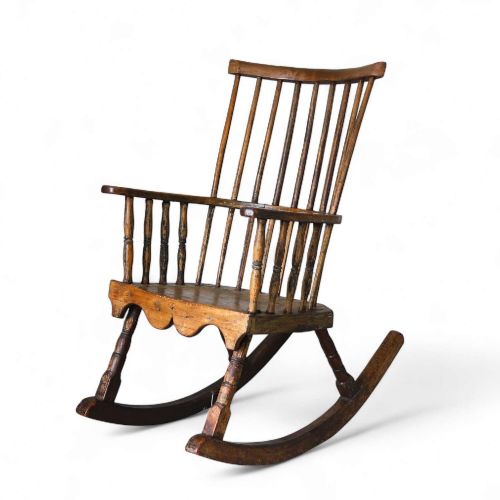
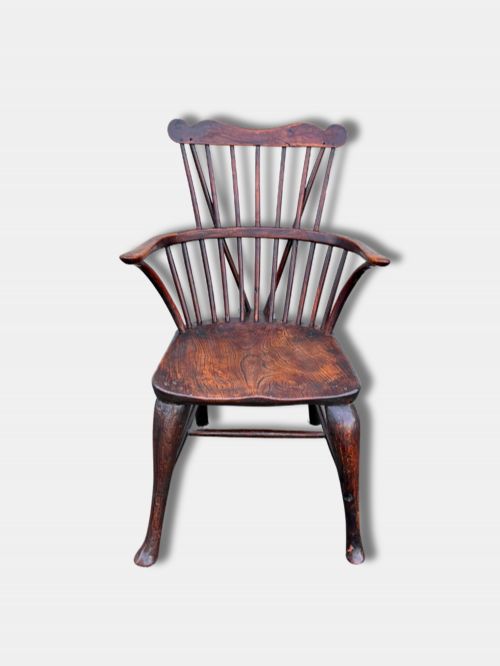
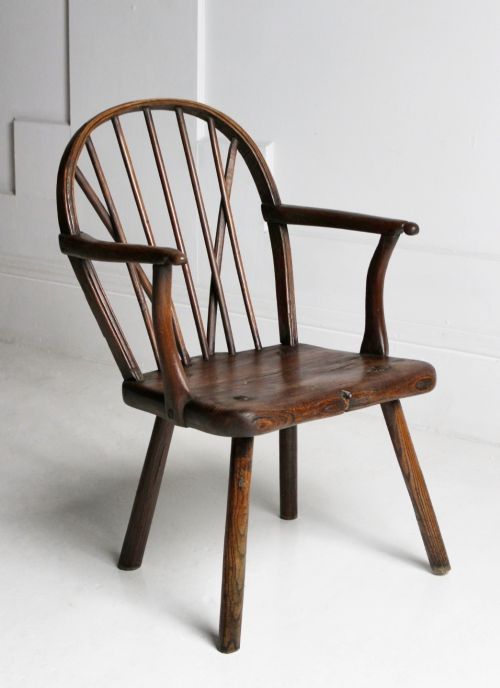
A primitive vernacular armchair represents unpretentious rural seating made across the eighteenth and nineteenth centuries, often taking the form of stick backs, comb backs, and Windsor chairs. These pieces emerge from regional English, Welsh, and Scandinavian traditions, including dug out chairs and child variants.
The versions most commonly met on this page span eighteenth-century and nineteenth-century examples, ranging from Thames Valley Windsors to Welsh stick chairs. Makers built them for utility in farmhouses and cottages rather than grand parlours, utilising whatever local timber came to hand.
Materials and construction
Construction relies on combining different timbers within a single piece, typically pairing a solid elm seat with ash spindles, fruitwood arms, or yew and laburnum accents. Joinery is direct and functional, using unrefined boards and cleft branches shaped by drawknife and adze.
Many examples retain traces of early paint or retain scrubbed bare wood surfaces that expose the natural grain of pine, sycamore, and hardwood. Dug out forms involve hollowing a single log into a monolithic seat, while stick backs wedge turned or cleft spindles directly into heavy wooden slabs.
Several examples feature laburnum wood, prized by country makers for its striking colour contrast despite being notoriously difficult to turn.
Distinctions in quality
Quality rests on the balance of the proportions and the boldness of the turning, distinguishing a well-considered regional chair from a hasty workshop utility piece. Sculptural comfort in the carved seat and the satisfying taper of the stick-back spindles determine the visual presence.
The choice of mixed timbers alters the character, where contrasting grain patterns in burr elm or yew elevate a simple frame. Original surface treatments, such as unstripped old paint or deep patination on bare hardwood, separate pieces that retain their historical integrity from those altered over time.
The Primitive Vernacular Armchair Glossary
- Comb-back
- A Windsor chair variation where the top rail resembles the teeth of a comb, extending the vertical spindles upwards. This regional format appears frequently in English and Welsh country seating.
- Stick back
- A chair construction method where turned or cleft wooden rods form the backrest, fitted directly into a solid timber seat. These pieces rely on simplicity and structural honesty.
- Dug out chair
- A heavy seat hewn from a single solid log rather than assembled from separate boards. This ancient method produces robust, primitive seating forms found in Scandinavian and British traditions.
- Windsor chair
- A form featuring a solid wooden seat into which the legs and back spindles are independently wedged. Country makers adapted these versatile designs with various back styles including hoops and panels.
Primitive Vernacular Armchair: Frequently Asked Questions
How do I care for primitive wood?
Keep these chairs away from direct heat sources and rapid temperature shifts to prevent timber splitting. Feed dry surfaces periodically with traditional beeswax to maintain the patina.
Avoid modern chemical polishes that strip the historic finish. Gentle dusting with a dry cloth preserves the character of the aged wood.
Were these chairs used outdoors?
Country armchairs served primarily inside farmhouses, cottages, and workshops for daily domestic tasks. Their robust construction meant they occasionally moved to porches or outbuildings.
Despite their rustic appearance, they were designed as indoor furniture. Exposure to damp outdoor environments damages the unsealed joints and historic timber.
How can I tell regional styles apart?
Welsh vernacular chairs often feature distinctive stick construction originating from specific valleys like Swansea or Carmarthenshire. Thames Valley Windsors display characteristic turned arm supports and refined wheel-back or comb-back profiles.
Scandinavian examples lean towards heavy dug-out forms utilising local pine. Examining the timber combination reveals the geographic origin and workshop traditions.
Why are some child chairs included?
Country makers produced miniature versions of adult comb-back and stick chairs for domestic use by children. These scaled-down pieces received the same construction care as full-sized armchairs.
Such items demonstrate the versatility of rural workshops catering to the entire household. Their survival reflects the high regard in which domestic items were held.