





Pot Board Sideboard
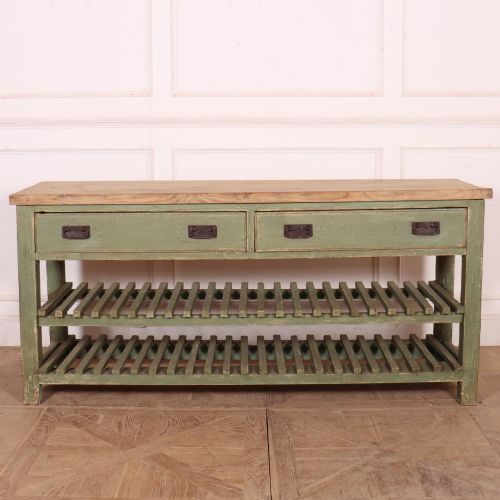
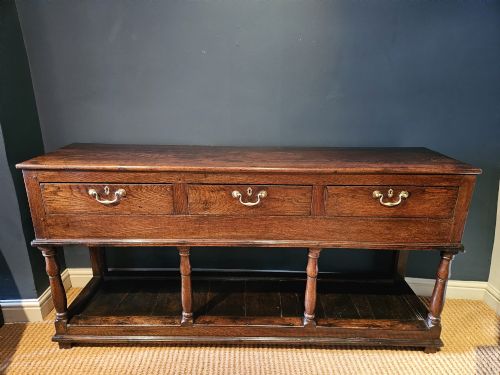
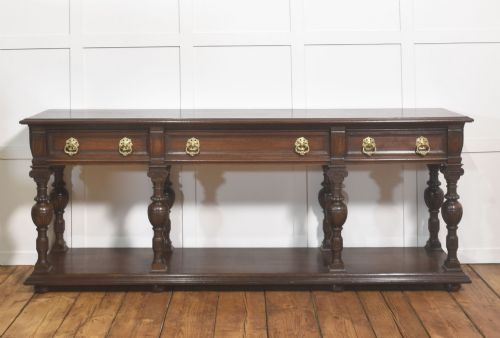
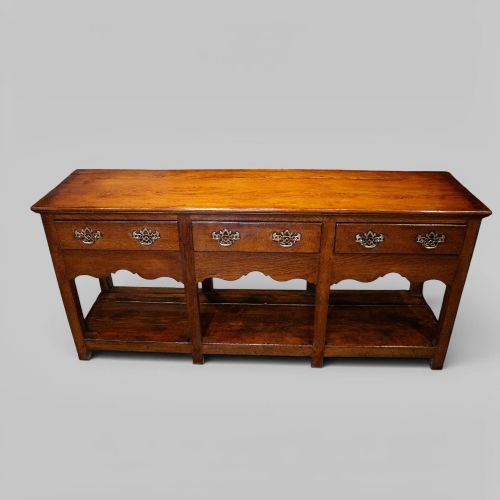
A pot board sideboard is a heavy country timber base with a lower shelf for storage, combining utility and robust joinery.
Pot Board Sideboard
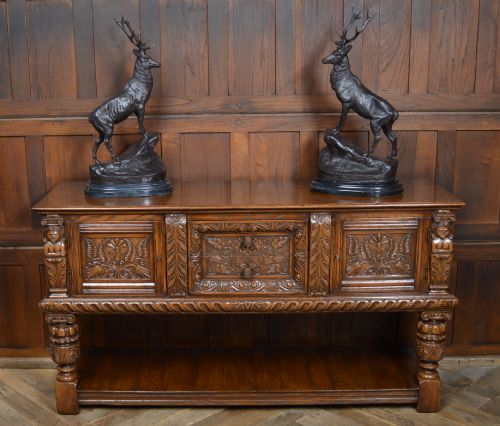
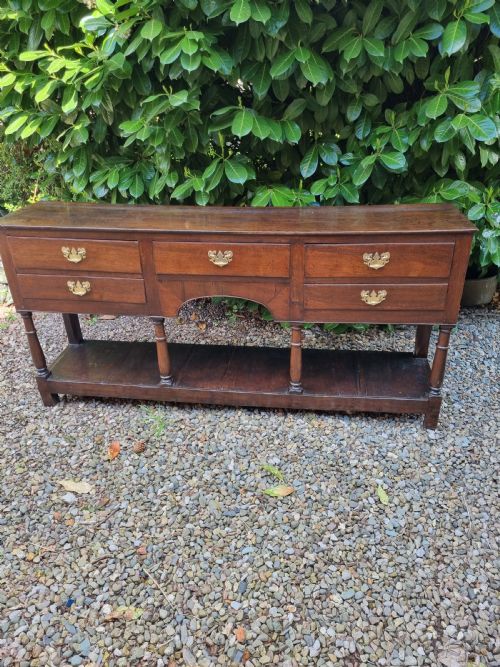
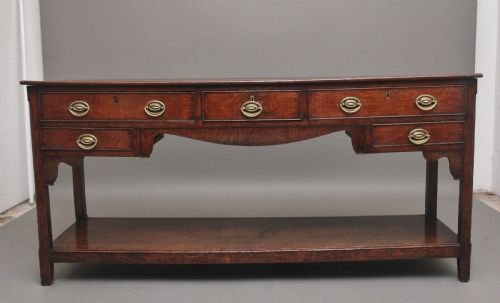
A pot board sideboard typically presents as a low wooden base equipped with a surface for food preparation or display, resting above an open lower platform known as the pot board. These items emerge primarily from 18th century Georgian and 19th century vernacular traditions, often carrying regional associations with Wales and rural English counties.
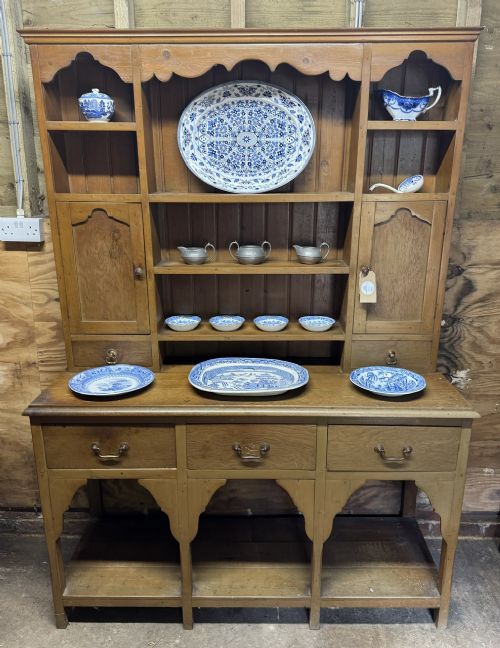
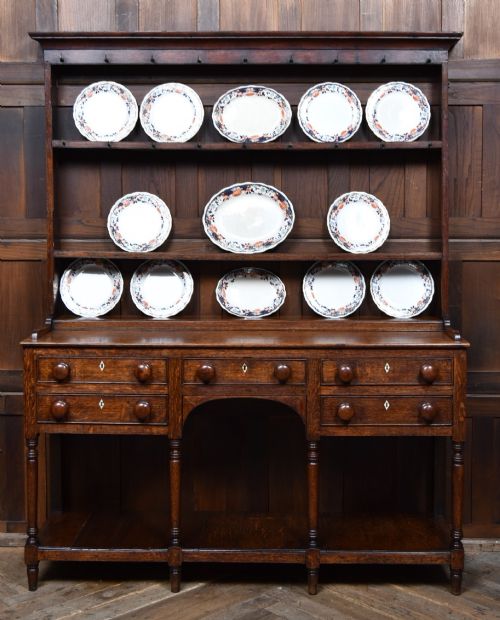
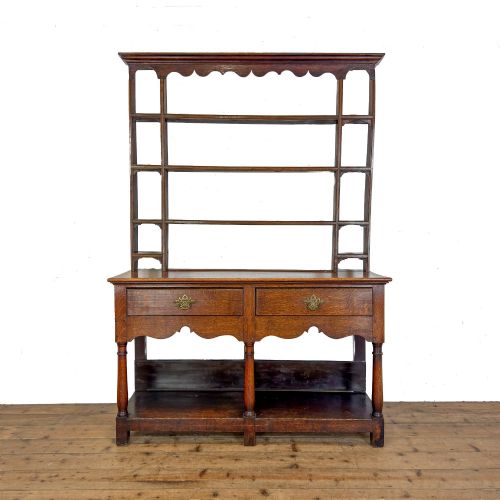
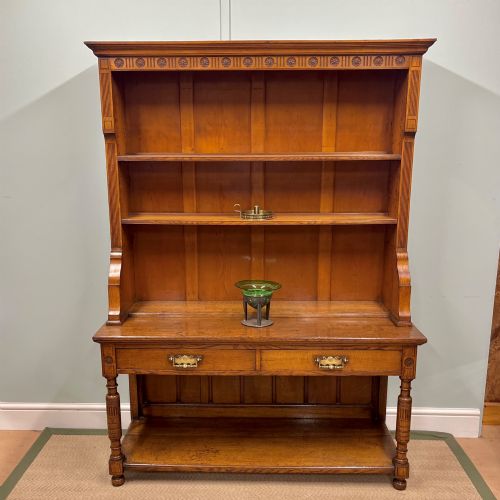
The version most commonly met on this page is the oak dresser base featuring an integrated lower pot shelf and multiple drawers across the upper section. Alongside these low bases, buyers frequently encounter taller Welsh dressers retaining their original upper plate racks, as well as occasional regional buffets and cupboards.
The form developed to serve practical domestic needs in farmhouse kitchens and country houses before finding a place in modern dining spaces and hallways. Surviving examples demonstrate the utilitarian roots of country furniture, shifting from daily workspace storage to decorative antique focal points.
How they were made
Makers constructed these pieces predominantly from solid oak, utilising regional timber grown close to the workshops where the furniture took shape. Secondary woods such as pine appear frequently in internal elements and drawer linings, while occasional pieces show painted finishes or applied brass and iron hardware.
Joinery techniques rely heavily on traditional frame and panel construction, pegged joints, and hand-cut dovetails within the drawer structures. Surfaces finished through decades of waxing develop an original patina that reflects the interaction between simple hand tools and dense native hardwoods.
Generations of heavy kitchen pots resting on the lower shelf left polished hollows in the oak.
What varies in quality
The distinction between standard examples and exceptional ones rests largely on the integrity of the timber and the retention of original surface patination. Pieces that maintain their untouched boards without extensive timber replacement command greater appreciation among serious collectors.
Proportion and scale also dictate quality, as smaller or particularly well-balanced country pieces demonstrate finer cabinet-making ambition than standard utilitarian workshop output. Carved detailing, where present, reveals the skill of the hand that shaped the oak panels.
Liberty of London
The Pot Board Sideboard Glossary
- Pot board
- A low horizontal shelf positioned near the floor beneath the main counter surface of a dresser or sideboard. It provided open storage for heavy pots, pans, and crockery in traditional kitchens.
- Dresser base
- The lower section of a Welsh dresser, functioning as a standalone sideboard with drawers and cupboards above the pot shelf. It served as a primary work surface in country houses.
- Patina
- The deep sheen and surface character acquired by timber through years of handling, polishing, and natural oxidation. Original finishes greatly enhance the visual depth of antique oak.
- Vernacular furniture
- Domestic pieces made by local craftsmen for everyday use, reflecting regional styles rather than academic architectural designs. These items emphasise utility and local materials.
- Dovetail
- A traditional interlocking joint used to secure drawer corners together securely without modern fasteners. Hand-cut variations indicate the period and skill level of the maker.
Pot Board Sideboard: Frequently Asked Questions
What is a pot board sideboard?
A pot board sideboard is a sturdy wooden base featuring a lower shelf designed originally to hold heavy kitchenware. These pieces serve today as practical storage items in dining rooms and hallways.
Most surviving examples date from the Georgian and Victorian eras, constructed primarily from solid oak with traditional hand-cut joinery.
Where were these dressers made?
Many of these pieces originate from rural workshops across Wales and English counties like Lancashire. Regional cabinet makers utilised local hardwoods to build furniture suited to country house kitchens.
Geography heavily influenced style, with Welsh vernacular pieces often displaying distinct proportions compared to English regional equivalents.
How do I date an oak sideboard?
Dating relies on examining construction methods, timber selection, and hardware styles across the piece. Hand-cut dovetails, pegged joints, and integrated pot shelves point toward 18th and early 19th century origins.
Original surface wear and timber shrinkage offer further clues regarding the age and operational history of the sideboard.
Can I use one in a modern kitchen?
These sideboards adapt readily to modern interiors, offering durable surface space and functional storage beneath. The open pot board provides an ideal display area for baskets or large ceramics.
Their solid oak construction ensures they handle daily domestic use just as they did in historic country kitchens.