
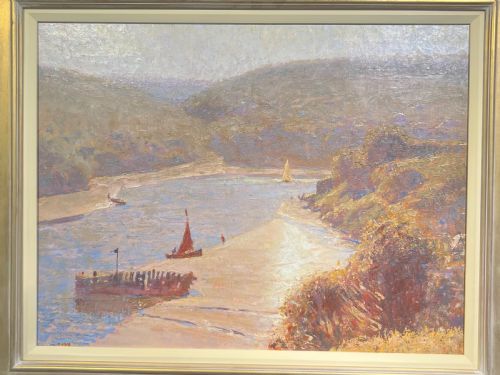


Post Impressionist Seascape
A post impressionist seascape captures coastal light and water through vigorous brushwork, offering buyers a vivid window onto maritime life.
Post Impressionist Seascape
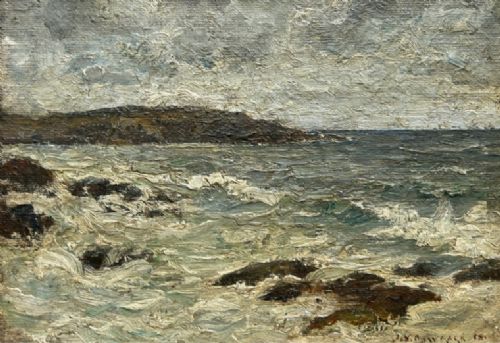
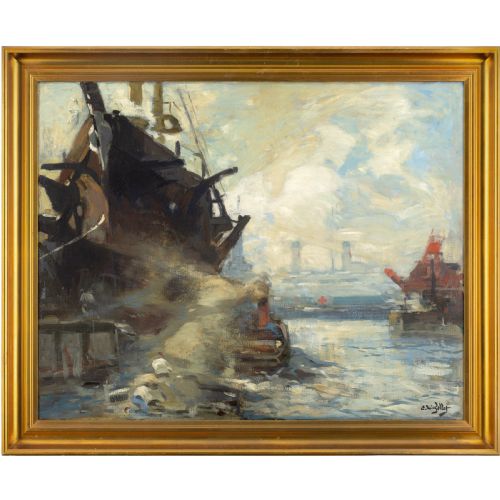
A post impressionist seascape presents coastal views, harbours and marine scenes through the expressive lens of twentieth-century painting. These works range from early depictions around nineteen hundred through to mid-century compositions spanning the nineteen fifties and nineteen sixties.
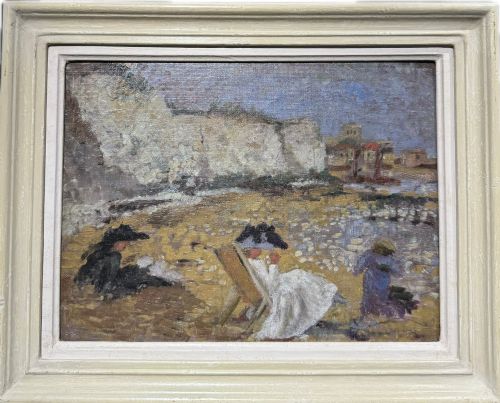
The pieces appearing on this page typically take the form of framed oil paintings on canvas or panel. Subjects frequently encompass French and British coastal locations, from Cornish fishing ports to Mediterranean harbours.
Buyers encounter works created in varied regional traditions, including the St Ives School and French coastal views. Canvas dimensions and framing styles differ widely across these decades.
How these artworks were produced
Artists relied primarily on oil paint applied to canvas or wood panels to build up textured surfaces. Many works incorporate thick impasto techniques that lend physical depth to crashing waves and rocky shorelines.
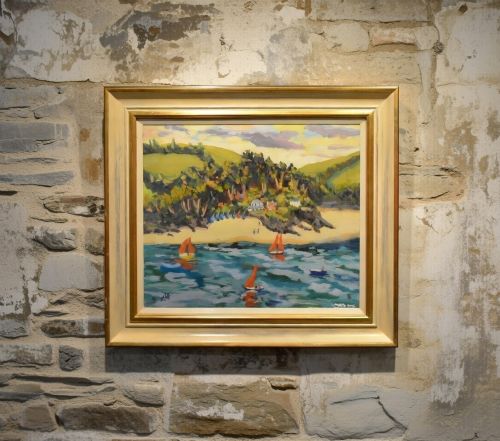
Paintings are frequently housed in gilt or wood frames that complement the canvas. The handling of oil paint allows for expressive brushstrokes that define light and movement across the sea.
Several canvases record artists braving wartime coasts and windy French beaches just to capture the exact shade of a red sail.
What distinguishes finer examples
Quality rests upon the artist's handling of paint and light, distinguishing confident brushwork from rigid application. The vitality of the coastal atmosphere and the structural integrity of the composition dictate the standing of a canvas.
Condition of the oil paint surface and the originality of the frame contribute to the overall integrity of the piece. Works bearing clear attribution to known painters or documented exhibition histories carry distinct documentary weight.
Eugène-Louis Gillot·Louis Suire·Jean-Baptiste Olive·Edward Seago·Donald McIntyre
The Post Impressionist Seascape Glossary
- Impasto
- Paint applied thickly to a canvas, standing out in relief from the plane. This technique adds tactile dimension to representations of water and foam.
- Panel
- A rigid support for painting made from wood rather than stretched fabric. Panels offer a firm ground often utilised in smaller coastal studies.
- Gilt
- A thin layer of gold leaf or gold-coloured pigment applied to frame surfaces. This finish enhances the visual boundary around the oil painting.
- Provenance
- The documented history of ownership and exhibition attached to an artwork. Tracing provenance confirms the authenticity and background of a coastal painting.
Post Impressionist Seascape: Frequently Asked Questions
How do I identify a post impressionist seascape?
These paintings are identified by expressive brushwork, an emphasis on light and colour, and subjects depicting coastal or marine environments. They typically date from the early to mid-twentieth century and often employ oil paint on canvas.
Signatures, framing styles, and exhibition labels on the reverse can provide further context regarding the artist and the specific period of execution.
Where were these coastal scenes usually painted?
Artists painted along various European coastlines, with a strong emphasis on British harbours such as St Ives and Polperro, alongside French locations including Brittany and the French Riviera.
These regions offered distinct qualities of light and maritime activity that suited the post-impressionist approach to landscape painting.
How should I display an oil painting at home?
Oil paintings on canvas require placement away from direct sunlight and excessive humidity to protect the paint surface and support. Proper wall hanging ensures the canvas remains stable over time.
Matching the frame to your interior style helps integrate the artwork into your living space while preserving the historical character of the piece.
What is the difference between impressionism and post-impressionism?
Post-impressionism extends the luminous palette of impressionism while placing greater emphasis on geometric forms, expressive brushwork, and emotional resonance. Artists working in this manner often used thicker paint application and bolder outlines.
In marine subjects, this translates to more dynamic representations of water, skies, and coastal structures rather than strictly optical recordings of light.