
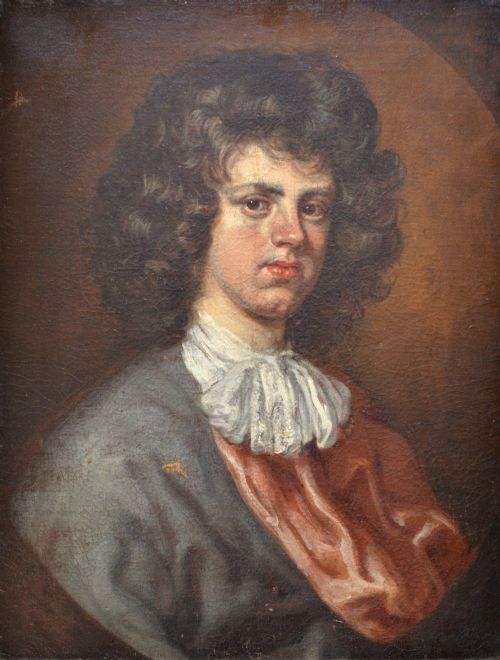
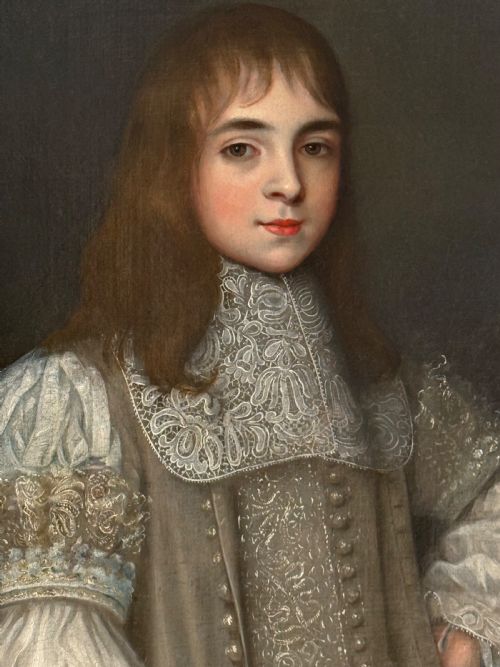


Portrait of Young Gentleman
A portrait of young gentleman captures the likeness and social standing of youth across centuries of painting and drawing.
Portrait of Young Gentleman
A portrait of young gentleman brings centuries of figurative art into focus, spanning from the seventeenth century through to the early twentieth century. The selection ranges from oil paintings on canvas and panel to delicate silhouettes and pastels.
Most examples originate from British and European traditions, reflecting changing fashions in costume from elaborate ruffs to naval jackets and court dress. These works record the changing conventions of youth and status through centuries of portraiture.
Materials and construction
The primary medium across the collection is oil paint applied to canvas or wood panel, often complemented by original giltwood or maple frames. Pastels on paper and ink silhouettes also appear among the varied techniques.
Artists utilised traditional preparation methods, laying canvases over boards or panels in earlier periods before transitioning to standard stretched canvas supports in later centuries.
The listings span from the seventeenth century to the twentieth century, utilising oil, pastel, ink, and canvas.
Distinctions in execution
The preservation of the original surface and the retention of period frames contribute significantly to the standing of an individual work.
Mary Beale·John Michael Wright·Arthur Pond·Frans van der Mijn·John Greenhill·Sir Godfrey Kneller·Thomas Jones Barker·Johann Kerseboom·Thomas Hudson·Frans Pourbus the Younger·Charles D'Agar·Theodore Roussel·Thomas Hickey·Robert Levrac Tournieres·Francesco Trevisani·Sir Henry Raeburn·Francesco Renaldi
The Portrait of Young Gentleman Glossary
- Oil on Canvas
- Pigments bound in a drying oil medium applied to a woven fabric support stretched over a wooden frame. This technique became the dominant format for fine art portraiture from the seventeenth century onward.
- Giltwood
- Wood carved and coated with a thin layer of gold leaf. Frames executed in this material often date to the same period as the canvas they enclose.
- Silhouette
- A portrait represented as a solid shape of a single colour, usually black, showing the profile in outline. These works are frequently cut from paper or painted in ink during the Georgian and Victorian eras.
- Panel
- A flat piece of wood used as a rigid support for painting before canvas gained widespread favour. Panels from the seventeenth century typically display distinct grain patterns and age splitting.
- Doublet
- A man's close-fitting jacket worn during the sixteenth and seventeenth centuries. Its presence helps date early portraits accurately.
Portrait of Young Gentleman: Frequently Asked Questions
How do I date a portrait?
Dating relies heavily on the clothing style, hair fashion, and any accompanying objects held by the sitter, such as books or letters. Costumes changed rapidly across the seventeenth, eighteenth, and nineteenth centuries.
Secondary clues include the type of canvas preparation, frame construction, and pigments used by the artist.
Are these works original?
The selection consists of original period works ranging from the seventeenth century to the twentieth century. Many carry attributions to specific artistic circles or named historical painters.
Signatures, monograms, and period framing help confirm the age and authenticity of individual paintings.
How should I display an oil painting?
Oil paintings require stable environmental conditions away from direct sunlight and extreme temperature fluctuations. Maintaining moderate humidity prevents the canvas and wooden stretcher from warping.
Hanging the piece securely using appropriate hardware ensures the original frame bears the weight safely.
What is a circle attribution?
An attribution to the circle of an artist indicates that the painter worked in the direct style and studio tradition of a recognised master. These works date from the same period and reflect the dominant aesthetic of that workshop.
Such designations help classify pieces created by contemporaries or close followers whose specific individual names are lost.