




Porcelain Pot Pourri Jar
A porcelain pot pourri jar brings scent and decorative elegance into a room through pierced covers designed to release fragrance.
Porcelain Pot Pourri Jar
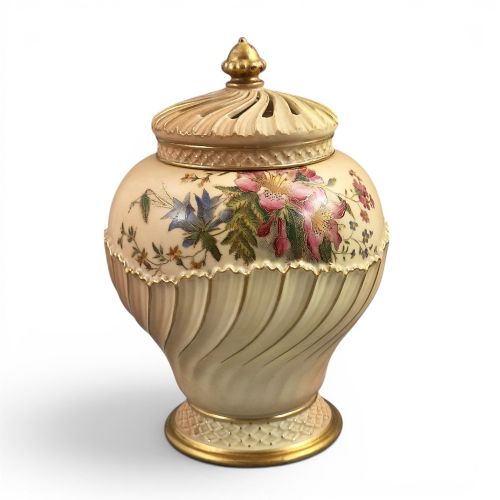
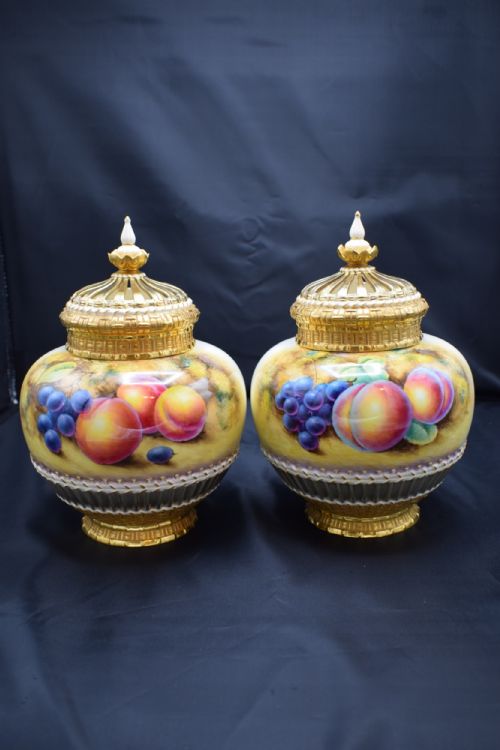
The selections here lean heavily toward English porcelain manufacture, dominated by Royal Worcester productions spanning the Edwardian era through the mid twentieth century. Alongside these factory pieces, French nineteenth-century examples incorporate gilt bronze mountings to elevate the ceramic body.
Common decorative formats include blush ivory grounds, hand-painted fruit studies, and Imari patterns on ironstone bodies. Lids frequently feature crown tops or pierced covers intended to contain the dried botanicals securely inside the jar.
Materials and construction methods
Potters formed these vessels using ceramic paste or refined porcelain, shaping them into ovoid jars, urns, and pedestal vases with matching covers. Pierced openings were cut into the ceramic prior to firing or executed as separate inner liners to hold the aromatic contents.
Surface ornamentation relies on enamel pigments applied by hand, supplemented by gold leaf, gilding, and gilt bronze or ormolu metal mounts. Royal Worcester examples utilise blush ivory glazes and detailed painting by named artists, whereas earlier ironstone pieces employ Imari palette transfers.
Listings span from the nineteenth century through the 1960s, featuring porcelain, gold leaf, enamel, and ormolu materials.
Assessing quality in decorative jars
Quality separates through the execution of the hand-painted decoration, where signed artist work on Royal Worcester pieces commands stronger attention than standard transfer-printed motifs. The crispness of the pierced work on the crown covers and the weight of any bronze or ormolu mounts also indicate superior manufacture.
The integration of the form matters, particularly in multi-piece sets or matched pairs where the proportions and gilding remain uniform across all components. Preservation of the original cover and the condition of the delicate gilt details dictate the standing of an individual piece.
Royal Worcester·Samuel Alcock·Masons Ironstone·Meissen
The Porcelain Pot Pourri Jar Glossary
- Blush ivory
- A soft, matte cream-coloured porcelain glaze developed by Royal Worcester in the late nineteenth century. It frequently serves as a background for floral or botanical painting.
- Crown cover
- A pierced, multi-tiered lid resembling a crown that allows scented air to escape from the body of the jar. These covers often feature detailed gilding or finials.
- Imari
- A decorative style employing deep cobalt blue, iron red, and gilding, originating in Japan and adapted by English makers such as Masons. The palette produces high-contrast geometric and floral motifs.
- Ormolu
- Cast brass or bronze finished with a gold-coloured mercury amalgam or gilt layer, used for mounts and decorative feet on nineteenth-century French porcelain vessels.
- Pot pourri vase
- A covered ceramic vessel specifically constructed with perforated sections to diffuse dried plant fragrances into domestic interiors. Forms range from simple jars to elaborate pedestal urns.
Porcelain Pot Pourri Jar: Frequently Asked Questions
How do I use a pot pourri jar?
Place dried aromatic plant materials inside the ceramic body and secure the pierced cover to let the scent diffuse into the room.
Keep the vessel away from direct sunlight and damp conditions to preserve both the porcelain body and the fragrance inside.
Are pot pourri jars waterproof?
Most antique porcelain jars feature unglazed interiors or construction methods intended strictly for dry botanical mixtures rather than holding fresh water.
Using them for cut flowers risks damaging the antique ceramic body and any historic finishes applied inside.
How do I date Royal Worcester pieces?
Royal Worcester items often carry standard factory date codes stamped underneath, consisting of dots or letters corresponding to specific years of manufacture.
Stylistic shifts, such as the transition from Edwardian blush ivory to mid-century painted fruit studies, also help narrow down the production period.
What is the difference between ironstone and porcelain?
Ironstone is a dense, heavy ceramic developed to resist chipping, whereas true porcelain offers a more translucent body and finer vitreous finish.
Both materials serve as stable foundations for decorative pot pourri jars but present distinct weight and visual textures.