


Porcelain Plaque Furniture
Porcelain plaque furniture brings together cabinet-making and ceramic painting, offering richly decorated surfaces set into woods like walnut, kingwood and satinwood.
Porcelain Plaque Furniture
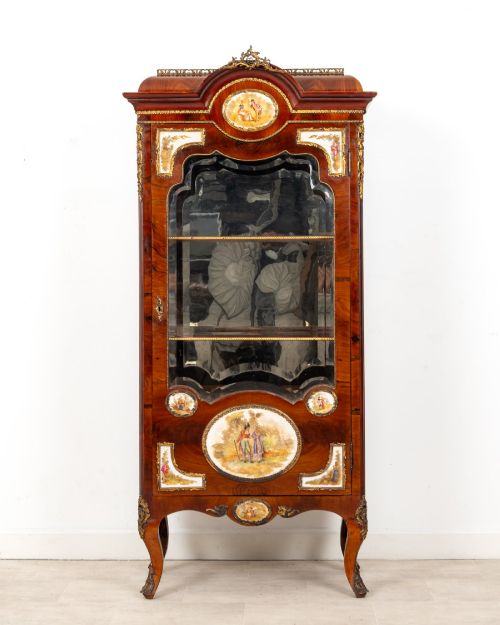
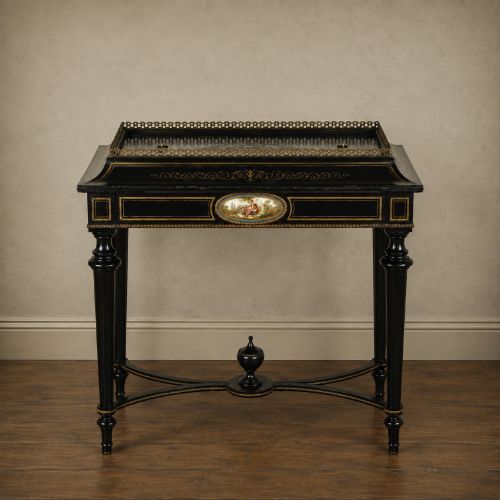
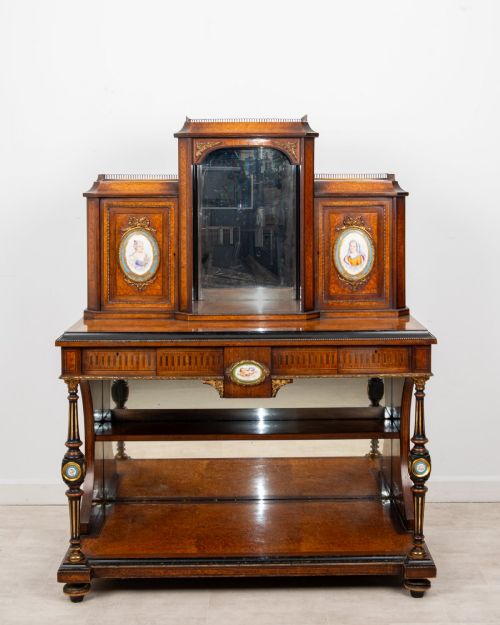
Porcelain plaque furniture encompasses case pieces and tables inset with painted ceramic plaques, which serve as decorative panels within the wooden structure. When searching for porcelain plaque furniture, buyers encounter forms ranging from writing desks and bonheur du jour tables to credenzas, side cabinets and display vitrines.
The pieces appearing here are predominantly of nineteenth-century French and Victorian origin, aligning with historical revivals such as Louis XV and Louis XVI styles. Cabinets, credenzas and writing desks dominate the selection, frequently combining exotic timber veneers with gilt metal mounts.
Smaller decorative items such as jardinière stands, bijouterie tables and occasional work tables also feature within this category. These smaller items demonstrate the same integration of ceramic art and cabinetry as the larger case pieces.
Materials and construction methods
Makers built these pieces using a foundation of solid timbers and applied veneers, selecting walnut, kingwood, amboyna, satinwood and ebonised wood to provide varied surface textures and tones. Ormolu, gilt bronze and brass mounts edge the porcelain plaques and reinforce the structural corners of desks and cabinets.
Painted porcelain plaques, often associated with Sevres-style decoration, were inset into the timber frames and secured alongside metal mounts. Glass panels appear on display cabinets and vitrines, while marble tops finish certain side cabinets and console tables.
Wine coolers and jardinières share the same porcelain plaque treatment as grand salon cabinets, proving the nineteenth century decorated even its potted plants.
Factors of quality and execution
Quality rests upon the execution of the painted ceramic panels and the precision of the cabinet-making. Finer pieces display delicately rendered painted subjects on the porcelain plaques, balanced composition in the timber marquetry and refined chasing on the ormolu mounts.
The choice of underlying timbers and secondary veneers dictates the distinction between standard production and exceptional examples. Superior items utilise richly figured amboyna, satinwood or kingwood alongside substantial gilt bronze mounts rather than simpler brass plating.
Lamb of Manchester
The Porcelain Plaque Furniture Glossary
- Bonheur du jour
- A small ladies writing desk featuring a tiered superstructure with drawers, cupboards or a shelf above the main writing surface. This form frequently incorporates painted porcelain plaques within the fall-front or drawer fronts.
- Ormolu
- Gilt bronze mounts applied to furniture for decorative and protective purposes. The technique involves treating bronze with an acid solution before applying finely ground gold mercury amalgam.
- Credenza
- A low dining room or parlour cabinet used for storage and display. Victorian and French examples often feature central doors inset with porcelain plaques flanked by curved glass end cabinets.
- Marquetry
- The art of applying pieces of veneer to a structure to form decorative patterns and pictorial designs. Cabinet-makers combine contrasting woods such as walnut, rosewood and kingwood to frame the porcelain plaques.
- Bijouterie table
- A glass-topped display table designed to hold small precious objects, medals or jewellery. These tables sometimes incorporate porcelain plaques into the wooden frame beneath the display well.
Porcelain Plaque Furniture: Frequently Asked Questions
How were credenzas used?
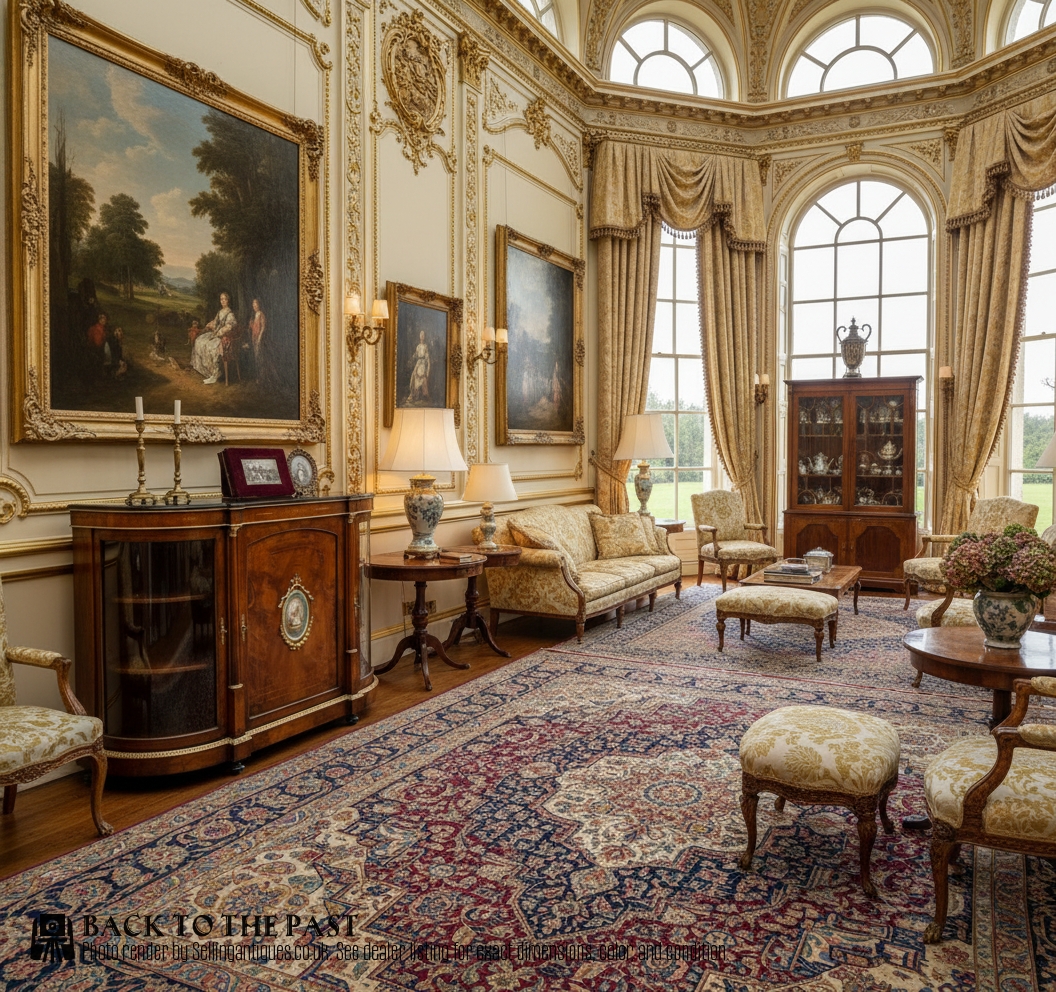
Credenzas served as formal display and storage furniture in nineteenth-century drawing rooms and dining rooms. Their low profile allowed the top surface to display ornaments while the interior stored porcelain or linens.
Versions on this page frequently combine walnut or ebonised wood with Sevres-style porcelain plaques and gilt bronze mounts, creating a decorative focal point against a wall.
How do I care for ebonised wood?
Ebonised wood is timber treated to resemble ebony, requiring gentle dusting with a soft, dry cloth to prevent the accumulation of abrasive particles. Avoid placing these pieces in direct sunlight or near heat sources to protect the dark finish and the surrounding ormolu mounts.
Moisture should be kept away from both the wooden surfaces and the inset porcelain plaques to preserve the integrity of the original adhesives and joints.
What defines Louis XVI style furniture?
Louis XVI style furniture is characterised by straight lines, symmetrical shapes and classical architectural motifs derived from antiquity. Tapered fluted legs and geometric ormolu mounts replace the flowing curves of earlier revival periods.
Pieces in this style within our listings pair these restrained structural lines with painted porcelain plaques and pale satinwood or kingwood veneers.