


Porcelain Maiden Figures
Porcelain maiden figures capture classical grace and romantic poise, offering collectors sculptural elegance in ceramic form.
Porcelain Maiden Figures
Porcelain maiden figures encompass sculptural depictions of women, nymphs, and classical figures modelled in ceramic and parian. Collectors encounter subjects ranging from mythological figures and water carriers to dancers and allegorical representations.
The pieces span periods from the eighteenth century through the Victorian and Edwardian eras into the nineteen-thirties. Victorian and early twentieth-century examples dominate the selection, often reflecting neoclassical and art nouveau tastes.
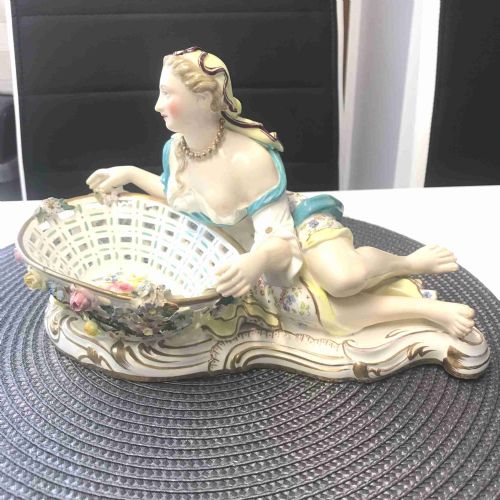
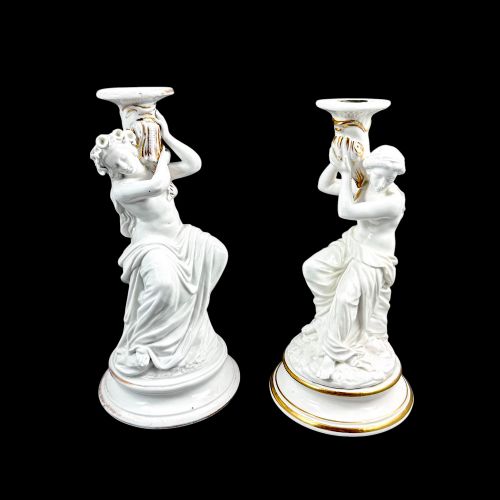
Forms extend beyond standalone figurines to incorporate functional objects such as sweetmeat baskets, spill vases, and figural candlesticks. Makers utilised diverse scales, from cabinet statuettes to monumental centrepieces.
Materials and production methods
Potters utilised standard glazed porcelain alongside unglazed biscuit porcelain and parian ware to achieve varied surface textures. Parian porcelain provided a matte, marble-like finish that suited neoclassical statuary and figural busts.
Artisans applied hand-painted enamel colours and gold leaf highlights to accentuate garments, floral details, and decorative borders. Gilding and gilt bronze mounts frequently complemented the ceramic bodies on candlesticks and centrepieces.
Several maiden figures balance wicker baskets and water jugs, occasionally accompanied by a watchful lizard resting on a tree stump.
Factors distinguishing quality
The crispness of modelling defines the upper tier of figures, where facial expressions, drapery folds, and fingers retain sharp definition without softening from worn moulds. Hand-painted enamel precision and delicate application of gold leaf further elevate the work.
The reputation of the manufactory and the skill of the individual modeller dictate standing within the market. Well-documented models produced by established potteries display superior balance and anatomical proportion compared to generic workshop output.
Royal Dux Bohemia·Royal Worcester·Meissen·Ernst Wahliss·Copeland
The Porcelain Maiden Figures Glossary
- Parian porcelain
- A fine-grained, unglazed porcelain developed in the nineteenth century to imitate white marble. It contains a high proportion of feldspar, which melts during firing to produce a smooth, translucent finish.
- Biscuit porcelain
- Unglazed ceramic fired once before decoration, yielding a matte surface texture. It allows sculptural details to remain crisp and unclouded by glaze.
- Sweetmeat dish
- An ornamental vessel designed for serving small confections or sweetmeats. These pieces often incorporate figural supports or flanking maiden motifs.
- Spill vase
- A small container designed to hold wooden spills used for lighting fires or candles. They frequently take the form of hollow figural sculptures.
- Caryatid
- A sculpted female figure serving as an architectural support in place of a column or pillar. In decorative arts, the form appears on candlesticks and furniture mounts.
Porcelain Maiden Figures: Frequently Asked Questions
How do I clean antique porcelain figures?
Use a soft, dry brush to remove dust from crevices and delicate extremities. Avoid soaking pieces with gilt highlights or enamel decoration in water.
For stubborn dirt, apply a slightly damp cloth with mild soap, testing a small hidden area first. Dry thoroughly with a lint-free cloth.
How can I identify the maker of a figure?
Check the underside for impressed numbers, stamps, or painted factory marks corresponding to known potteries. Pink triangle stamps often indicate early twentieth-century Bohemian production.
Model numbers and registered design marks assist in narrowing down the date of manufacture and the specific atelier.
Where should I display large porcelain figures?
Position monumental pieces and centrepieces on sturdy, stable surfaces away from high-traffic household areas. Enclosed cabinets protect delicate elements like fingers and floral appliques from accidental knocks.
Ensure placement avoids direct sunlight to prevent gradual fading of hand-painted enamel colours over time.