
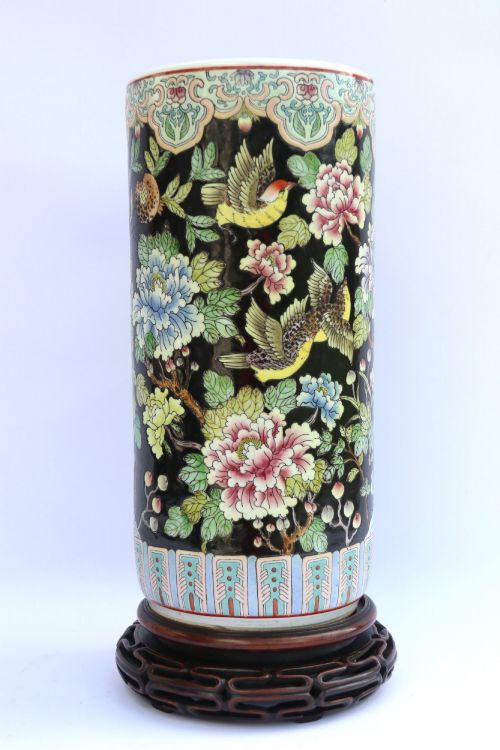


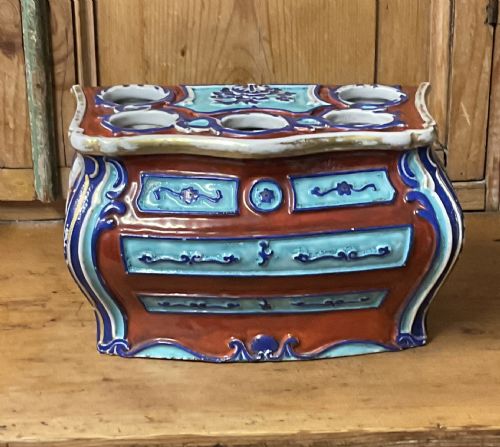

Porcelain Flower Holder
Porcelain flower holder pieces bring domestic floral display into focus, offering sculptural form and hand-painted detail from eras spanning the eighteenth century to the twentieth.
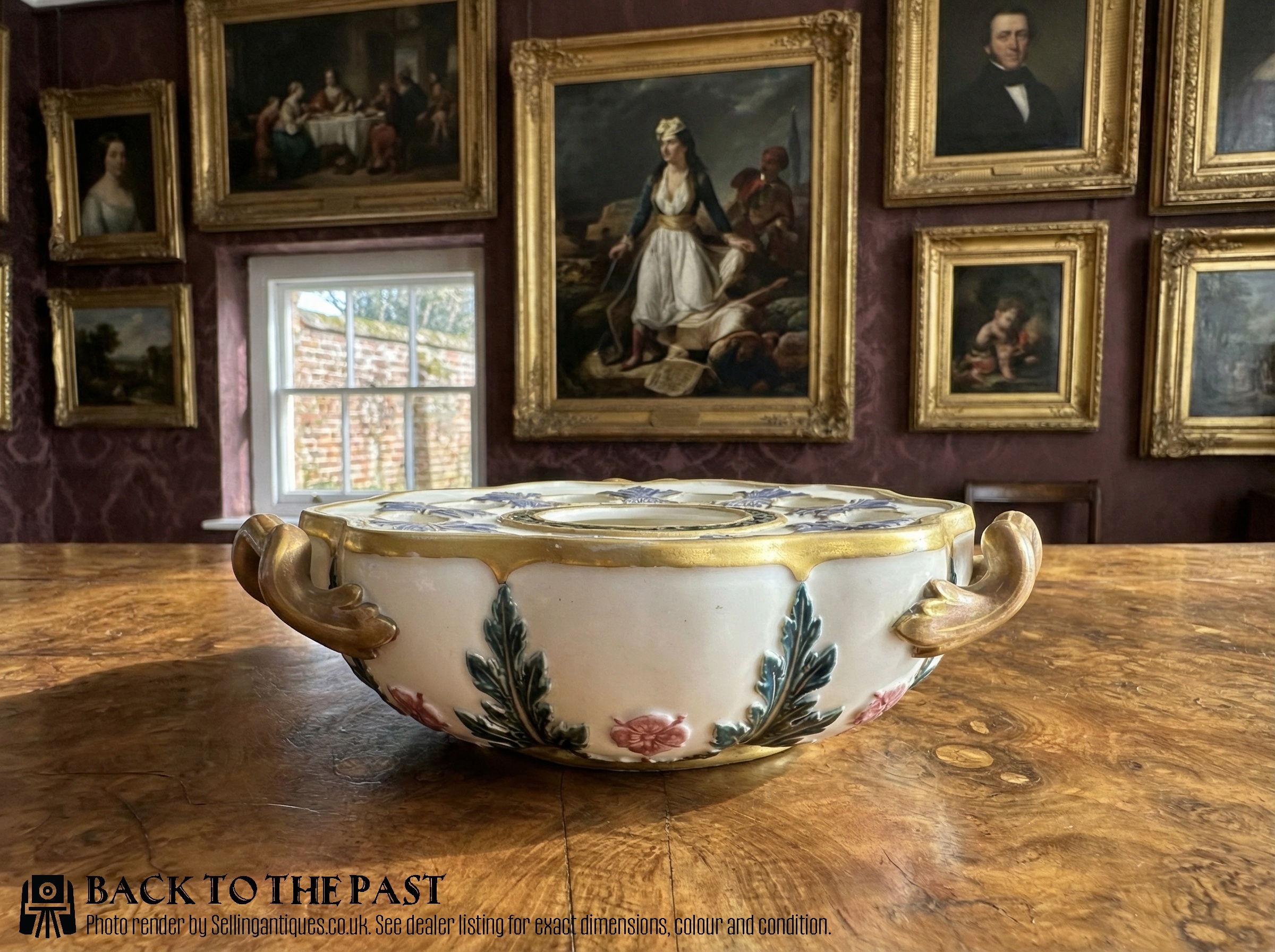
Porcelain Flower Holder
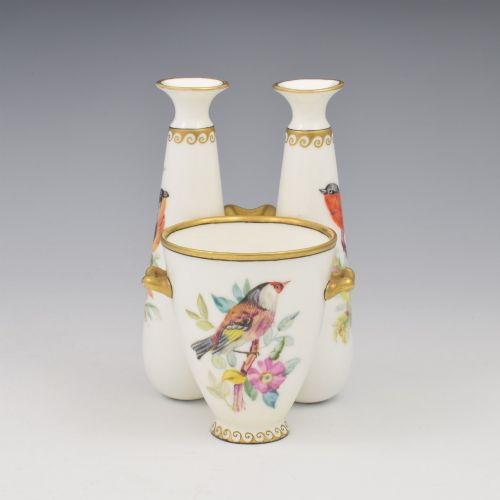
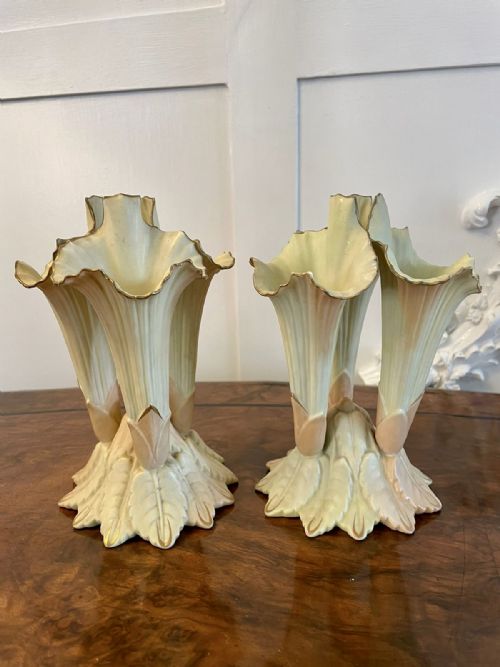
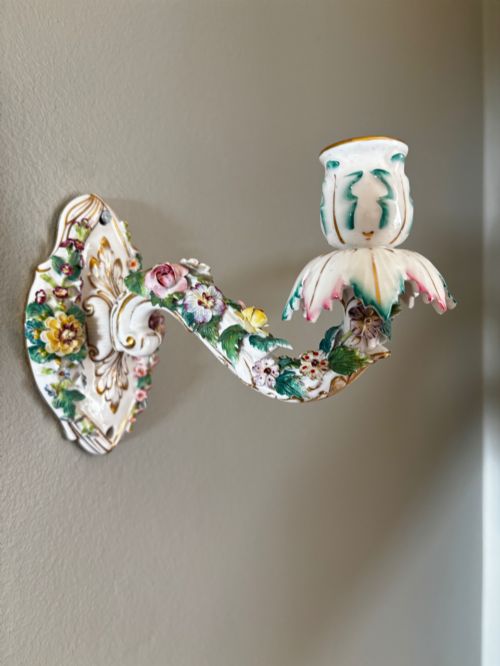
A porcelain flower holder takes many structural forms across the selection, ranging from single spill vases and chambersticks to triple vases, wall sconces, and figural posy holders. Pieces emerge from distinct periods including Georgian, Victorian, Edwardian, and the early twentieth century, alongside Chinese Export and Qing styles.
The most common formats met on this page are spill vases and figural vessels, often featuring hand-painted botanical or ornithological subjects such as highland cattle and birds. Manufacturers span English factories like Royal Worcester, Locke & Co, Minton, and Derby, alongside continental works including Meissen and German Saxony.
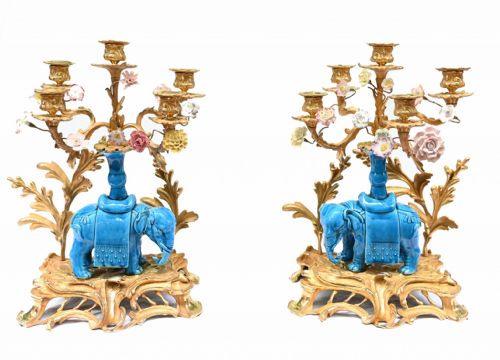
Buyers also encounter more specialised decorative forms, including candelabras, bouquetiere figures, bough pots, and tulipieres paired with hardwood stands. These objects combine utilitarian floral function with intricate sculptural modeling and glazed polychrome decoration.
Materials and manufacturing techniques
Makers utilised hard-paste porcelain and earthenware as the primary ceramic bodies, shaping them through moulding and hand-modelling before firing. Glaze and enamel provide the smooth surface finish and colour across the painted scenes.
Gilding and gold leaf accent borders, rims, and figural elements, often applied by hand to highlight raised portions of the moulding. Ormolu mounts and silver-plated stands occasionally support or frame the ceramic vessels.
Figural compositions and naturalistic subjects rely on detailed overglaze enamel painting, executed by named artists and factory workshops to render plumage, cattle, and floral motifs with precision.
Listings feature hard-paste porcelain, earthenware, and enamel, decorated with gilding, gold leaf, and hand-painted wildlife scenes across Victorian and Edwardian periods.
Evaluating quality and execution
Quality rests in the crispness of the porcelain moulding and the delicacy of the hand-painted detail, where skilled brushwork distinguishes superior artistic output from standard factory production. Hand-applied gilding and enamel preservation retain the visual depth intended by the decorator.
The reputation of the maker and the presence of documented artists or factory marks elevate a piece's standing within its period. Integrated mounts, such as original ormolu and fitted hardwood stands, contribute to the overall integrity of the object.
Royal Worcester·Locke & Co·Meissen·Krister KPM Waldenburg·Royal Doulton
The Porcelain Flower Holder Glossary
- Spill vase
- A tall, narrow vessel designed to hold slender wooden spills used for lighting candles and fires. These tubular containers often feature hand-painted decoration.
- Bouquetiere
- A decorative vessel specifically formed with multiple apertures to arrange cut flowers in distinct stems. Figures are frequently incorporated into the ceramic design.
- Hard-paste porcelain
- A dense, durable ceramic material fired at high temperatures using kaolin and petuntse. It resists scratching and takes glossy glaze evenly.
- Ormolu
- Gilded bronze mounts applied to furniture, clocks, and ceramic objects to provide decorative edging or structural support. The technique involves mercury gilding on bronze.
- Tulipiere
- A multi-spouted vase designed for displaying tulip bulbs individually, originating in seventeenth-century ceramic traditions. Pieces often feature tiered sections for water and stems.
Porcelain Flower Holder: Frequently Asked Questions
What is a porcelain flower holder used for?
These pieces function as decorative vessels for arranging cut stems, holding matches, or brightening a room with painted subjects.
Many designs served specific domestic tasks, such as containing spills for hearth lighting or supporting candles alongside floral displays.
How do I identify the period of a piece?
Dating relies on factory marks, painter signatures, ceramic body composition, and stylistic traits typical of Georgian, Victorian, or Edwardian manufacture.
Examining the application of enamel, glaze texture, and base markings provides direct evidence of the era of production.
Are these pieces fragile for daily use?
Ceramic and porcelain require careful handling, particularly items with delicate fingers, protruding petals, or attached ormolu and metal mounts.
Placing them on stable surfaces away from heavy traffic prevents accidental knocks to fragile rims and handles.
What subjects appear on painted vases?
Decoration frequently draws from the natural world, showing ornithological studies, highland cattle, birds, and floral arrangements.
Some examples incorporate figural groups, children with wheelbarrows, or traditional Chinese motifs derived from Qing and export styles.