


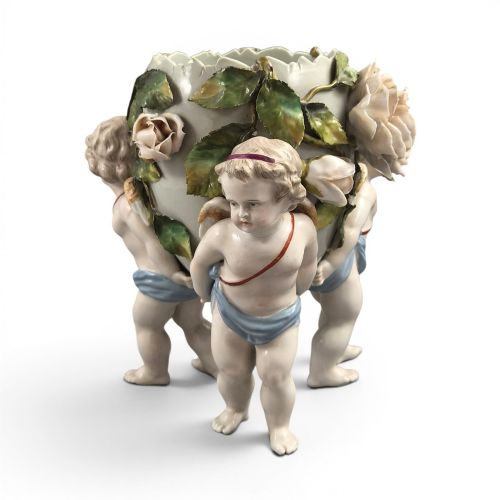


Porcelain Cherub Vases
Porcelain cherub vases combine sculptural figures with ceramic vessels, offering ornamental charm rooted in nineteenth-century continental and British ceramic traditions.
Porcelain Cherub Vases
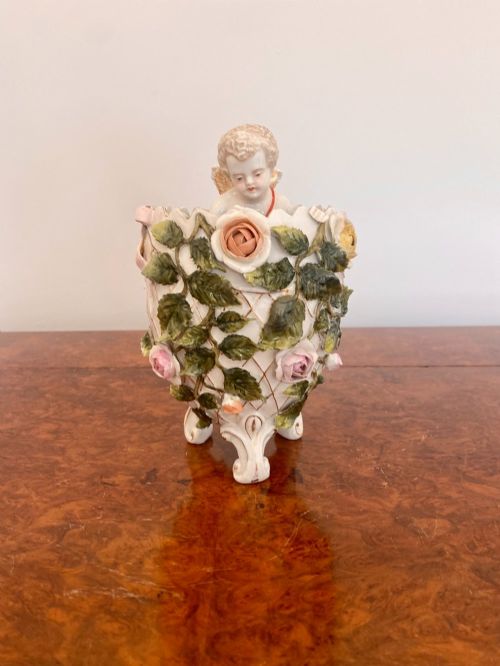
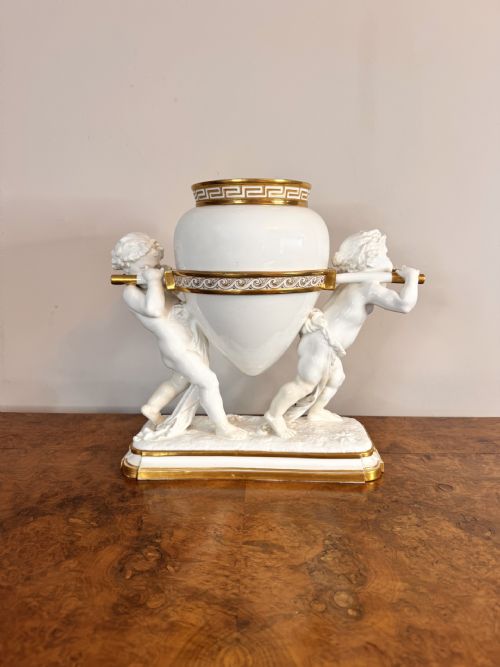
When you search for porcelain cherub vases, you encounter decorative vessels paired with figural ceramic putti from the nineteenth century. These objects include lidded urns, potpourri containers, ewers, and table lamps originating from French, German, and British makers.
The pieces on this page heavily reflect continental workshops and English manufacturers working in revivalist modes. You will frequently find styles ranging from Rococo Revival and Louis XVI to Victorian interpretations involving applied or painted putti.
How they were made
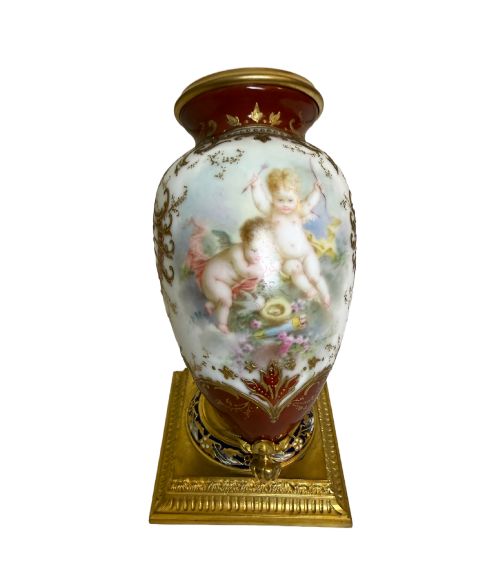
Makers utilised hard-paste porcelain and ceramic bodies shaped into vases, urns, and figural supports. Artisans applied hand-painted details, enamel work, and specialised techniques such as pate-sur-pate to build surface depth and texture.
Metal mounts in gilt bronze, ormolu, and gold leaf frequently accompany the ceramic bodies. These bronze elements secure bases, handles, and rims, adding structural weight and a contrasting metallic lustre to the porcelain.
Porcelain Cherub Vases Retail Price Guide 2026
Typical asking prices for porcelain cherub vases among the pieces listed under this phrase on Sellingantiques today, from the lower quarter to the upper quarter. They describe what is for sale here now, not the wider market.
Cherubs occasionally peek out from inside ceramic vessels rather than merely lounging beside them.
What varies in quality
The integration between the ceramic body and its metal mounts dictates overall craftsmanship. Superior items feature securely fitted ormolu or gilt bronze mounts that complement the porcelain vessel rather than overpowering its form.
Sevres·Samson Paris·Sitzendorf·Meissen·Royal Worcester·Dresden·Minton
The Porcelain Cherub Vases Glossary
- Ormolu
- Gilded bronze mounting applied to furniture and decorative objects. This technique involves an amalgam of mercury and gold applied to a bronze base, creating a durable golden finish.
- Pate-sur-pate
- A ceramic decoration method where successive layers of liquid clay are built up on a coloured body. This creates a low-relief cameo effect before glazing and firing.
- Bleu Celeste
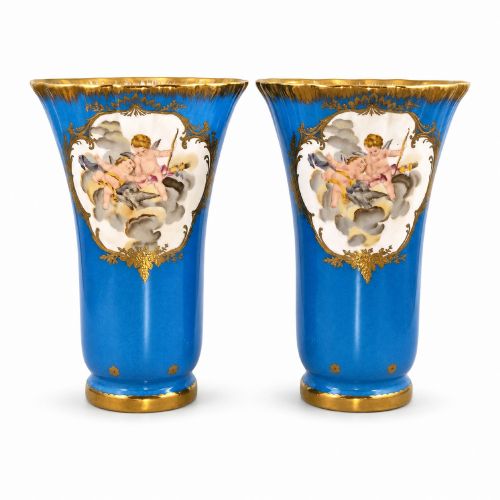
- A bright turquoise blue glaze colour famously utilised by the Sevres porcelain factory. It provides a vibrant backdrop for gilt highlights and painted scenes.
- Potpourri
- A vase or jar designed with a pierced or perforated lid to hold dried fragrant plant material. These vessels often incorporate decorative handles and figural elements.
- Hard-paste porcelain
- A dense, durable ceramic paste composed of kaolin and petuntse fired at high temperatures. It resists scratching and accepts bright enamel colours effectively.
Porcelain Cherub Vases: Frequently Asked Questions
What periods do these vases date to?
The pieces listed across this selection date entirely to the nineteenth century, spanning from approximately 1860 through 1910. This era encompasses Victorian production as well as continental European manufacturing.
Specific dates within titles point to decades such as the 1880s and 1890s, reflecting popular revivalist aesthetics of those periods.
How were these decorative vases used?
These items served primarily as ornamental display pieces on mantelpieces, consoles, and centre tables within nineteenth-century interiors. Certain forms, such as potpourri jars, held scented dried botanicals.
Other variations incorporated functional elements, functioning as lamps, mantel clocks, or ewers alongside purely decorative lidded urns.
How do I identify different styles?
Styles draw heavily on historical European design vocabularies, notably French Rococo Revival and Louis XVI Neoclassicism. You will observe scrolling forms, asymmetrical elements, and classical urn shapes.
Victorian interpretations often blend these continental influences with domestic British manufacturing traits, resulting in diverse decorative outcomes.
What materials are combined with the porcelain?
Gilt bronze and ormolu appear frequently as mounts, bases, and handles supporting the ceramic bodies. Gold leaf and enamel accents also enhance the exterior surfaces.
Makers utilised hard-paste porcelain and standard ceramics for the main body, ensuring durable structures for both figural cherubs and vessel walls.