






Polychrome Rose Medallion Bowl
A polychrome rose medallion bowl brings vibrant Cantonese hand-painted panels and rich gilding straight into a traditional interior.
Polychrome Rose Medallion Bowl
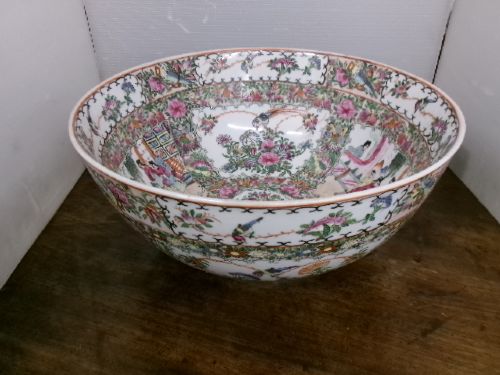
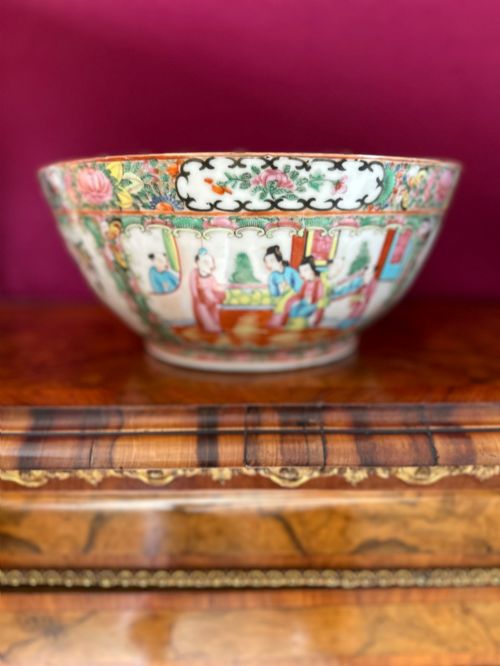
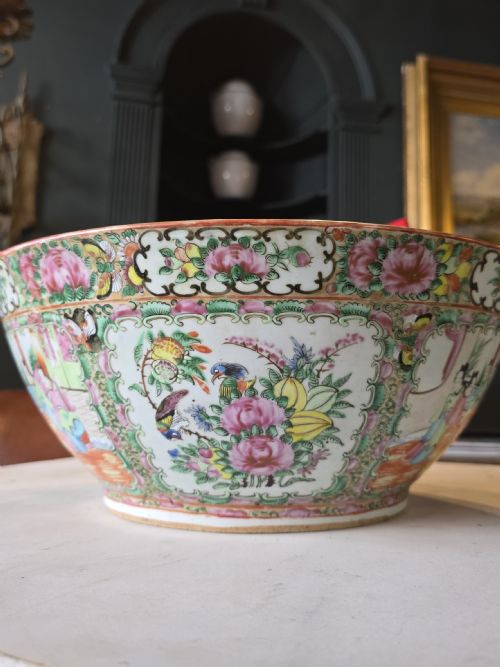
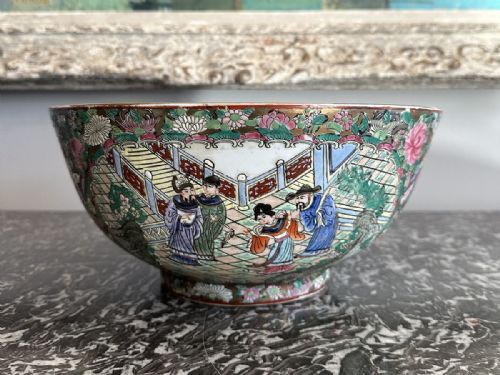
A polychrome rose medallion bowl is a distinctive form of Chinese export porcelain featuring bright overglaze enamel decoration divided into alternating panels. Buyers searching for this phrase seek generous decorative vessels created for export markets during the eighteenth, nineteenth, and early twentieth centuries. The items encountered most frequently on this page date from the nineteenth century, including large punch bowls and centrepiece bowls.
These pieces typically display intricate figural scenes alongside birds, butterflies, and floral arrangements, all rendered in vivid pinks, greens, and golds. Many examples arrive paired with carved hardwood stands or fitted with gilt bronze or ormolu mounts. The forms range from standard decorative bowls to substantial punch bowls measuring up to twenty inches across.
How they were made
Makers utilised fine white porcelain as the canvas, shaping large vessels such as punch bowls and centrepiece bowls by hand before initial firing. Artisans then applied intricate overglaze enamels in bright polychrome palettes, compartmentalising the surface into distinct narrative and botanical panels.
Gold leaf and gilding were meticulously painted onto the rims, borders, and medallion outlines to catch the light. Certain nineteenth-century pieces were subsequently fitted with cast gilt bronze or ormolu mounts to suit Western taste, while others were displayed upon bespoke carved hardwood stands.
Polychrome Rose Medallion Bowl Retail Price Guide 2026
Typical asking prices for polychrome rose medallion bowl among the pieces listed under this phrase on Sellingantiques today, from the lower quarter to the upper quarter. They describe what is for sale here now, not the wider market.
Listings span from the eighteenth century through the Victorian era up to the mid-twentieth century, predominantly utilising porcelain and overglaze enamel.
What varies in quality
Quality in a polychrome rose medallion bowl rests primarily on the crispness and density of the hand-painted enamels and the precision of the gilding. Superior examples exhibit exceptionally fine brushwork within the figural panels, where faces and robes are rendered with sharp definition rather than hurried repetition.
The weight and resonance of the porcelain body, alongside the complexity of the border patterns and the presence of substantial hardwood stands or ormolu mounts, further distinguish the finer pieces in the range.
The Polychrome Rose Medallion Bowl Glossary
- Polychrome
- Decorated in several colours. This multi-coloured enamel technique defines the vibrant appearance of the bowls.
- Famille Rose
- A major palette of Chinese ceramic glazes introduced in the eighteenth century. It is distinguished by its predominant use of opaque pink or rose enamel.
- Overglaze enamel
- Pigments applied over a previously fired and glazed ceramic surface. A subsequent low-temperature firing fuses the colours to the glaze.
- Punch bowl
- A large, deep vessel historically used for mixing and serving alcoholic punch at social gatherings. Many export examples made in China for Western markets take this expansive form.
- Ormolu
- Finely ground and consecrated gold applied to a bronze object. This French mounting technique occasionally appears on nineteenth-century export bowls.
Polychrome Rose Medallion Bowl: Frequently Asked Questions
How are these bowls dated?
Dating relies on stylistic clues, the characteristics of the porcelain body, and the specific vibrancy of the overglaze enamels. Nineteenth-century pieces often display distinct panel layouts and heavier potting.
Changes in trade patterns and export history also help narrow down the decade of production when specific marks or mount styles are present.
Were they made for export?
Yes, these items were specifically produced in China for Western markets, particularly during the Qing dynasty. European and American buyers favoured the intricate storytelling panels and opulent gold detailing.
This export trade resulted in a fusion of traditional Chinese ceramic techniques with decorative preferences popular in Victorian homes.
How do I display a large bowl?
Large punch bowls and centrepiece bowls sit comfortably on sturdy tables, sideboards, or dedicated stands. Many nineteenth-century examples come with carved hardwood bases that elevate the piece and protect the base.
Placement should avoid high-traffic edges where accidental knocks might damage the overglaze enamel or the gilt bronze mounts.
What is Chinese export porcelain?
Chinese export porcelain encompasses ceramic wares manufactured in China specifically for consumption in Europe and the Americas. These items frequently adapted traditional shapes and decorative motifs to satisfy foreign tastes.
The resulting objects bridge Eastern craftsmanship with Western interior design trends from the eighteenth century onward.