


19th Century Ormolu Bowl
A 19th century ormolu bowl brings gilt bronze brilliance and French flair to a grand interior table.
19th Century Ormolu Bowl
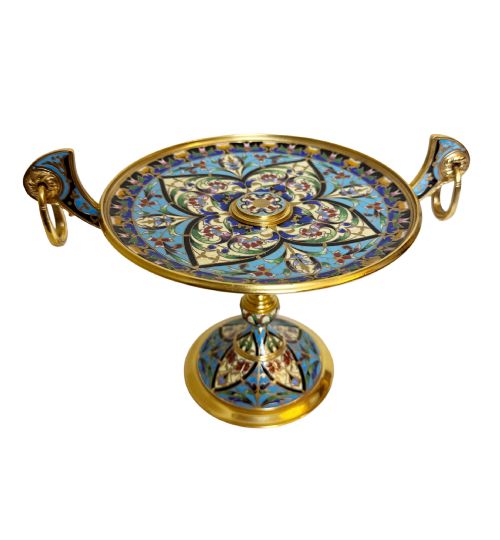
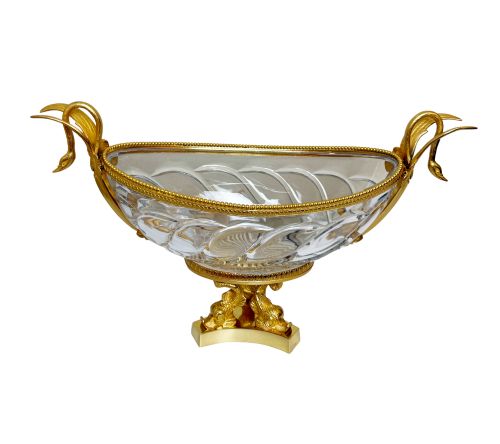
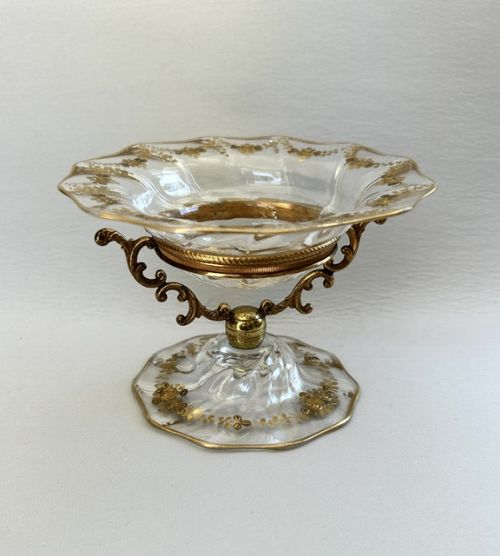
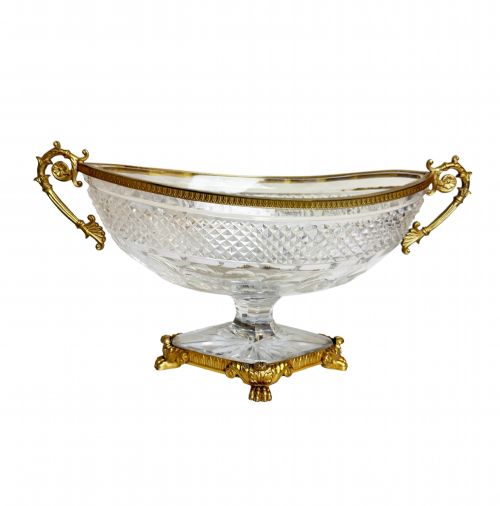
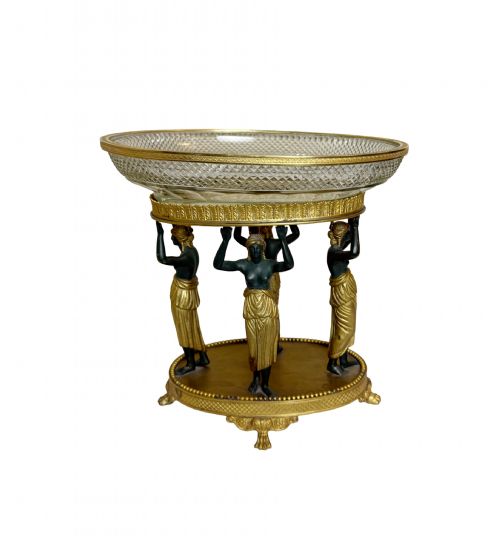
A 19th century ormolu bowl sits at the heart of nineteenth-century display tables, taking the form of large centrepieces, tazzas, comports, and jardinières. Buyers seeking one will mostly encounter French designs spanning the Rococo Revival, Empire, and Belle Epoque periods.
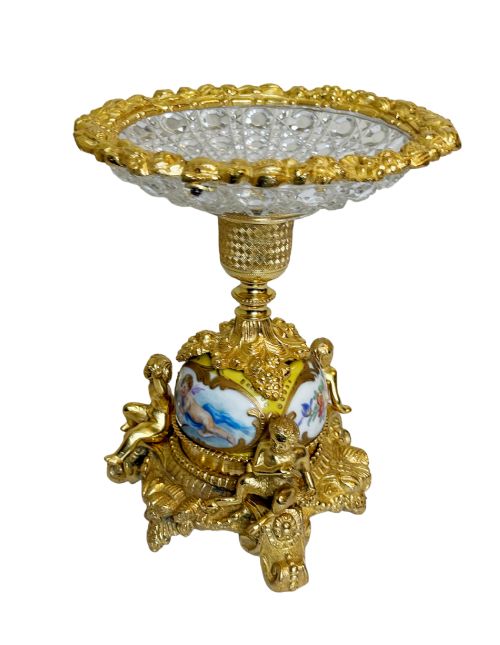
The objects combine gilded metal mounts with vessels made from cut crystal, green onyx, porcelain, and enamel. Many pieces incorporate figural detailing such as cherubs or mermen alongside classical architectural motifs.
Materials and construction
Makers fashioned the metal components using cast bronze treated with an ormolu mercury gilding technique or modern electroplating to achieve a brilliant golden surface. These mounts were then secured to vessels carved from hardstones like onyx and agate, or blown from cut crystal and glass.
Ceramic elements frequently involve Sevres style porcelain, champlevé enamel, and cloisonné work inserted directly into the bronze frames. Artisans combined these disparate media with precise mechanical fixings such as threaded pins and nuts.
The documented pieces span the Regency, Empire, Rococo Revival, Chinoiserie, and Belle Epoque stylistic movements.
Distinctions in quality
Quality rests heavily on the crispness of the bronze chasing, where sharper hand-tooled details in the acanthus leaves and figural hair separate superior casting work from softer commercial output. The weight and clarity of the central vessel, whether flawless cut crystal or hand-painted porcelain, dictate the overall calibre of the piece.
The harmony between the mount and the body reveals the maker's intent, as top-tier examples integrate the ormolu seamlessly with the underlying stone or ceramic without awkward gaps or mismatched proportions.
Christofle Paris·Louis Pierre Malpass·Samson
The 19th Century Ormolu Bowl Glossary
- Ormolu
- Gilt bronze created by applying an amalgam of gold and mercury to cast bronze, then heating to drive off the mercury. This historic method yields a deep, warm lustre that differs from later electroplated finishes.
- Tazza
- A shallow bowl or dish mounted upon a stem and foot, used historically for displaying fruit or sweetmeats. The form derives from classical antiquity and was widely revived during the nineteenth century.
- Champlevé
- An enamelling technique where troughs or cells are hollowed out of a metal surface and filled with vitreous enamel paste before firing. The surrounding metal lines remain visible as a grid.
- Comport
- A decorative pedestal dish or bowl used on formal dining tables for serving fruit or confections. They often match the ceramic or glass styles of surrounding dinner services.
- Jardiniere
- An ornamental receptacle or pot designed to hold growing plants or floral arrangements. In nineteenth-century interiors, these vessels frequently featured elaborate metal mounts and enamel plaques.
19th Century Ormolu Bowl: Frequently Asked Questions
What were 19th century ormolu bowls used for?
These decorative vessels served as centrepieces on dining tables and reception room furniture, holding fruit, flowers, or simply displaying status.
Wealthy households utilised them during formal dinners and grand gatherings to catch the candlelight and impress guests with artistic refinement.
How do I identify French Empire style?
French Empire pieces rely on classical symmetry, military trophies, sphinxes, and crisp geometric lines inspired by ancient Rome and Greece.
The ormolu on these items tends to have a heavy, authoritative presence with a distinct matte and burnished contrast.
What is the difference between ormolu and gilt bronze?
Ormolu specifically refers to gilt bronze produced via the historic mercury amalgamation method common before mid-nineteenth-century restrictions.
Gilt bronze is a broader term that encompasses any bronze object coated in gold, including later electroplated variations.
How should I clean an ormolu bowl?
Dust the piece gently with a soft dry brush, avoiding all commercial metal polishes that can strip the delicate gold layer.
Moisture should be kept away from porous materials like onyx, malachite, and unglazed porcelain components during maintenance.