
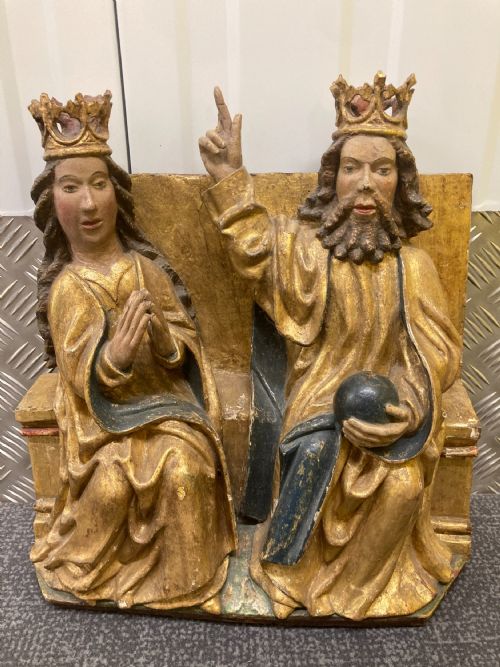


Polychrome Religious Figure
These polychrome religious figures span centuries of devotional carving, bringing sacred presence and painted timber into domestic interiors.
Polychrome Religious Figure
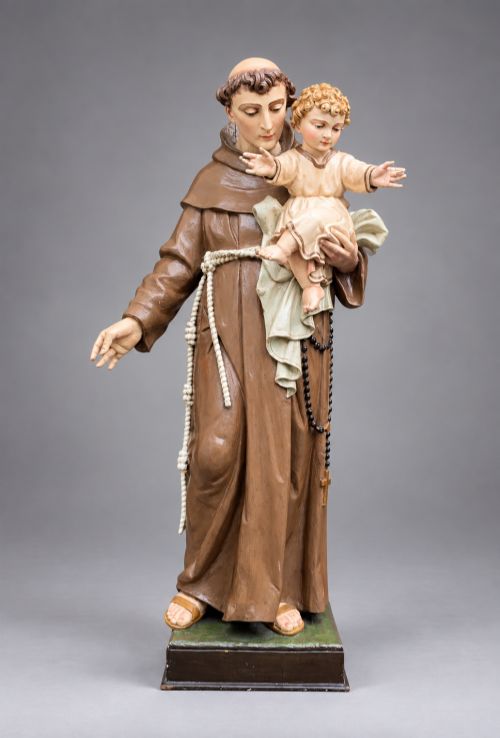
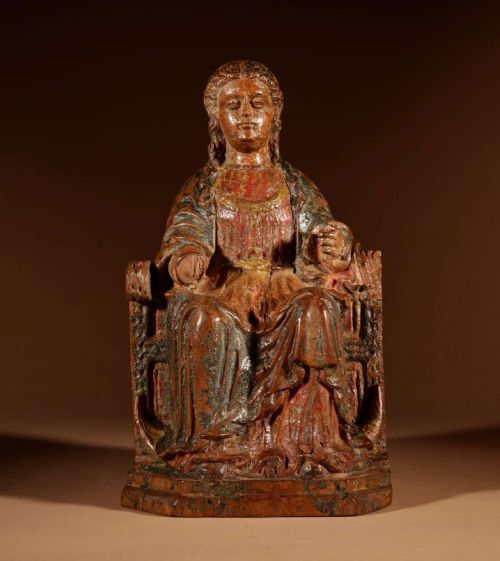
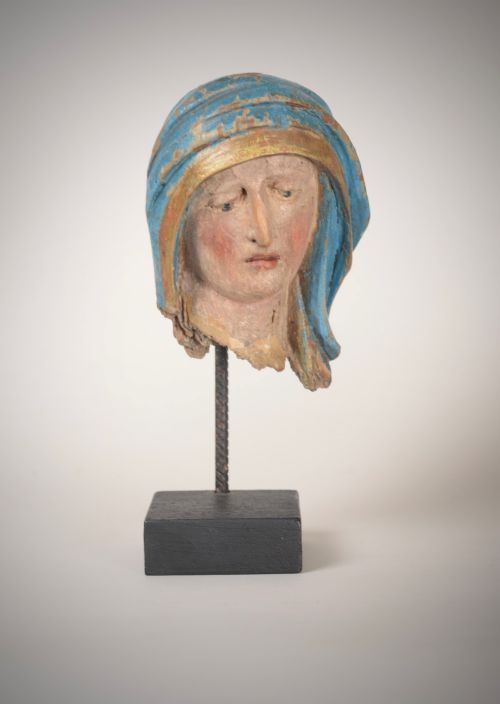
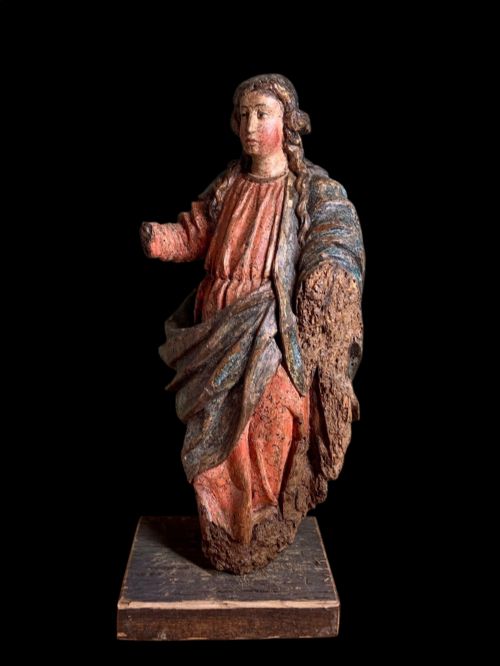
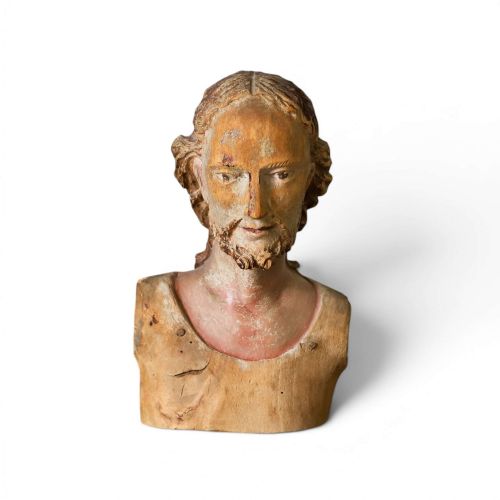
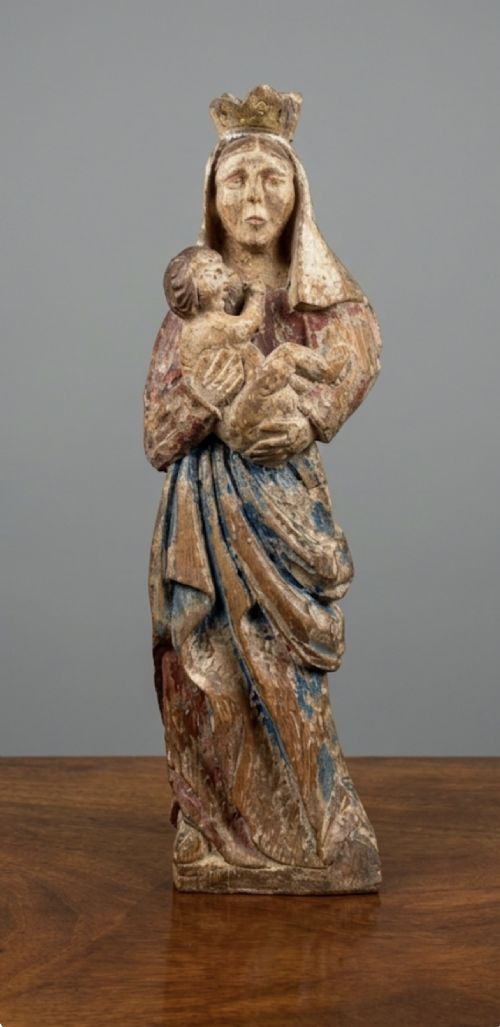
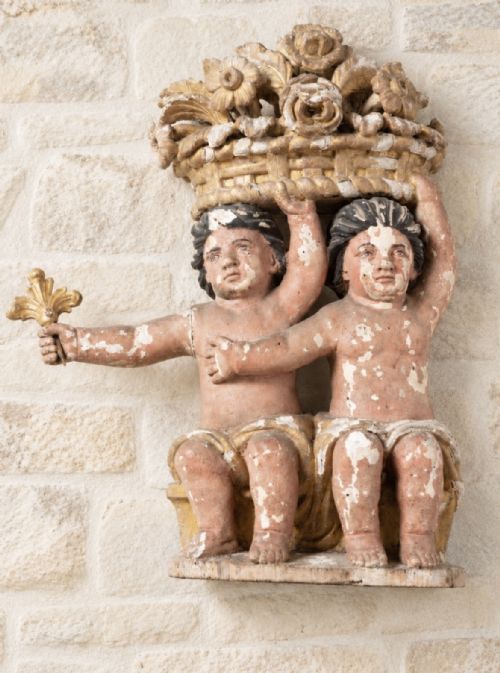
A polychrome religious figure represents sacred subjects ranging from Madonna and child groups to saints, angels, and temple deities. These sculptures appear in various forms, including seated thrones, processional figures, and carved busts spanning from the medieval period through the nineteenth century.
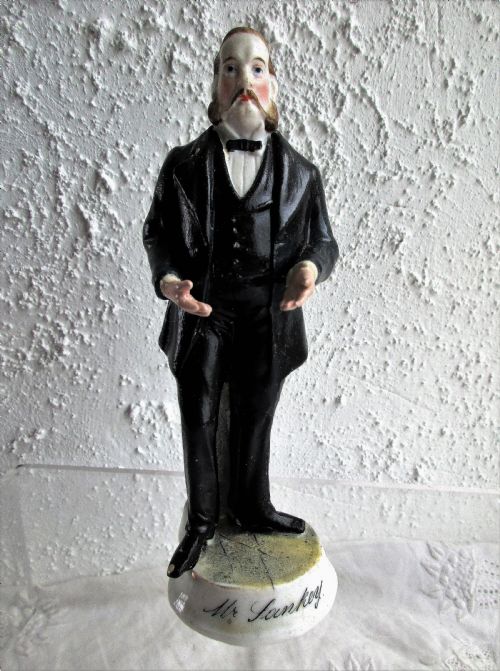
The pieces on this page originate from diverse European traditions like Spanish Baroque and Italian workshops, alongside Chinese temple carvings and English porcelain or earthenware. Wooden sculptures dominate the selection, shaped from walnut, oak, olive wood, and pine before receiving their painted and gilded finishes.
Materials and methods
After carving, artisans applied a preparation layer of gesso to the wood surface to receive polychrome pigment and gold leaf. The application of multiple paint layers and metallic leaf brought depth and luminosity to the garments and flesh tones of each sacred subject.
Listings feature carved wood, gesso, and gold leaf across Renaissance, Baroque, and Gothic styles.
Evaluating the carving
The skill of the original hand determines the success of a carving, seen in the anatomical proportions of hands and faces and the natural fall of textile folds. Pieces executed by trained regional workshops demonstrate superior command of expression compared to simpler vernacular productions.
The survival of the original painted surface and gilt details dictates the visual power of a sculpture. Retaining early pigment layers without extensive modern repainting preserves the intended character and historical integrity of the piece.
George Kemper·Rouillard Angers
The Polychrome Religious Figure Glossary
- Polychrome
- Decorated in multiple colours. This term describes sculpture and woodwork finished with varied pigments and paint.
- Gesso
- A plaster mixture used as a base for paint and gilding. Artisans applied this substance to wooden carvings to create a smooth surface.
- Giltwood
- Wood carved and decorated with gold leaf. This material catches ambient light to highlight sacred figures.
- Capipote
- A Spanish devotional figure with a carved head and hands attached to a framework body. These statues wore real fabric vestments.
- Creche figure
- A sculpture designed for nativity displays. Neapolitan workshops produced these articulated figures for seasonal arrangements.
Polychrome Religious Figure: Frequently Asked Questions
How do I care for wooden religious figures?
Keep these sculptures away from direct sunlight and dramatic changes in temperature to protect the timber and paint layers.
Dust the surface gently with a dry, soft brush rather than using liquids or cleaning products that might harm the gesso.
Where were these statues originally displayed?
Many figures stood in churches, private chapels, or domestic shrines to aid personal prayer and devotion.
Larger temple guardians and processional pieces served ritual functions in communal religious ceremonies and festivals.
How can I tell the age of a carved figure?
Examine the tool marks left on the reverse and base, as hand-chiselled wood differs from later machine shaping.
Study the style of the carving, the ageing of the gesso, and the composition of the underlying wood to indicate the period.
What is the difference between Spanish and Italian styles?
Spanish carvings often display dramatic emotional intensity and naturalistic skin tones associated with Baroque devotional practices.
Italian figures frequently lean towards classical proportions and softer facial expressions derived from Renaissance traditions.