
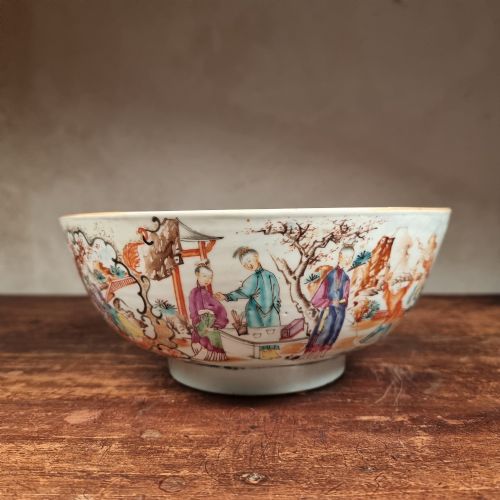
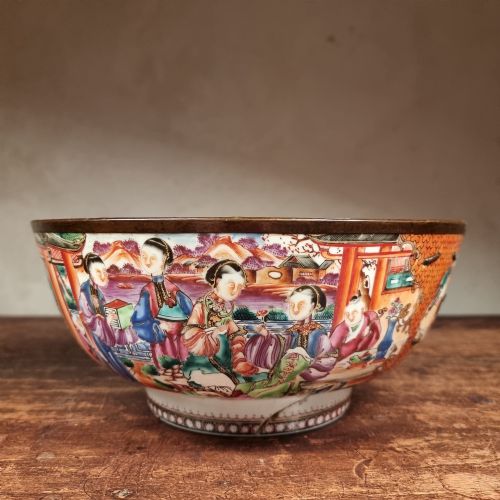



Polychrome Ceramic Punch Bowl
A polychrome ceramic punch bowl brings vibrant painted colour and scale to a room, offering both history and a decorative centrepiece.
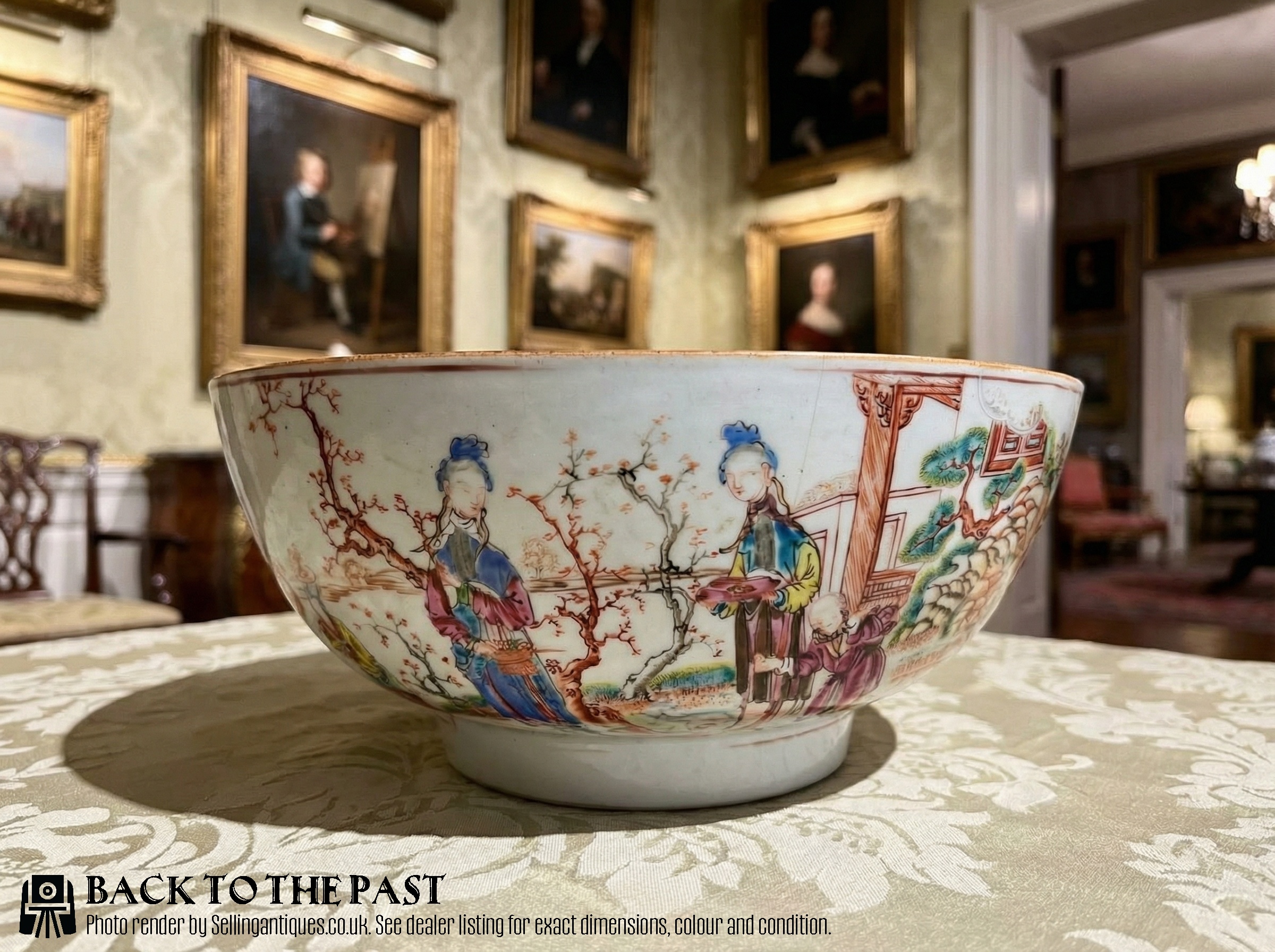
Polychrome Ceramic Punch Bowl
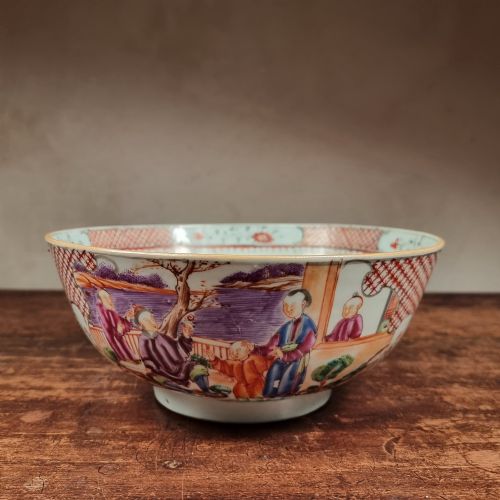
When searching for a polychrome ceramic punch bowl, buyers encounter substantial vessels created for serving drinks or acting as centrepiece bowls. These objects emerge primarily from Chinese Export, Qing Dynasty, and Japanese Imari traditions, alongside continental European porcelain.
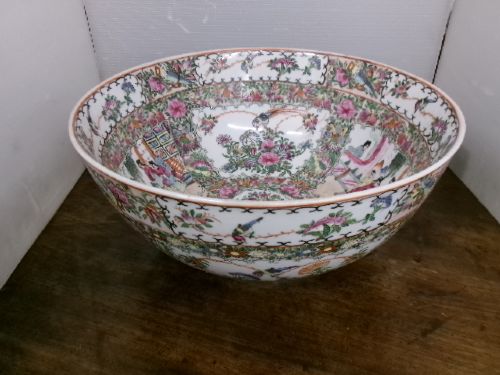
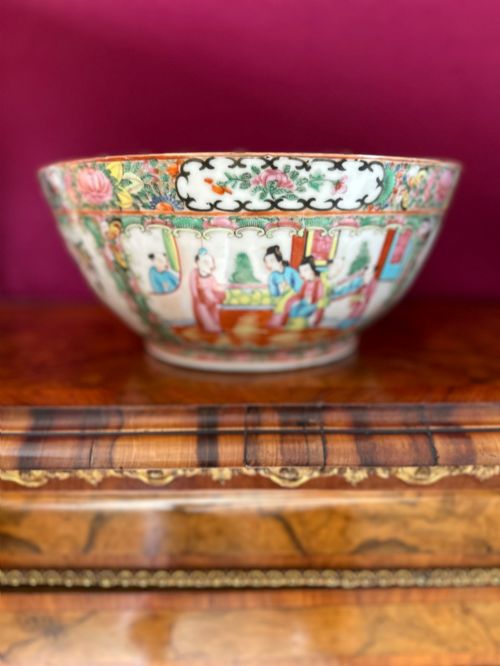
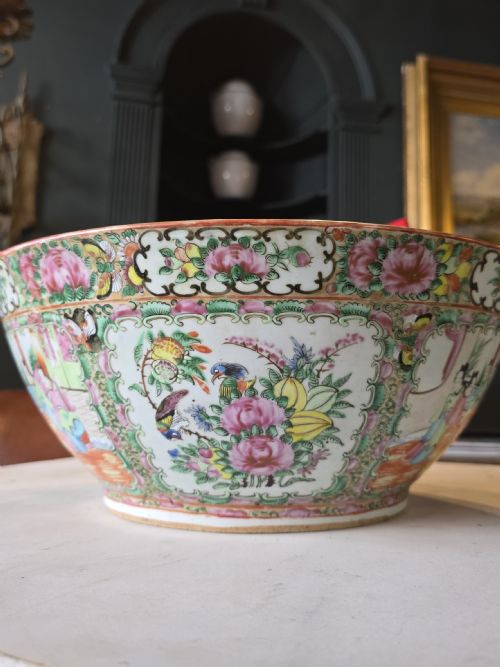
The version most likely to appear on this page is a large nineteenth century Chinese Canton or Rose Medallion bowl, often measuring fifteen inches or more across. Pieces from the eighteenth century or Japanese Satsuma and Meiji periods also surface, alongside English factory work such as Chamberlain Worcester.
Forms range from deep circular punch bowls to scalloped edges and examples mounted in ormolu or accompanied by stands. They serve today as decorative bowls that anchor a table or sideboard with complex narrative painting and generous proportions.
How they were made
Makers utilised ceramic and porcelain bodies, shaping them into large bowls before applying detailed hand-painted designs in enamel colours. Overglaze enamel work allowed artisans to build rich figurative and floral palettes across the exterior and interior surfaces.
Many pieces incorporate gold leaf, gilt, or gilding to highlight borders, panels, and intricate motifs. Some European and export examples additionally integrate cast or half-pierced metalwork galleries and mounts to elevate the presentation of the ceramic.
Materials recorded across the inventory include porcelain, earthenware, enamel, gold leaf, and ormolu mounts.
What varies in quality
Quality rests heavily on the crispness and complexity of the hand-painted polychrome decoration, where finely delineated figures and botanicals distinguish master workshops from simpler output. The density and preservation of the enamel work, together with any applied gilding, determine the visual impact of the surface.
The physical scale and structural integrity of the ceramic body also dictate worth, with large, well-balanced punch bowls requiring considerable skill to fire without distortion. Additional elements such as original ormolu mounts, stands, or pierced metal galleries add distinct layers of craftsmanship to the finished object.
Chamberlain Worcester·Ryuzan
The Polychrome Ceramic Punch Bowl Glossary
- Polychrome
- Decoration executed in multiple enamel colours. This multi-coloured approach defines the vibrant palettes seen across Chinese export and Japanese Satsuma wares.
- Famille rose
- A major palette of Chinese ceramic glazes introduced in the eighteenth century, dominated by opaque pink or rose enamel. The style appears frequently on large punch bowls depicting figures and court scenes.
- Imari
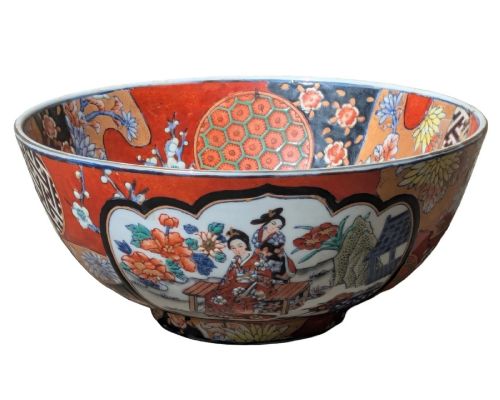
- A style of Japanese export porcelain featuring underglaze blue and overglaze red, gold, and green. These bowls display densely patterned geometric and floral compartments.
- Rose medallion
- A distinctive Chinese Canton pattern characterised by alternating panels of figures and birds, surrounded by flowers and butterflies. Bowls in this style are often exceptionally large.
- Ormolu
- Cast brass that has been gilded, used for decorative mounts and stands. It frequently frames nineteenth century porcelain bowls to enhance their status.
Polychrome Ceramic Punch Bowl: Frequently Asked Questions
How were these punch bowls originally used?
These vessels were designed for mixing and serving communal punch drinks during social gatherings and banquets. Their generous diameters allowed hosts to combine spirits, citrus, water, and spices.
Over time, their role shifted as households displayed them as decorative centrepieces on dining tables or sideboards rather than utilising them for hospitality.
How do I tell Chinese export from Japanese pieces?
Chinese export pieces, particularly Canton and Famille Rose wares, typically feature narrative court scenes, peony blooms, and rose medallion panelling executed in pink and green enamel. The porcelain bodies often have a heavier, chalky feel.
Japanese Imari and Satsuma wares rely on denser geometric patterning, darker iron reds, and heavily crackled cream-coloured earthenware bodies in the case of Satsuma.
What does nineteenth century mean for these bowls?
Objects dated to the nineteenth century encompass the Victorian era, the Qing Dynasty, and the early Meiji period in Japan. During this time, export production for Western markets expanded significantly.
Bowls from this era often display immense scale and highly decorative, multi-panel painting styles intended for international buyers.