



Polychrome Ceramic Bird Figures
Polychrome ceramic bird figures bring bright colour and character to a room, ranging from grand parrots to pairs of ducks.
Polychrome Ceramic Bird Figures
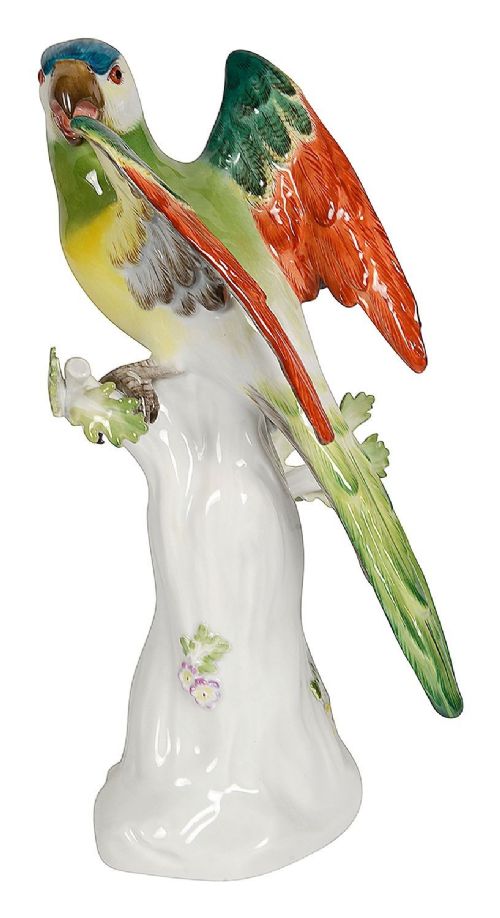
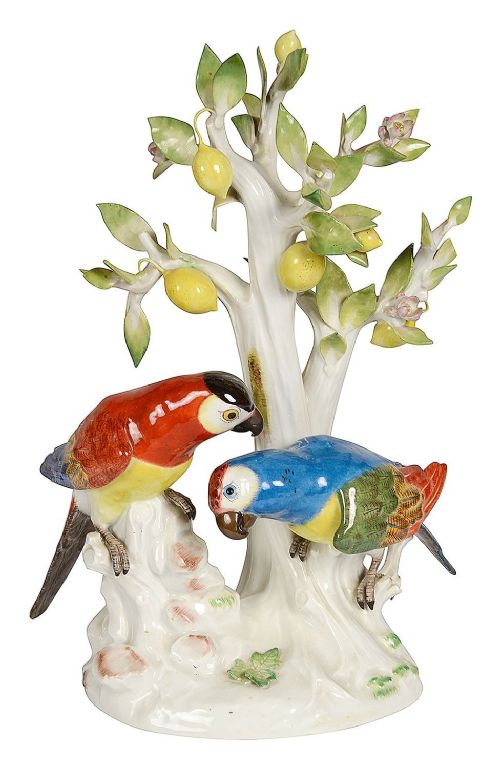
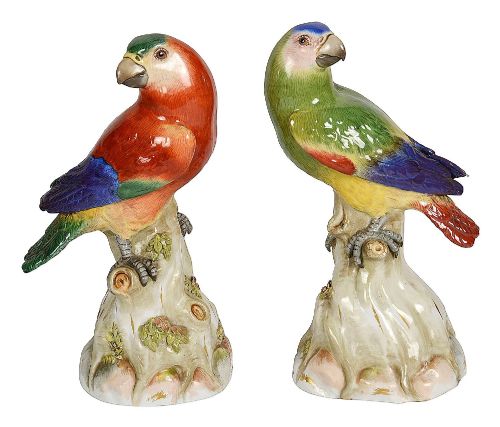
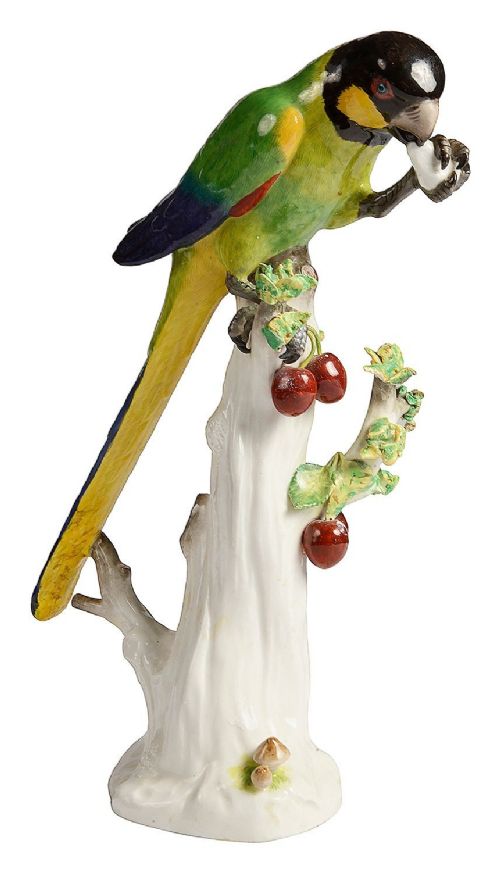
When you search for polychrome ceramic bird figures, you encounter an array of glazed porcelain, faience and delftware forms produced across several centuries. These decorative objects take the shape of parrots, ducks, pheasants, partridges and dogs with birds, modelled as single figures, pairs or functional items like tureens and candlesticks.
The versions you are most likely to meet on this page lean heavily towards nineteenth-century Meissen porcelain parrots, alongside eighteenth-century Spanish faience partridge-tureens, Dutch delftware vases and Chinese export pieces. They span periods from the Georgian era through to the late nineteenth century, reflecting diverse European and Asian decorative traditions.
How they were made
Makers shaped these figures from hard-paste and soft-paste porcelain, faience and delftware, often applying overglaze enamel or sancai glaze to achieve vibrant colouration. Some pieces incorporate wooden elements alongside the ceramic body, while others utilise complex moulding techniques to render intricate details like tree trunks, lemon trees and feathered plumage.
The application of enamel glaze requires precise firing to bond the rich pigments to the ceramic surface. Artisans painted each feather and facial feature by hand, ensuring that the polychrome palette remained vivid across centuries of display.
Polychrome Ceramic Bird Figures Retail Price Guide 2026
Typical asking prices for polychrome ceramic bird figures among the pieces listed under this phrase on Sellingantiques today, from the lower quarter to the upper quarter. They describe what is for sale here now, not the wider market.
Listings feature hard-paste porcelain, soft-paste porcelain, faience and delftware across the eighteenth and nineteenth centuries.
What varies in quality
The distinction between standard and superior pieces rests upon the precision of the modelling and the vibrancy of the hand-painted enamel. Master modellers captured naturalistic postures and lively expressions, whereas lesser examples can appear stiff or heavily formulaic in their execution.
Scale and complexity also dictate the standing of a piece within the range, particularly with large pairs or elaborate multi-figure compositions set against naturalistic backgrounds like lemon trees. The depth of the glaze and the crispness of the firing define the visual success of the surface.
Meissen·Derby Porcelain·Delftware
The Polychrome Ceramic Bird Figures Glossary
- Polychrome
- Decorated in several colours. This term describes ceramics painted with a varied palette of enamel pigments.
- Hard-paste porcelain
- A durable ceramic material composed of kaolin and petuntse. It fires at very high temperatures to create a dense, vitrified body.
- Faience
- Tin-glazed earthenware produced in Europe. It provides an opaque white surface suitable for colourful painted decoration.
- Sancai
- A three-colour glaze technique characteristic of Chinese ceramics. It typically employs green, amber and cream tones.
- Overglaze enamel
- Pigments applied on top of a fired glaze and fixed with a second, lower-temperature firing. This method preserves bright, glossy hues.
Polychrome Ceramic Bird Figures: Frequently Asked Questions
What are polychrome ceramic bird figures?
These pieces are decorative ceramic sculptures and vessels modelled in the shape of birds, painted in multiple colours.
They include freestanding parrots, partridge tureens and pheasants produced by European and Asian factories.
How were these bird figures used?
Owners placed them on mantelpieces, sideboards and dining tables as decorative ornaments to display wealth and taste.
Some objects, such as partridge-tureens and delftware vases, combined sculptural bird forms with practical utility for serving or display.
How do I date an antique ceramic bird?
Dating relies on examining the paste, glaze characteristics, painting style and any factory marks present on the base.
Comparing the modelling conventions against documented periods like Georgian or late nineteenth-century production helps establish age.
How do I care for antique ceramic birds?
Keep them away from direct sunlight and dust them gently with a soft, dry brush.
Avoid using liquid cleaners on overglaze enamels or wooden components to prevent surface damage.