



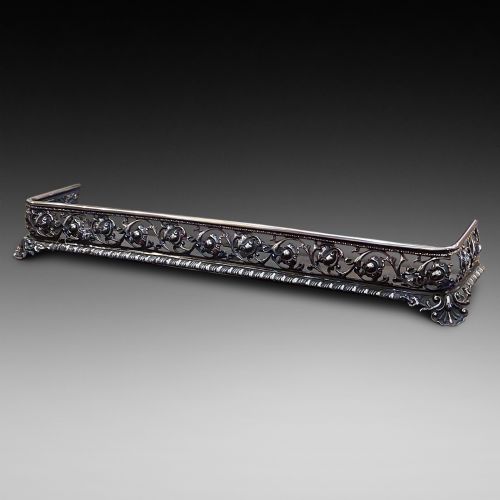
Polished Steel Hearth Guard
A polished steel hearth guard frames the fireplace with bright metal, protecting the room and catching the warmth of the fire.
Polished Steel Hearth Guard
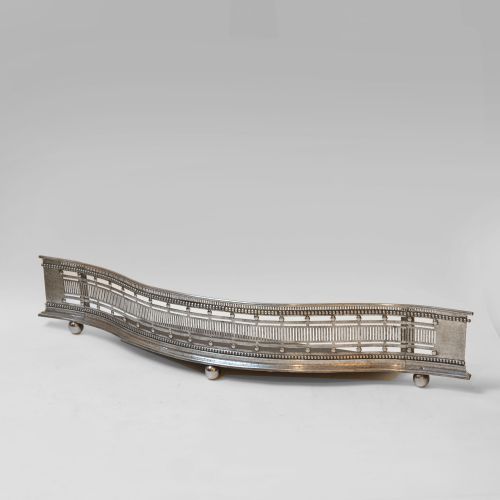
A polished steel hearth guard sits directly upon the floor before an open fireplace, creating a low barrier that prevents embers from reaching the room. These functional items appear in forms such as fireplace fenders, hearth fenders, and fire guards.
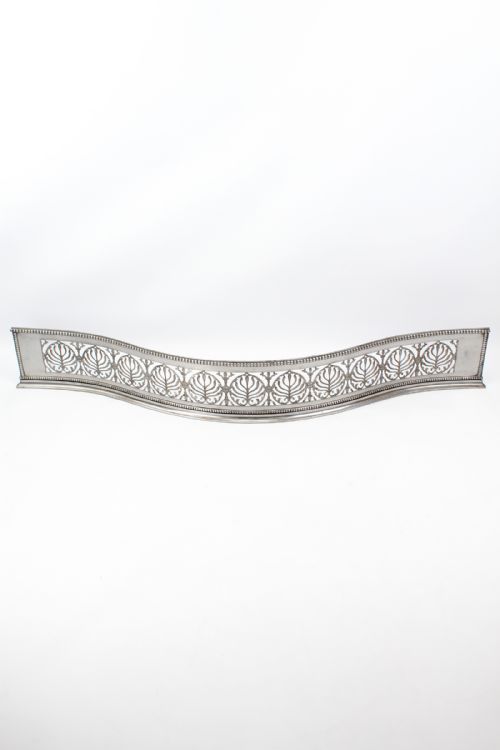
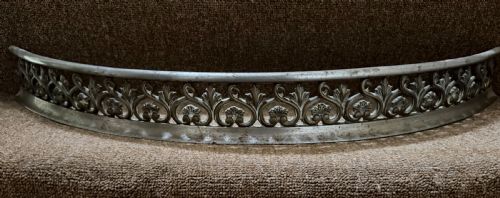
The selections available run through Georgian, Victorian, and Edwardian periods, including specific dates from seventeen-fifty to eighteen-fifty. Common shapes include bowfront and serpentine profiles, sometimes incorporating brass or copper details.
Makers and designers of the Regency era adopted neoclassical styles, as seen in pieces influenced by George Bullock. Buyers encounter variations in scale, from standard widths to large four-foot-six serpentine designs.
How they were made
Blacksmiths and metalworkers shaped steel, iron, and copper using traditional hammering, piercing, and engraving techniques. Surfaces were then polished to a bright finish that reflected the light of the hearth.
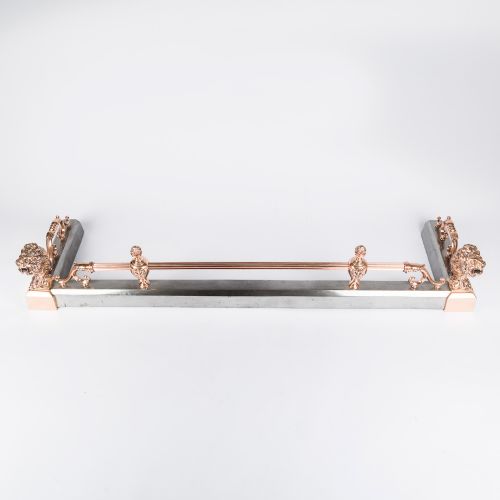
Many examples combine steel structures with contrasting brass mounts, gilt bronze, or applied metal details such as lions, flowers, and dragons. These decorative elements were cast and fixed to the main fender body.
Some guards secretly double as menagerie displays, featuring cast brass lions alongside delicate engraved dragons.
What varies in quality
The refinement of the metalwork defines the upper tier, visible in crisp piercing, deep hand engraving, and smooth serpentine curves. Lesser examples rely on plain sheets with minimal shaping and simple joins.
The combination of metals also dictates distinction, where heavy brass mouldings and detailed cast bronze motifs raise a piece above standard iron or steel constructions.
The Polished Steel Hearth Guard Glossary
- Serpentine
- A curved shape that undulates with a convex centre flanked by concave ends. This contour requires precise metal manipulation.
- Bowfront
- A curved frontal profile that sweeps outward in a single continuous arc. It offers a softer line against the straight hearth.
- Pierced
- Metalwork perforated with decorative patterns or slots. This technique lightens the visual weight of the heavy guard.
- Fender
- A low metal guard placed around the hearth. It keeps coal and ash contained within the fireplace opening.
Polished Steel Hearth Guard: Frequently Asked Questions
What is a polished steel hearth guard?
A polished steel hearth guard is a protective barrier placed around the base of a fireplace to catch stray embers and sparks. They are typically made from steel, iron, or brass.
These guards serve both a practical safety function and an ornamental role in traditional room settings.
How do I date a steel fender?
Dating relies on stylistic clues such as neoclassical motifs, Regency curves, or Georgian serpentine shapes. Construction methods like hand piercing also point to specific periods.
Dates span from the mid-eighteenth century through the nineteenth and into the Edwardian era.
What styles are common in these guards?
The most frequent styles include Georgian, Victorian, Regency, and Neoclassical designs. Many feature shaped fronts and contrasting brass or copper elements.
Maker influences, such as the style of George Bullock, occasionally appear in Regency pieces.
Are these items purely decorative?
While highly decorative today, they were originally designed for daily domestic use around open coal or wood fires. Their primary job was containment.
They protect carpets and flooring from heat and falling debris while framing the fireplace.