


Polished Steel Fire Tools
Polished steel fire tools bring a bright, reflective finish and practical hearth utility to period fireplaces.
Polished Steel Fire Tools
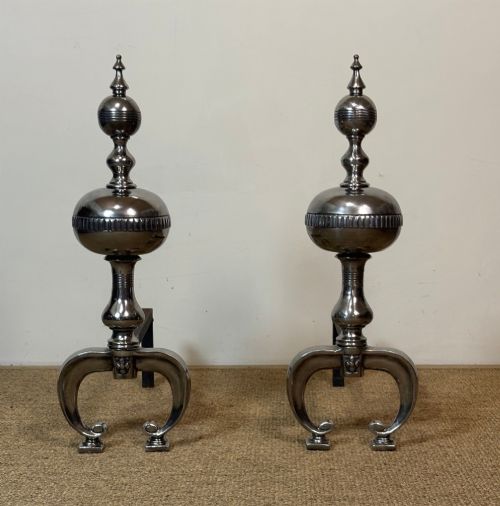
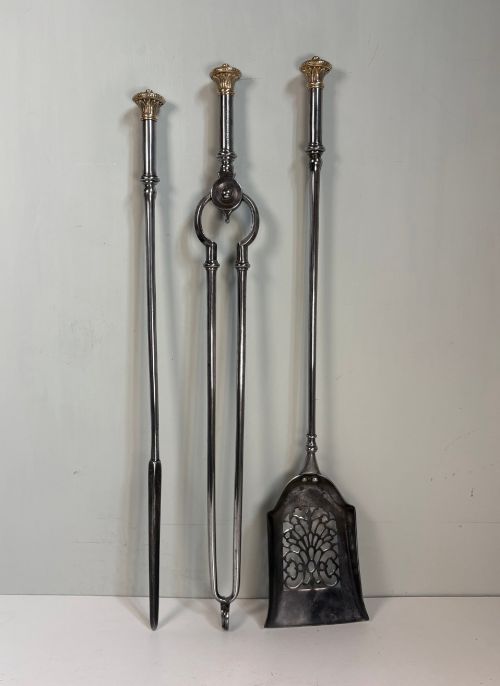
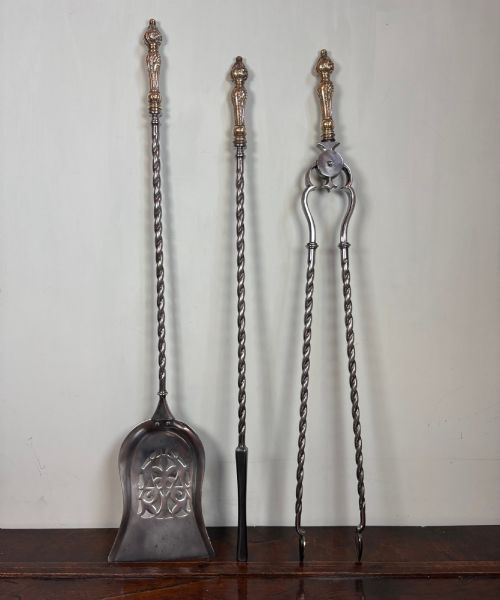
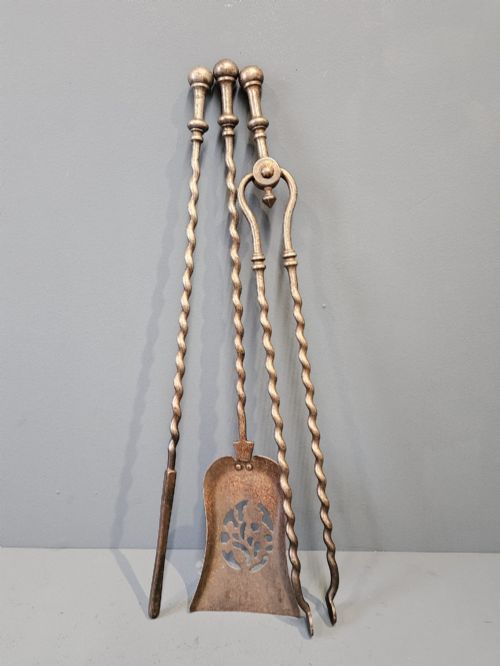
Polished steel fire tools comprise sets of implements designed for tending a hearth, most frequently encountered as paired fire dogs, individual fire irons, or complete companion sets. These pieces date across the eighteenth, nineteenth, and early twentieth centuries, spanning periods from the Georgian and Regency eras through the Victorian, Arts and Crafts, and Edwardian styles.
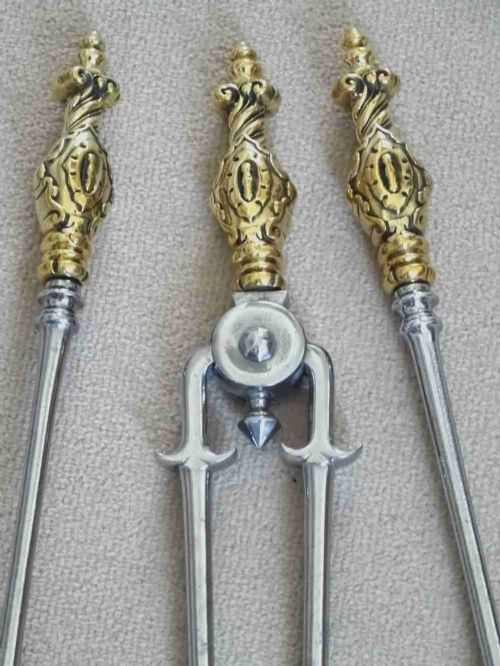
The objects typically take the form of tongs, pokers, and shovels, sometimes accompanied by a stand or paired with fire dogs. Many examples combine the bright finish of steel with contrasting brass or bronze details, reflecting the prevailing taste of their respective periods of manufacture.
How they were made
The makers of these hearth implements shaped them primarily from iron and steel, utilising forging and turning techniques to achieve both structural strength and slender elegance. Surfaces were meticulously ground and polished to a bright sheen that reflected the light of an open fire.
Many sets incorporate brass or gilt bronze elements, particularly on the handles and mounts, providing a warm metallic contrast to the cool grey of the polished steel body.
Some nineteenth-century makers evidently expected guests to admire the hearth so intensely they added bronze finders just to keep everyone looking.
What varies in quality
Quality in these hearth implements rests upon the crispness of the turning on the handles and the balance of each tool in the hand. Finer sets display harmonious proportions across the poker, tongs, and shovel, with handles that transition smoothly into the shaft.
The retention of a bright, uniform polish without deep pitting indicates both superior initial metal selection and careful subsequent preservation through generations of use.
The Polished Steel Fire Tools Glossary
- Fire irons
- Implements used for managing a coal or wood fire, typically comprising a poker, tongs, and a shovel.
- Fire dogs
- Andirons placed on the hearth to support logs, frequently found listed alongside matching sets of fire tools.
- Companion set
- A collection of fireside implements presented together, often hanging from a dedicated stand or resting upon a fender.
- Neoclassical
- A decorative style drawing inspiration from classical antiquity, influencing the restrained and symmetrical design of many eighteenth and nineteenth-century pieces.
Polished Steel Fire Tools: Frequently Asked Questions
How were polished steel fire tools used?
These implements served the practical daily work of tending an open hearth, from arranging burning logs with the poker to lifting coal with the shovel and adjusting fuel with the tongs.
At the same time, their bright polished surfaces were intended to catch and reflect the ambient light of the room when the fireplace was not in use.
What periods do these fire tools cover?
The pieces span several centuries, with examples originating from the Georgian and Regency periods through the Victorian era and into the Edwardian years.
Design motifs shifted over time, moving from classical restraint in the eighteenth century to more ornate or handcrafted aesthetic expressions by the late nineteenth century.
Why do some sets combine steel and brass?
Makers frequently paired polished steel with brass handles, mounts, or fenders to introduce warmth and visual contrast into the fireside arrangement.
This two-tone metalwork was particularly favoured during the Georgian, Regency, and Victorian periods as a way to complement other decorative hardware in the room.
How should I care for polished steel?
These metals require a dry environment and occasional light maintenance to prevent rust from forming on the active surfaces.
Keeping the steel clean preserves the reflective finish that defined the original appearance of the tools on the hearth.