



Polished Brass Handles
Polished brass handles gleam on kettles, fire tools, and door hardware from the Victorian and Edwardian periods.
Polished Brass Handles
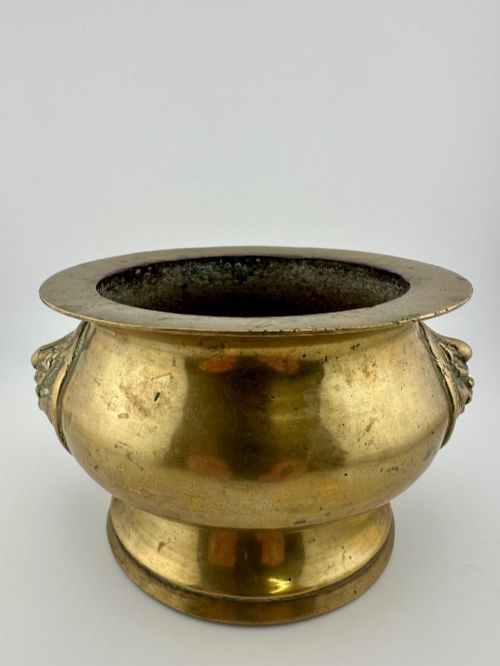
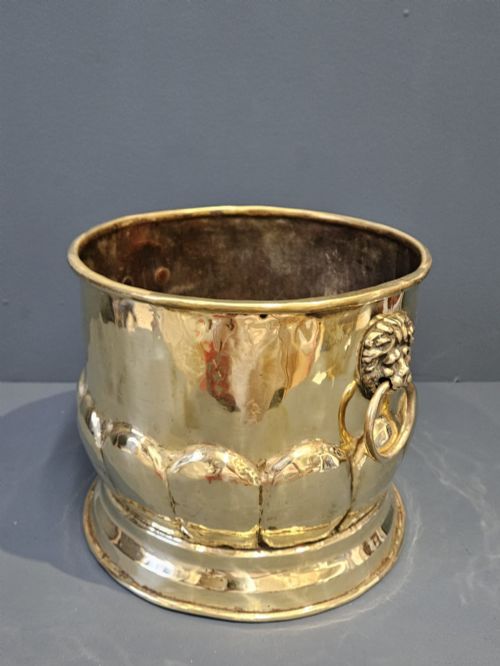
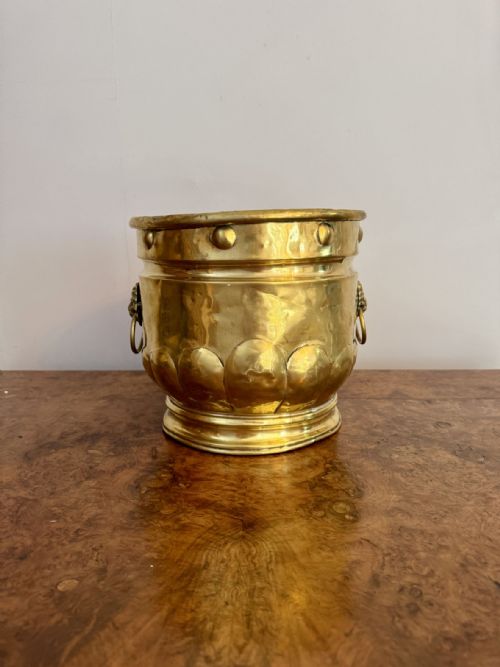
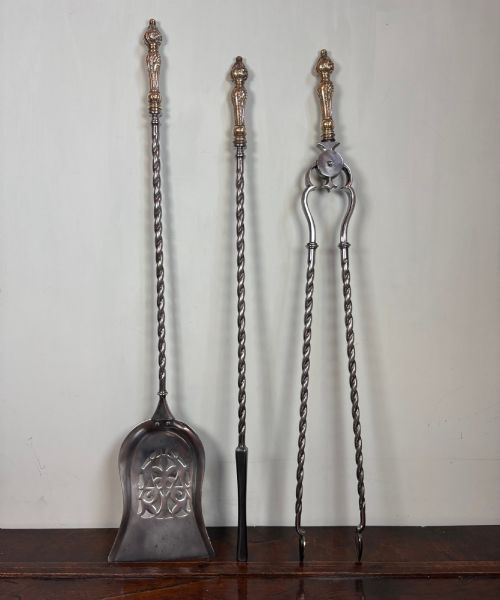
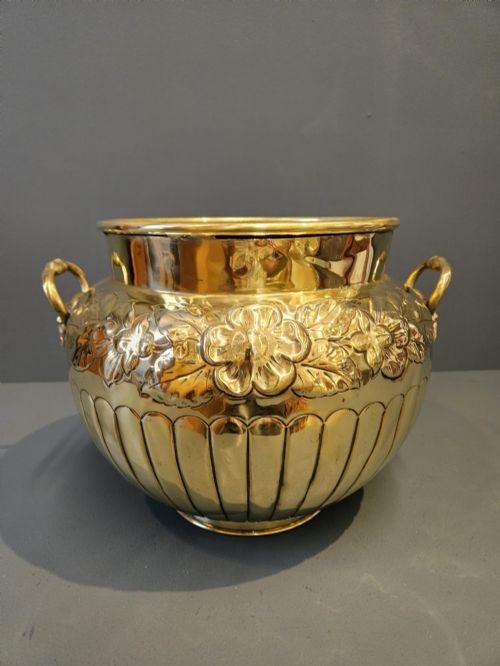
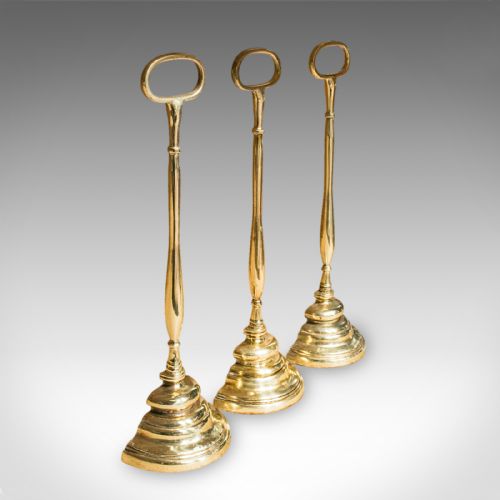
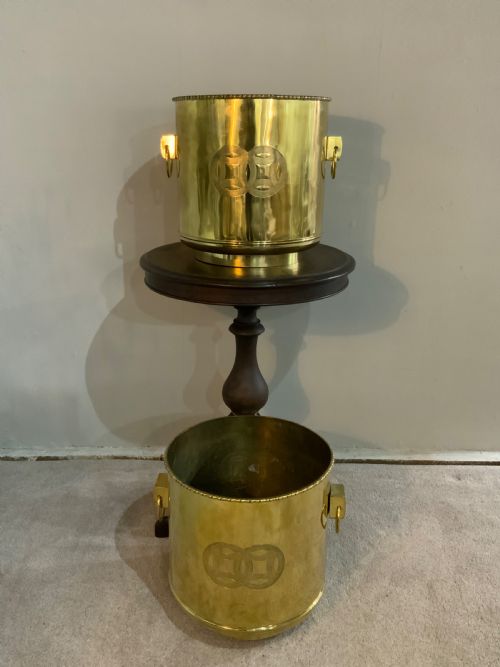
Polished brass handles appear on a wide variety of household metalwork and furniture, ranging from heavy door hardware and shop door entries to utilitarian kitchen vessels and decorative planters. When searching for polished brass handles, buyers most frequently encounter items where the metal forms an integral part of a functional piece, such as twin-handled vases, coal buckets, and fire irons.
The objects bearing these handles date principally from the nineteenth and early twentieth centuries, spanning the Georgian, Victorian, and Edwardian eras alongside Arts and Crafts designs. These pieces often combine brass with complementary materials like copper, steel, and mahogany to serve domestic, hearthside, or display purposes.
Materials and construction
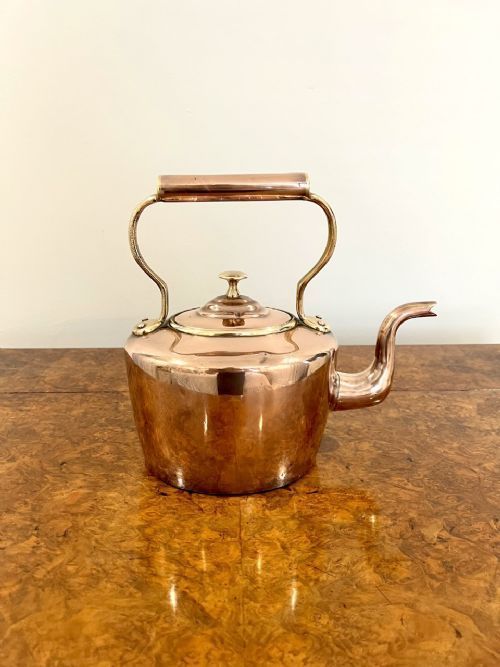
The pieces listed on this page utilise cast and sheet brass, frequently paired with beaten copper, forged steel, or turned wood to form the body of the object. Handles are typically cast separately and securely riveted, soldered, or bolted to main bodies such as coal scuttles, kettles, and planters.
Makers employed traditional metalworking techniques including spinning, hammering, and casting, often adding decorative rope twists or lion masks to the grip. The resulting hardware balances structural durability with polished surface ornamentation characteristic of the period.
Quality and execution
The standard of a piece depends heavily on the weight of the metal used and the crispness of the casting detail in the handle and body. Heavier gauges of brass and copper indicate superior utility and longevity, particularly in items designed for daily hearth or kitchen use.
Refinement in finishing also separates standard utilitarian wares from finer decorative examples. Pieces featuring hand-forged elements, carefully fitted joints, and balanced proportions reflect superior craftsmanship by period makers.
William Soutter And Sons
The Polished Brass Handles Glossary
- Brass
- An alloy of copper and zinc known for its bright golden appearance and durability. It was widely cast and polished for Victorian and Edwardian hardware.
- Jardiniere
- An ornamental pot or stand designed to hold plants or flowers. These vessels often feature prominent side handles for lifting.
- Coal scuttle
- A container used for holding household coal near a fireplace. Many surviving examples combine a copper body with sturdy brass handles.
- Censer
- A vessel used for burning incense, frequently manufactured in bronze or brass with decorative handles. Eastern examples often incorporate traditional motifs.
- Fire irons
- A set of matching fireplace tools including pokers, tongs, and shovels. They often feature decorative brass handles designed for handling.
Polished Brass Handles: Frequently Asked Questions
How do I clean polished brass?
Polished brass benefits from gentle dusting and occasional wiping with a soft cloth to maintain its bright surface. Avoid harsh abrasive cleaners that can strip the metallic finish.
Over time, natural handling creates a warm patina, so cleaning should be done sparingly to preserve the character of the metal.
Are these handles purely decorative?
While many pieces serve a decorative purpose today, most polished brass handles were originally engineered for heavy domestic service. Items like shop door handles, kettle grips, and fire tools were built to withstand regular physical use.
Buyers can safely utilise robust examples provided the fixings remain secure and stable.
How can I date these items?
Dating relies on stylistic markers, manufacturing techniques, and the accompanying materials found in the piece. Georgian and early Victorian items often display heavier hand-forged construction, while Edwardian pieces lean towards lighter cast forms.
Comparing the specific mounting style of the handles helps place the object within its correct period.
Where were these pieces used?
These items populated various rooms of the nineteenth-century home, from the kitchen and scullery to the formal hearth and hallway. Kettles and preserving pans sat near the stove, while coal buckets and fire tools served the main living spaces.
Door hardware and bells functioned directly at thresholds and entry points.