


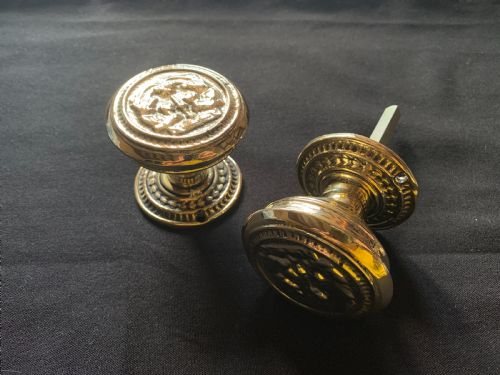


Brass Door Knobs
Brass door knobs are architectural fittings designed to operate latches, bringing period weight and tactile presence to interior doors.
What brass door knobs are
Makers and manufacturers produced these hardware items in brass, bronze, and steel, often paired with glass components or paired specifically for rim locks. Oval profiles and beehive turnings dominate the surviving domestic hardware found in these archives.
How they were made
Metalworking techniques for these fittings involved casting brass and bronze into rigid forms, supplemented by turning on lathes to create concentric beehive rings. Embossed decoration relied on stamping sheet metal or dies to raise patterns from the surface.
Assemblies combined metal bases with steel spindles and sometimes glass inserts, held together with threaded components or grub screws designed to secure the knobs onto interior doors.
Retail Price Guide 2026
Typical UK retail prices for brass door knobs, calculated from the Sellingantiques database of over a million retail prices indexed since 2003. This retail price guide relies exclusively on Sellingantiques data; no external sources or auction records are used, so the figures do not describe the wider market.
Victorian occupants apparently loved gripping concentric rings so much that beehive turnings outnumber almost every other decorative pattern.
What varies in quality
Differentiation across the range depends on the heft of the cast metal and the crispness of the turned or embossed details. Simple, utilitarian pressings sit at one end, while heavy, deeply ribbed beehive turnings and complex bronze castings represent substantial manufacturing effort.
The choice of secondary materials, such as integrated brass finger plates or cut glass inserts alongside the metal, alters the visual weight and finish of the hardware.
The Brass Door Knobs Glossary
- Beehive
- A turned pattern of concentric rings resembling a skep beehive, commonly found on Victorian hardware grips.
- Rim lock
- A box-like door lock mounted on the surface of the door rather than mortised inside the edge.
- Finger plate
- A flat metal plate fitted behind the knob to protect the door surface from hand marks.
- Spindle
- The square metal bar connecting opposing knobs through the latch mechanism.
Frequently Asked Questions
How do I clean antique brass knobs?
Maintenance requires gentle wiping with a soft cloth to preserve patination rather than harsh chemical polishing that strips historical depth.
Leaving the accumulated surface character intact helps retain the aged appearance expected on period architectural pieces.
Will these fit modern doors?
Modern internal doors often use standard spindle sizes and backsets, but older square spindles and threaded collars may require minor adjustments for correct alignment.
Checking the spindle thickness and the accompanying latch mechanism before installation ensures proper mechanical operation.
What is a rim lock knob?
These specific knobs are designed to operate surface-mounted box locks rather than internal mortise mechanisms set inside the door stile.
They usually feature distinct threaded collars or roses suited to the mechanics of older rim lock cases.
How do I date brass door hardware?
Dating relies on stylistic clues like the linear reeding of the Regency period versus the heavy turnings of the Victorian era.
Material choices, such as early bronze or later steel combinations, also help place the items within their specific design eras.