









Polished Brass Front Knocker
These polished brass front knocker examples range from Victorian dolphin designs to heavy anchor forms, offering tactile weight and historic charm for your entrance.
Polished Brass Front Knocker
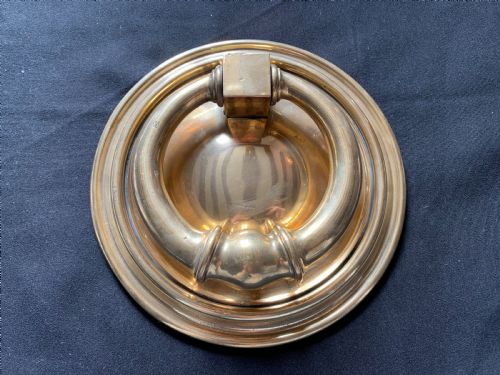
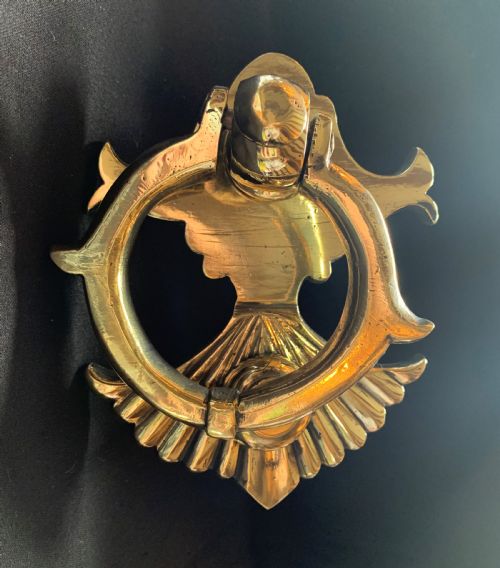
A polished brass front knocker provides both functional entry communication and architectural character for a timber door. You will encounter various regional interpretations and formats across these listings.
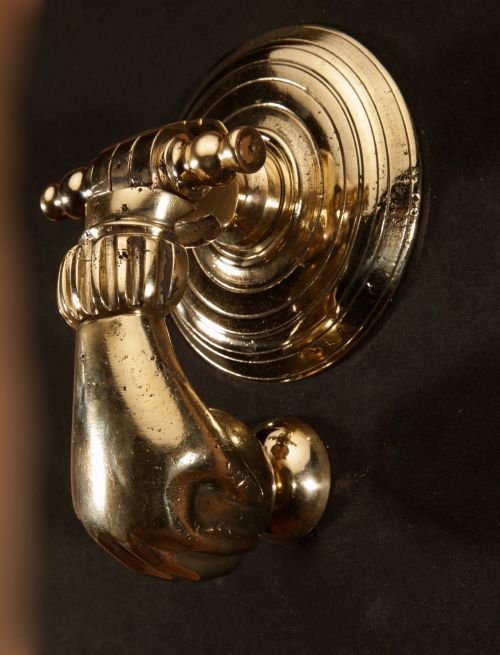
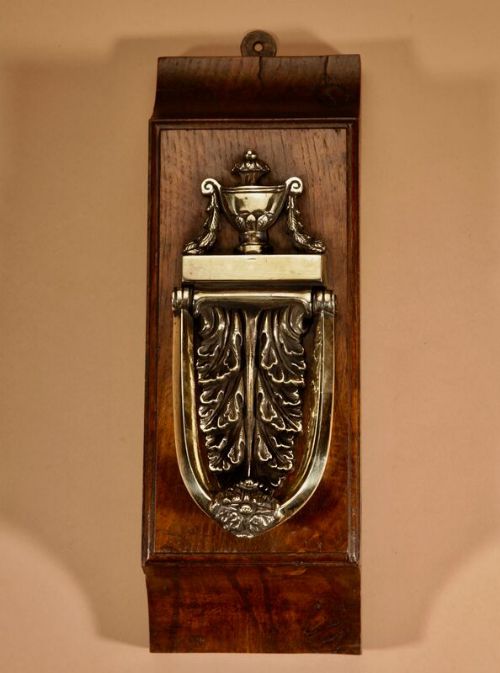
The selections span periods from the Georgian era through Victorian times into the early twentieth century, including items made from solid brass and bronze. Common architectural forms include traditional doctors knockers, maritime anchors, and sculptural hands.
Victorian examples dominate the available variations, featuring elaborate detailing such as Maltese dolphins and complete letterbox assemblies. These architectural hardware pieces reflect the decorative priorities of their respective eras.
How they were made
Makers utilised casting techniques in brass and bronze to achieve the substantial weight and intricate relief seen in these knockers. Heavy gauge metals were poured into moulds and subsequently finished with polishing to highlight the surface details.
Several pieces incorporate integrated plates, letterboxes, or pull handles cast as single cohesive units or joined securely. The underlying materials primarily consist of solid brass, bronze, and occasional iron components.
The listings demonstrate a strong representation of Victorian manufacturing, alongside Georgian and 1940s examples in brass, bronze, and iron.
What varies in quality
The standard of a polished brass front knocker depends on the crispness of the cast detail and the thickness of the metal gauge. Superior examples exhibit deep relief modelling in motifs like hands, dolphins, or imp figures.
Design complexity and completeness also distinguish the range, as pieces featuring integrated letterboxes or backplates demand greater initial foundry skill. The purity of the solid brass or bronze influences the long-term ageing and polish retention.
The Polished Brass Front Knocker Glossary
- Doctors knocker
- A specific style of door knocker featuring a pivoting vertical bar hinged at the top, historically associated with medical practitioners so patients could rouse them easily. This design allows for a distinct rapping sound.
- Solid brass
- An alloy of copper and zinc cast in substantial thickness rather than plated over a base metal. This material resists corrosion effectively while maintaining a bright polished finish.
- Louis Seize style
- A neoclassical decorative style referencing the reign of Louis XVI, characterised by symmetry, straight lines, and classical motifs. Pieces in this style often display refined geometric or floral ornamentation.
- Maltese dolphin
- A decorative marine motif frequently utilised in Victorian maritime hardware, depicting stylized dolphins with sweeping tails. This imagery reflects the coastal connections and ornate tastes of the nineteenth century.
Polished Brass Front Knocker: Frequently Asked Questions
How do I mount a heavy brass knocker?
Most heavy brass knockers require secure screw fixings through pre-drilled holes in the timber door. Ensure the fixings match the weight of the bronze or brass hardware.
For pieces that include an integrated letterbox plate, check the alignment of the internal aperture before final installation to guarantee smooth operation.
Are these door knockers original period pieces?
The listings encompass items spanning the Georgian, Victorian, and early twentieth-century periods. Each entry notes the specific stylistic era or estimated decade of origin.
Materials range from solid brass to cast bronze, reflecting the manufacturing standards of their respective historical periods.
How should I clean polished brass hardware?
Maintain polished brass surfaces using a soft cloth and a gentle metal cleaner formulated for unlacquered brass. Avoid abrasive pads that might scratch the cast relief details.
Regular light dusting preserves the natural lustre of the bronze and brass without stripping the accumulated character of the metal.