




Front Door Hardware
Front door hardware brings immediate character to an entrance, offering heavy brass and bronze knockers, pulls, and bells shaped by centuries of design.
Front Door Hardware
When you search for front door hardware, you enter a field defined by functional metalwork that spans the Georgian, Victorian, and Edwardian periods. The items you meet most often on this page are brass and bronze door knockers, alongside centre door knobs and bell pulls.
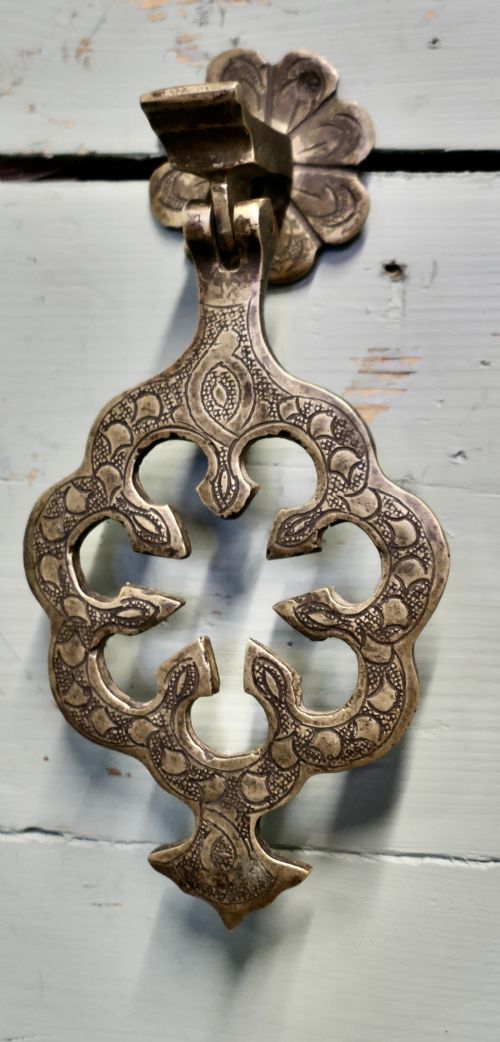
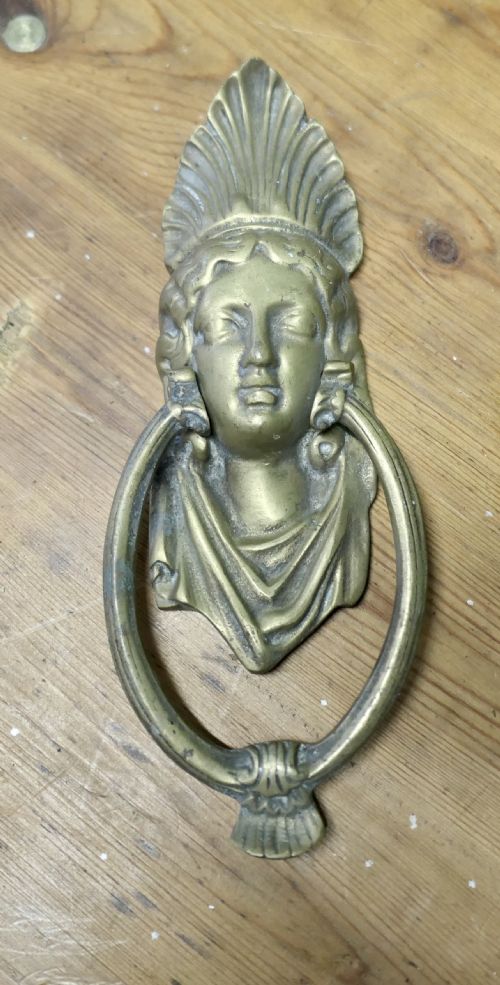
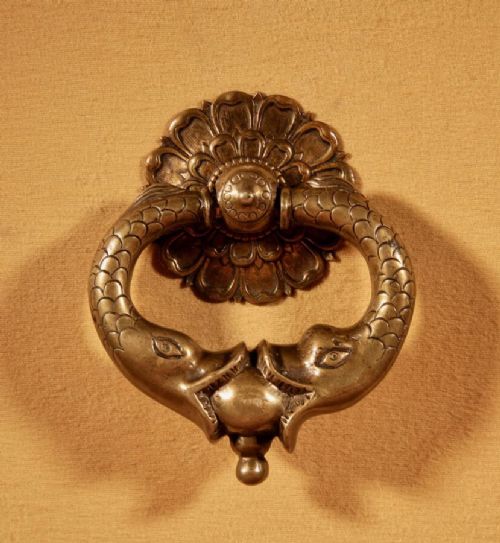
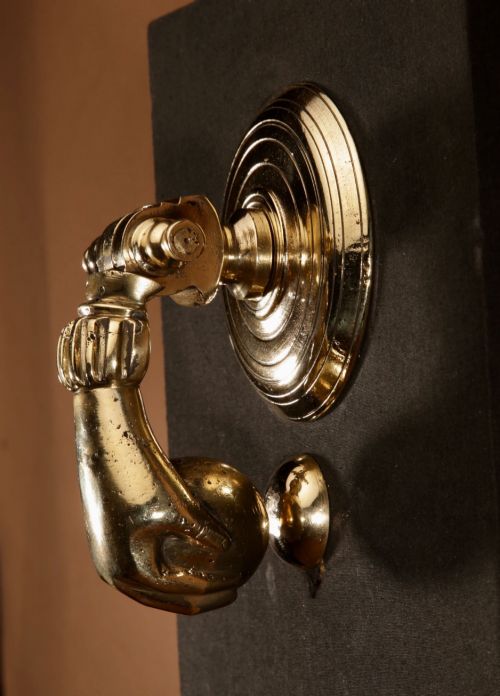
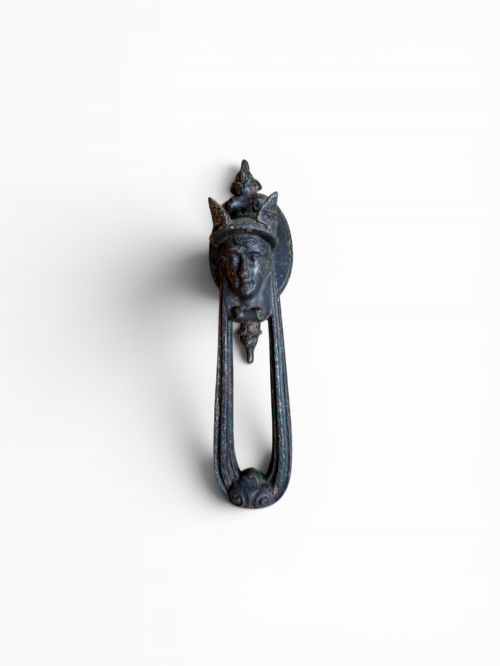
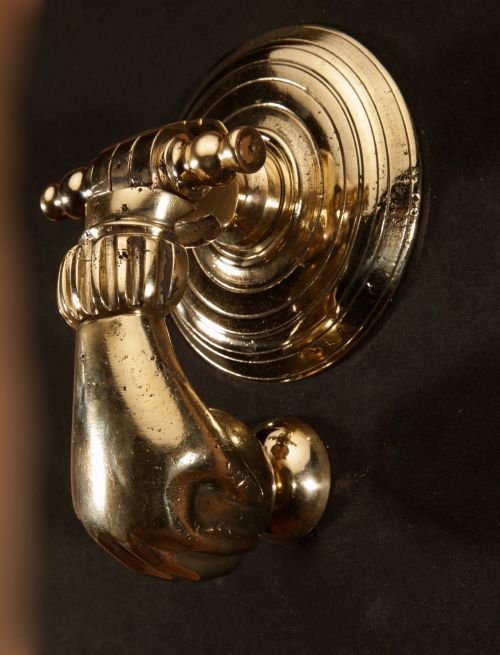
The selection ranges from large, pierced brass knockers and lion masks to maritime anchors and hand motifs. Alongside these sit period centre door knobs in bee hive and octagonal forms, reflecting the architectural preferences of their respective eras.
Makers such as Kenrick & Sons appear among the Victorian examples, while continental European pieces introduce Louis Seize and 18th century styles. Buyers find both simple utilitarian plates and highly decorative architectural hardware designed to dress a main entrance.
How they were made
The evidence shows that these pieces rely heavily on cast brass, solid brass, and bronze, shaped through traditional foundry methods to achieve crisp detail. Cast iron also appears in Victorian items, providing a heavier, darker alternative to copper-alloy metals.
Finishes and assembly vary, with some items featuring heavy-gauge construction and integrated striking plates or letterboxes. Makers utilised casting and piercing techniques to create complex shapes like caryatids, sea serpents, and hands.
Listings feature items spanning the Georgian, Victorian, and Edwardian periods, constructed from brass, bronze, cast iron, and lead.
What varies in quality
Quality in front door hardware rests upon the crispness of the casting and the weight of the metal utilised. Heavier gauge brass and solid bronze retain sharper facial expressions in mask motifs and deeper relief in pierced designs.
The sophistication of the design dictates distinction, moving from plain utilitarian plates to sculptural forms like hands, dolphins, and laurel wreaths. Original patination and the presence of matching striking plates or letterbox assemblies further elevate the standing of a piece.
Kenrick & Sons
The Front Door Hardware Glossary
- Caryatid
- A sculpted female figure serving as an architectural support. In door hardware, it forms the vertical grip or backing of the knocker.
- Striking plate
- The metal plate mounted on the door surface where the knocker lands. It protects the wood and amplifies the sound when the knocker falls.
- Bell pull
- A mechanical lever mounted on the exterior connected to an interior bell wire. Georgian examples often feature slender brass rods and ornate backplates.
- Gauge
- The thickness of the metal used in construction. Heavy gauge brass indicates a thicker, more substantial casting that resists bending.
- Bee hive
- A distinctive turning pattern found on Victorian centre door knobs. The profile consists of multiple stepped rings resembling a traditional skep.
Front Door Hardware: Frequently Asked Questions
What is a doctors knocker?
A doctors knocker is a specific style traditionally fitted to the doors of medical practitioners so patients could alert them urgently. These pieces typically feature a hinged upper hammer section that drops onto a lower striking post.
In the evidence, these appear as large solid brass examples designed to make a distinctive sound. They carry a formal presence distinct from standard ring or motif knockers.
How do I date a brass knocker?
Dating front door hardware involves examining the casting quality, screw fixings, and stylistic cues of the period. Georgian items often display simpler geometric forms or neoclassical restraint, while Victorian pieces lean towards heavier relief and figurative designs.
Materials also offer guidance, as solid brass and bronze span multiple centuries while cast iron becomes more prominent during the Victorian era. Comparing the form against known architectural styles helps narrow down the decade.
Can I use antique hardware outside?
Most front door hardware was originally cast for exterior exposure and handles the elements well. Solid brass, bronze, and cast iron develop natural oxidation over time when exposed to weather.
Buyers should check whether the metal has a protective lacquer or a bare finish that requires maintenance. Historic pieces often survive decades of outdoor use thanks to their robust initial gauge.
What is a centre door knob?
A centre door knob sits in the middle of a front door rather than at the edge, serving as a pull to draw the door closed. These items are often fixed rigidly in place rather than operating a latch.
Victorian and Georgian examples come in octagonal, ovular, and bee hive turnings cast in brass or bronze. They provide a symmetrical focal point for the entrance alongside the door knocker.