




Antique Door Knocker
An antique door knocker brings genuine historical weight to an entrance, turning a functional entry point into a piece of sculpture.
Antique Door Knocker
An antique door knocker is architectural hardware designed to announce visitors, spanning simple drop rings to elaborate sculptural forms. The pieces available here range from austere iron rings to heavy cast brass figures.
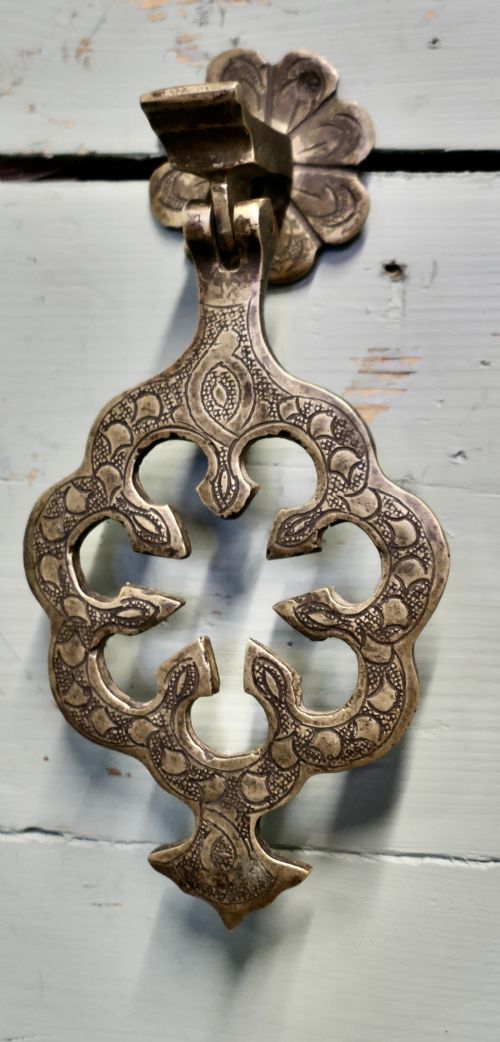
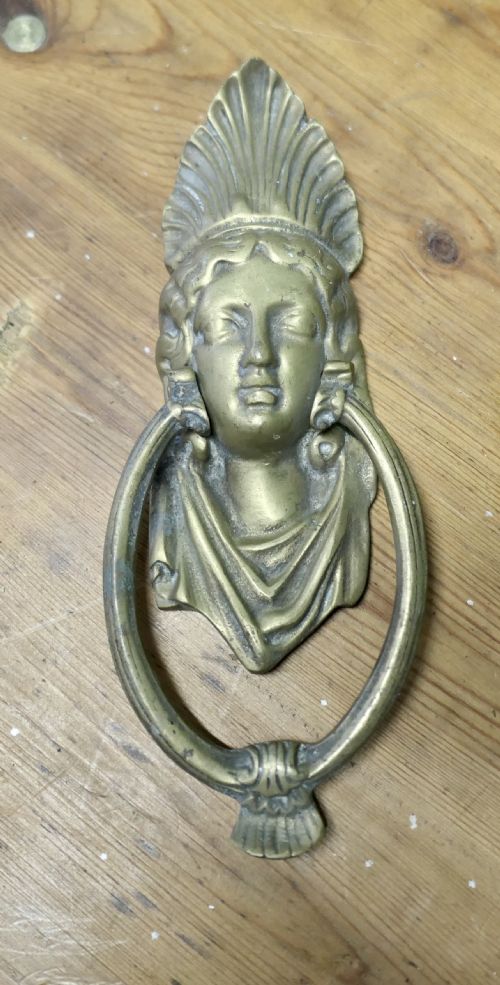
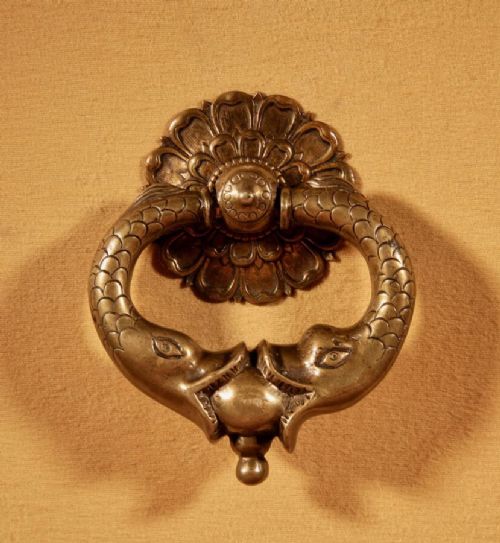
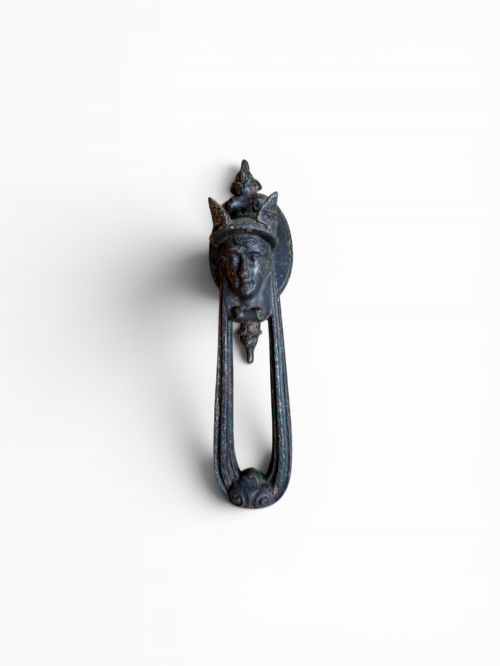
Victorian examples dominate the selection, frequently taking the shape of marine motifs, mythological figures, or heraldic masks. Buyers also encounter earlier Continental bronze works and utilitarian designs like the doctors knocker.
Beyond standard door knockers, the material occasionally intersects with architectural hardware, fireplace accessories, and decorative mounts. These items serve the same functional or ornamental purpose on timber surfaces.
Materials and casting methods
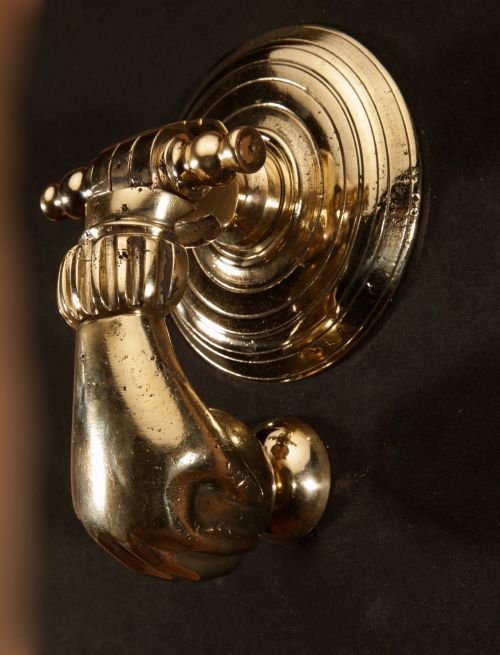
Foundries produced these items primarily through metal casting, utilising brass, bronze, cast iron, and wrought iron. Solid brass and bronze versions provide substantial heft and resistance to the elements.
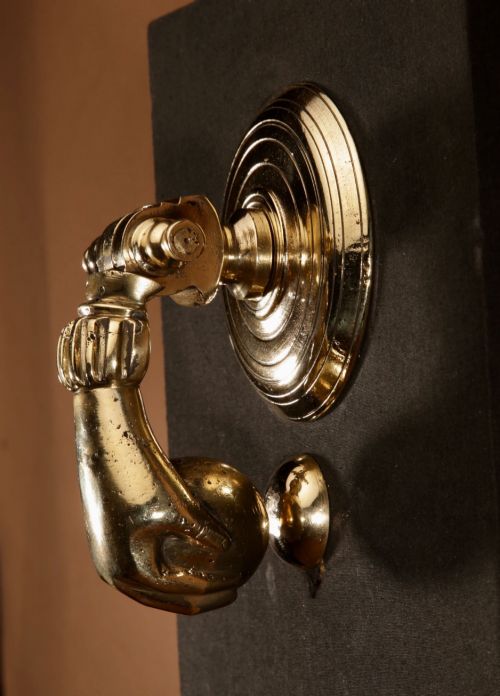
Makers utilised sand casting or lost wax methods to achieve intricate relief details such as caryatids, lion masks, and hands. Iron variants often received a dark protective finish to endure external exposure.
Complete assemblies frequently incorporate a matching striking plate alongside the main handle or ring. Pierced backplates and heavy gauge metals demonstrate the structural demands placed on everyday door furniture.
Antique Door Knocker Retail Price Guide 2026
Typical asking prices for door knocker among the pieces listed under this phrase on Sellingantiques today, from the lower quarter to the upper quarter. They describe what is for sale here now, not the wider market.
Among the creatures guarding these doors are sea serpents, dolphins, imps, elves, and an Elizabethan queen.
Evaluating craftsmanship
The choice of alloy dictates durability and weight, with heavy gauge bronze and solid brass sitting above lighter hollow castings. Original backplates, mounting screws, and striking plates enhance both completeness and historical integrity.
Kenrick & Sons
The Antique Door Knocker Glossary
- Striking plate
- The metal plate mounted on the door face where the knocker hammer lands, protecting the timber from repeated impacts.
- Caryatid
- A sculpted female figure serving as an architectural support, seen here incorporated into the vertical stem of the hardware.
- Doctors knocker
- A specific drop-bar style mounted above a nameplate, traditionally associated with medical practitioners so patients could locate them swiftly.
- Maltese dolphin
- A traditional marine motif shaped like a stylized sea creature, frequently utilised in coastal British hardware.
- Pierced brass
- Metalwork cut through to create an openwork pattern, lightening heavy plates while adding decorative contrast.
Antique Door Knocker: Frequently Asked Questions
How do I install an antique door knocker?
Most pieces mount directly through the timber using threaded bolts or wood screws inserted through the backplate or striking plate. Care must be taken to align the hammer with the striking plate to prevent damage.
Pre-drilling holes matching the original spacing ensures the hardware sits flush against the exterior surface without stressing the metal.
Can these knockers be used on modern doors?
These items function effectively on contemporary timber doors provided the door thickness accommodates the mounting hardware. The substantial weight of solid brass or bronze requires sturdy backing.
Matching the finish of existing locks and letterboxes helps integrate historical hardware into a modern entrance.
How do I clean and maintain antique brass?
Maintenance requires gentle washing with warm soapy water and a soft cloth to remove dirt without stripping the aged patina. Abrasive cleaners should be avoided.
Applying a light coat of microcrystalline wax protects the metal surface from atmospheric oxidation and moisture.
What is the difference between brass and bronze?
Brass is an alloy of copper and zinc, typically yielding a brighter golden tone when polished. Bronze consists mainly of copper and tin, producing a darker, warmer brown appearance.
Both materials weather differently outdoors, developing distinct surface patinas over decades of exposure.