




Cast Bronze Door Hardware
Cast bronze door hardware brings weight and historical character to an entrance, offering solid metalwork designed to last for centuries.
Cast Bronze Door Hardware
Buyers seeking cast bronze door hardware encounter an array of functional fittings, from large hand-shaped knockers to complete handles, push plates, and letter boxes. The selection spans centuries of design, with particular emphasis on Victorian examples alongside earlier continental pieces.
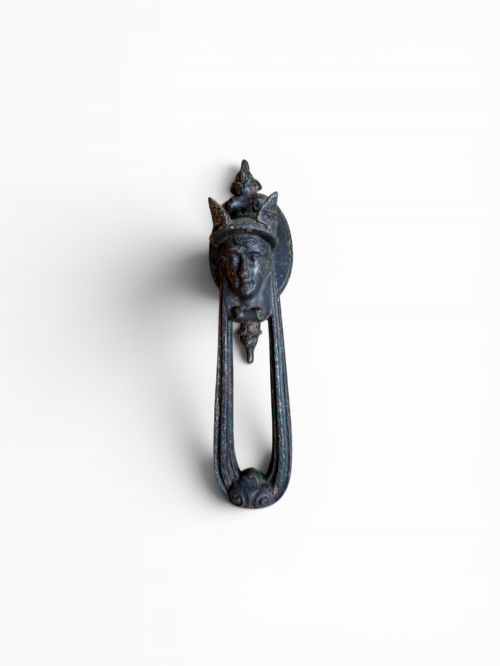
Most items on this page function as architectural hardware, serving practical roles on period doors while displaying sculptural forms such as lion masks, sphinxes, and classical motifs.
Materials and construction methods
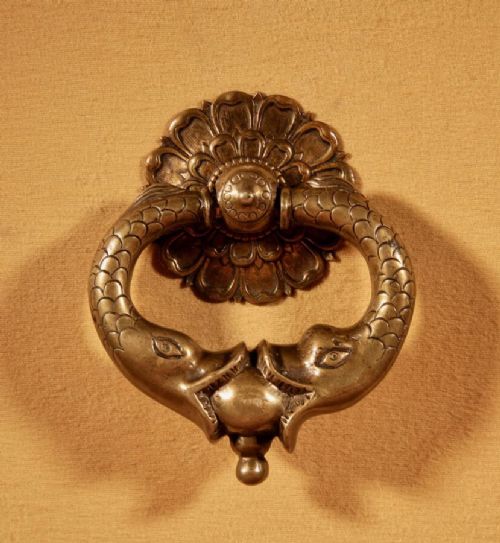
Makers utilised bronze, brass, and copper alloy, often employing traditional casting techniques to shape intricate details like laurel wreaths and ram's heads. Surfaces show variations from polished bronze finishes to older patinas developed over centuries of use.
Iron and brass occasionally appear alongside bronze within the listings, supporting structural elements on heavier door knockers and handles.
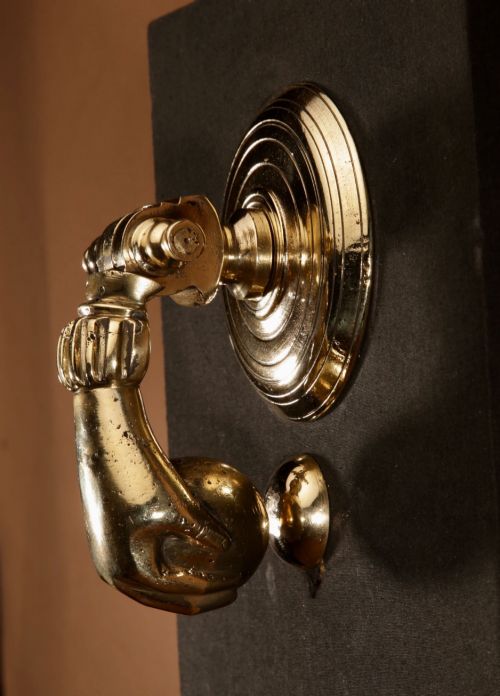
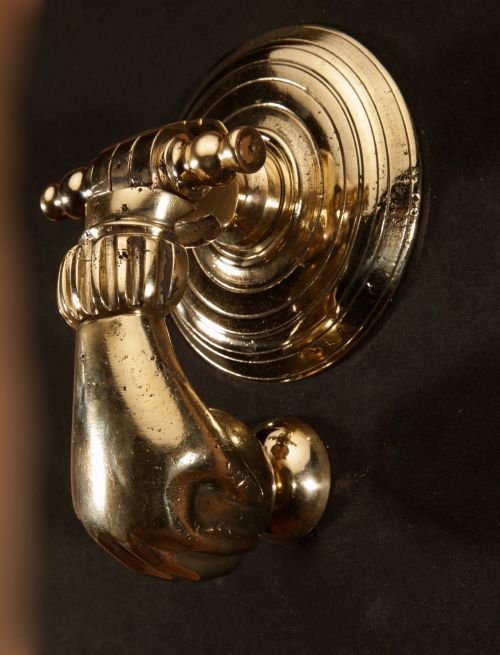
Several knockers take the distinct shape of a human hand, ready to rap upon your door.
Quality factors in cast hardware
The distinction between ordinary and superior pieces rests on the crispness of the cast detail and the depth of the sculptural modeling. Items featuring complex imagery, such as human hands or mythological figures, demand greater skill from the metalworker.
Original mounts and matching components elevate a piece, whereas replacements or heavily worn fixing points alter the structural integrity and historical completeness of the hardware.
The Cast Bronze Door Hardware Glossary
- Cast bronze
- Molten bronze poured into a mould to create solid architectural fittings with durable physical properties. This technique allows for complex shapes like animal masks and human figures.
- Push plate
- A flat metal plate fitted to a door to protect the surface from fingerprints and wear around the handle. These often match the material and style of the surrounding hardware.
- Letter box
- An aperture fitted to a door for receiving mail, frequently combined with a pull handle in Victorian examples. They are cast in matching metals to complete an entryway.
- Patina
- The surface sheen and colour acquired by bronze over years of handling and environmental exposure. This natural layer distinguishes older metalwork from modern reproductions.
- Architectural hardware
- Functional metal fixtures attached to buildings and doors, combining utility with decorative design. The category covers items from simple handles to elaborate knockers.
Cast Bronze Door Hardware: Frequently Asked Questions
How do I date cast bronze door hardware?
Dating relies on stylistic clues, manufacturing marks, and the quality of the casting relative to known periods like the Victorian era or the seventeenth century. Comparing the fastening mechanisms and wear patterns also helps establish age.
Surface patination provides further context, though handlers should examine the underlying metal composition and design motifs to confirm the historical context of the piece.
Are these pieces suitable for modern exterior doors?
Most items are robust enough for daily use on exterior doors, provided the fixings match modern safety and installation requirements. Many buyers install period knockers and handles on contemporary entrances to add weight and tactile interest.
Care should be taken with older or more delicate items, particularly seventeenth-century examples, which may require specialised mounting to preserve their structure.
What is the difference between brass and bronze hardware?
Bronze is primarily an alloy of copper and tin, while brass is an alloy of copper and zinc. This chemical difference alters the colour, weight, and corrosion resistance of the finished object.
Historical listings often show both metals used for architectural fittings, with bronze typically offering a deeper, richer tone as it ages.
How should I clean antique bronze door fittings?
Cleaning generally requires little more than a soft cloth to remove dust and dirt, preserving the accumulated patina that indicates age. Harsh chemical polishes strip away historical surfaces and reduce the value of the piece.
Consulting a specialist before applying any substance ensures the original metal and finish remain undamaged.