






Traditional Entrance Door Hardware
Traditional entrance door hardware consists of period knockers, pulls, and bell pulls crafted to grace front doors with enduring character.
Traditional Entrance Door Hardware
Traditional entrance door hardware covers functional furnishings for front doors, including door knockers, pull handles, and bell pulls. These pieces serve both practical entry needs and decorative purposes on period properties.
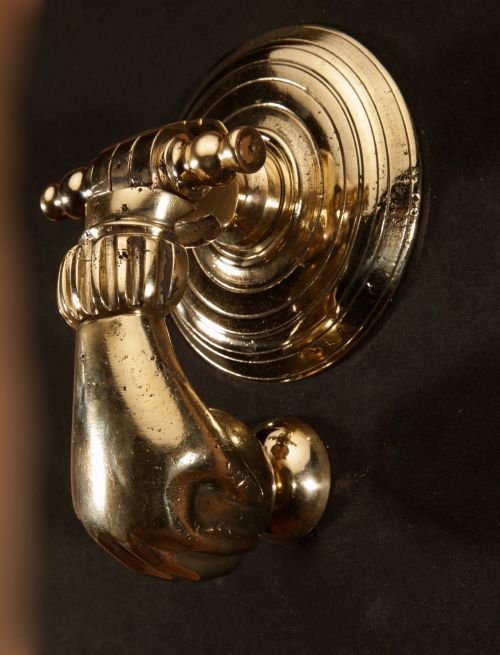
The selections available span several distinct historical eras, encompassing Georgian, Victorian, Edwardian, and 1900s designs. Buyers most frequently encounter brass door knockers shaped as hands, anchors, dolphins, or classic doctors' patterns.
Beyond knockers, the range includes bronze door pulls and brass bell pulls originating from the Georgian and Edwardian periods. Each item reflects the architectural style and metalworking standards of its specific era.
How traditional entrance door hardware was made
Items in this category are fashioned primarily from solid brass, bronze, polished bronze, and cast metal or iron. Metalworking techniques relied heavily on casting to achieve robust forms and detailed shapes like anchors and hands.
Heavier items utilise heavy gauge brass to ensure durability against frequent use on exterior doors. Finishes range from polished bronze surfaces to the natural patination of older iron and brass.
Current listings feature materials spanning solid brass, bronze, polished bronze, cast metal, and iron across multiple periods.
What varies in quality
Quality differences emerge in the substance of the metal and the definition of the casting work. Heavy gauge brass and substantial bronze pieces provide a more substantial feel in the hand than lighter alternatives.
Detailing distinguishes finer examples, visible in the precise rendering of nautical motifs, hands, or marine creatures. The crispness of the original mould and the quality of the surface polish set superior items apart.
The Traditional Entrance Door Hardware Glossary
- Doctors knocker
- A specific style of brass door knocker featuring a hammer and striking plate, historically associated with medical practitioners. This form remains a familiar sight on period front doors.
- Bell pull
- A mechanical linkage device mounted beside a door, connected to an internal bell before electric doorbells became common. Georgian examples often feature slender brass shafts.
- Solid brass
- An alloy of copper and zinc used extensively for durable hardware that resists corrosion while developing a warm patina over time.
- Bronze
- A copper alloy containing tin, valued for its strength and dark, rich finish. It appears frequently in Edwardian pulls and early door knockers.
Traditional Entrance Door Hardware: Frequently Asked Questions
What periods do these pieces date from?
The inventory spans the Georgian, Victorian, Edwardian, and 1900 eras. Each period brings distinct decorative conventions and weight to the hardware.
Items range from early Georgian bell pulls to late Victorian marine-themed knockers and twentieth-century designs.
How were these metal pieces attached?
Traditional door hardware uses screw fixings integrated into backplates or mounting lugs. Matching plates often accompany knockers to protect the door timber.
Installation requires aligning the mechanism so the striking hammer hits the plate correctly.
What metals are most common?
Solid brass and bronze form the vast majority of surviving pieces. Cast metal and iron also appear in utilitarian applications.
Polished bronze and heavy gauge brass provide the resilience needed for exterior conditions.
What shapes do door knockers take?
Common motifs include human hands, anchors, dolphins, and doctors' patterns. These shapes reflect the maritime and ornamental tastes of their respective periods.
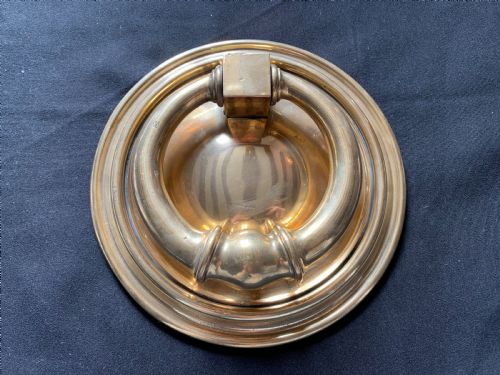
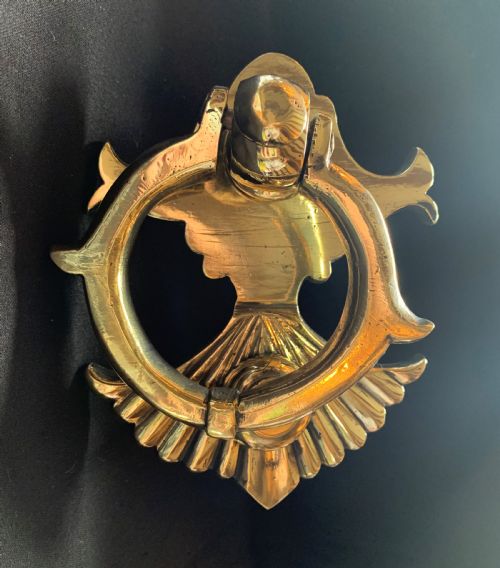
Simple rings and plates also serve as standard functional designs.