






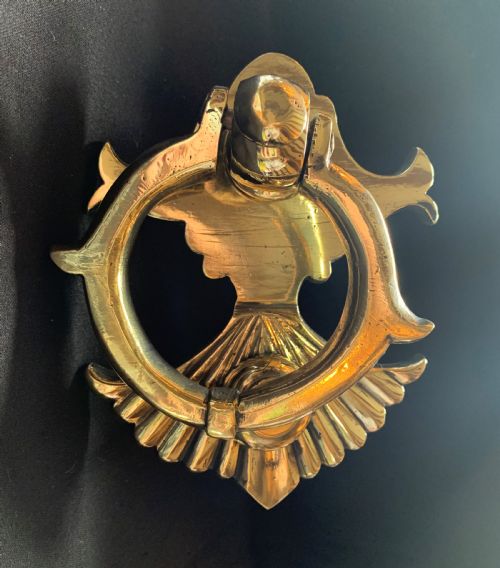


Brass Entrance Hardware
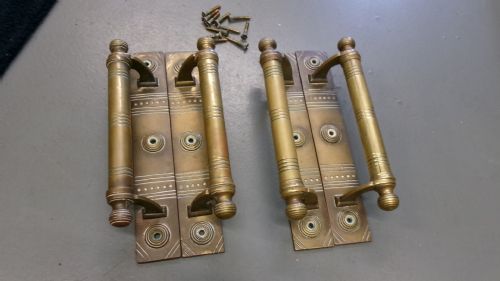
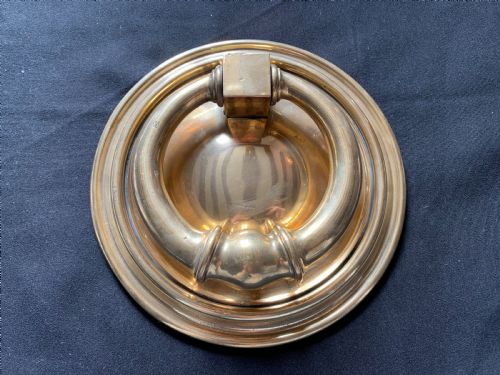
Brass entrance hardware makes a front door sing, offering heavy knockers, handles, and pulls that outlast modern fittings.
How they were made
Makers utilised casting techniques to shape heavy gauge brass and bronze into robust door hardware that could withstand daily use. Molten metal poured into moulds created the intricate details seen on animal shapes, anchors, and classical revival motifs.
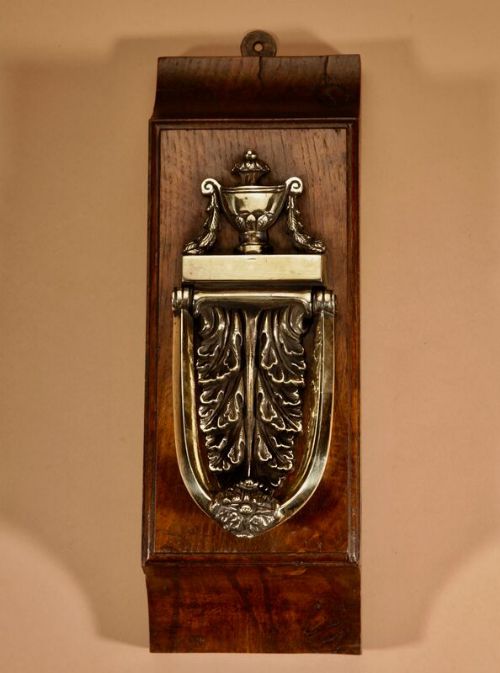
Finishing involved hand polishing or leaving surfaces to develop a natural patina over decades of exposure. Certain pieces combine cast metal with crystal inserts or oak backplates to create contrast and texture.
What varies in quality
Weight and gauge set the standard for quality in brass entrance hardware, with heavy castings offering a substantial feel that lighter modern reproductions lack. Superior examples feature crisp casting details where feathers, scales, and facial expressions remain sharp and well-defined.
The integrity of the original mounting plates, pivot pins, and striking studs determines whether a piece functions as intended rather than merely serving a decorative purpose. Metal composition also plays a role, as solid brass and bronze age gracefully compared to plated alternatives.
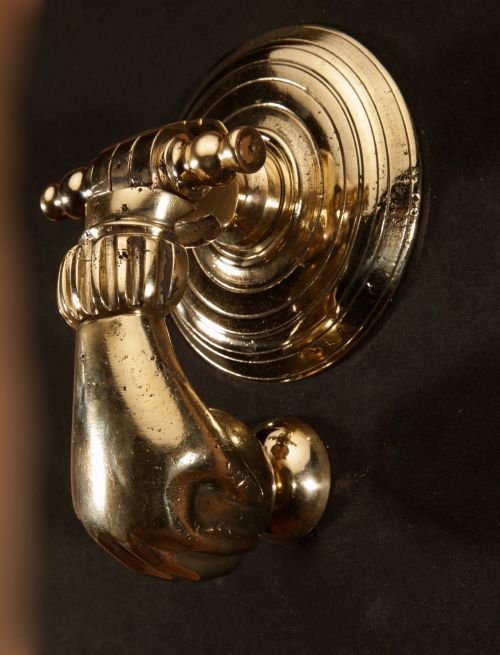
Makers cast fierce bronze hands and Maltese dolphins into solid metal, ensuring your visitors knock with marine or anatomical authority.
The Brass Entrance Hardware Glossary
- Doctors knocker
- A specific style of door knocker featuring a vertical pivot, traditionally found on the doors of medical practitioners. This design allows the hammer to lift and drop against a striking plate mounted lower down.
- Bell pull
- A mechanical linkage device mounted beside a door, connected to an internal bell before electric doorbells became common. Pulling the handle operates a crank mechanism inside the wall.
- Heavy gauge
- A term describing metalwork with a thick cross-section, ensuring high durability and resistance to bending under repeated impacts. Heavy gauge pieces often survive in better structural condition.
- Louis Seize style
- A neoclassical design vocabulary drawing on French eighteenth-century motifs, characterised by symmetry, straight lines, and classical ornamentation. Pieces in this style often display restrained elegance.
Brass Entrance Hardware: Frequently Asked Questions
How do I clean antique brass?
Most collectors prefer to leave an aged patina intact rather than polishing antique brass to a bright shine. Gentle washing with warm soapy water removes accumulated grime without stripping the historical surface.
Avoid harsh chemical dips that can pit the metal and destroy subtle shadow details in the cast relief.
Can I fit these on modern doors?
Many historical knockers and handles fit standard modern door thicknesses with simple threaded spindle adjustments or surface screws. You should check the backplate dimensions and existing hole alignments before attempting installation.
Some larger pieces require reinforced backing plates to support their considerable weight safely.
What is a doctor's knocker?
A doctor's knocker is a distinct two-part door knocker designed with a pivot bar and a striking knob positioned below it. This configuration produced a clear, echoing sound suited to large townhouses.
Medical practitioners used this specific pattern so patients and messengers could easily identify their entrance at night.
How do I date brass hardware?
Stylistic clues such as Georgian symmetry, Victorian animal motifs, or Art Deco geometric lines provide the clearest indication of a piece's period. Fastener types, casting roughness on the reverse, and the composition of the metal also help determine age.
Comparing the weight and wear patterns to known period examples confirms the era of manufacture.