





Pocket Visiting Card Case
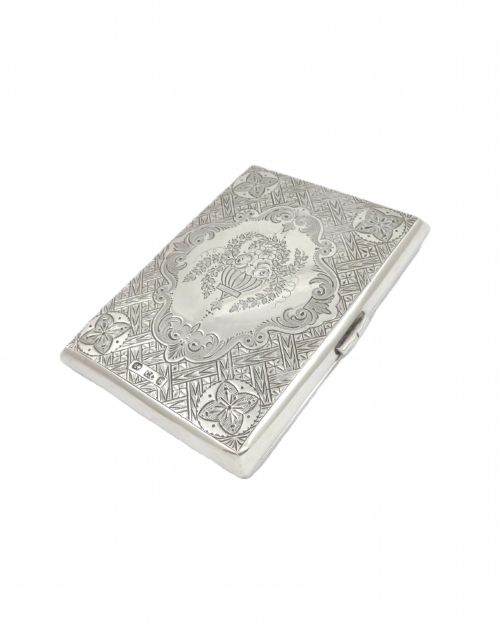
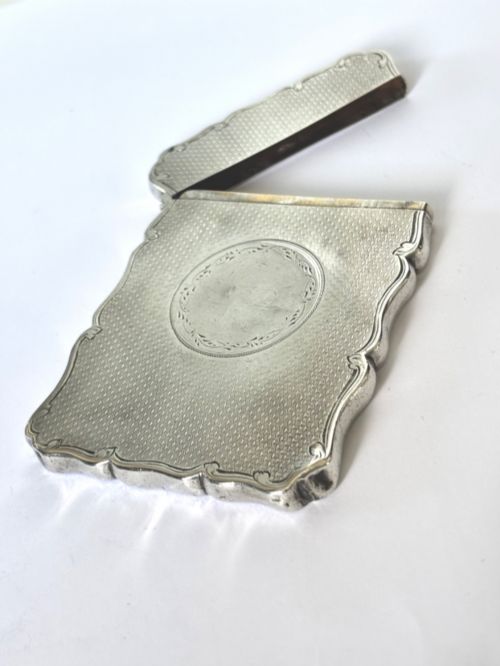
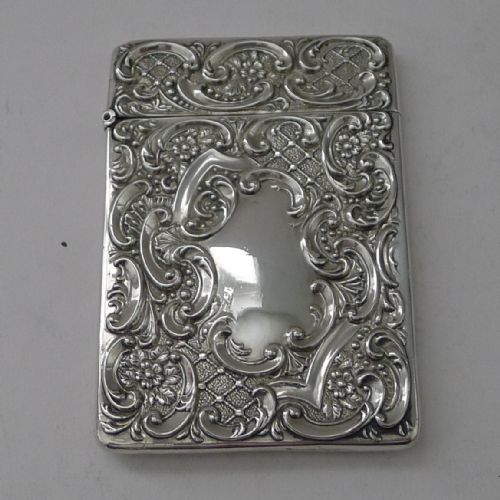
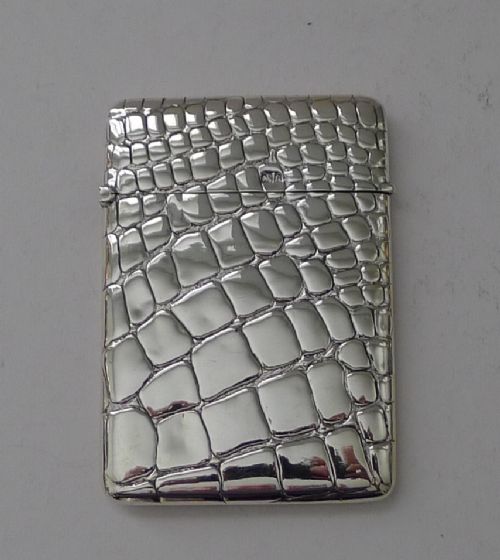
A pocket visiting card case is a compact receptacle for social exchange, most often met in sterling silver from the Victorian and Edwardian eras.
Pocket Visiting Card Case
A pocket visiting card case serves to hold calling cards during social calls. The examples gathered under this phrase span from the mid-nineteenth century through the Edwardian period, alongside occasional instances originating from earlier dates.
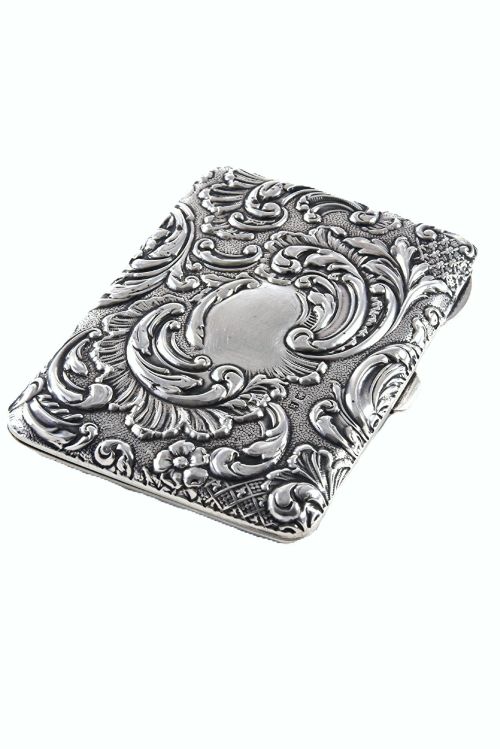
The dominant forms on this page are rectangular metal cases, alongside folding aide-memoires and novelty boxes. Materials extend beyond sterling silver to tortoiseshell, mother of pearl, bone, Connemara marble, and carved wood.
Origin points vary from English provincial assay offices to Birmingham, alongside Indian silver and Chinese wood examples. Buyers encounter everything from plain polished surfaces to elaborate architectural castle top scenes.
Materials and construction
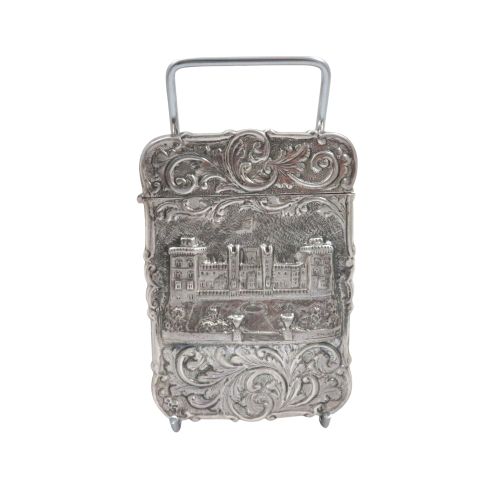
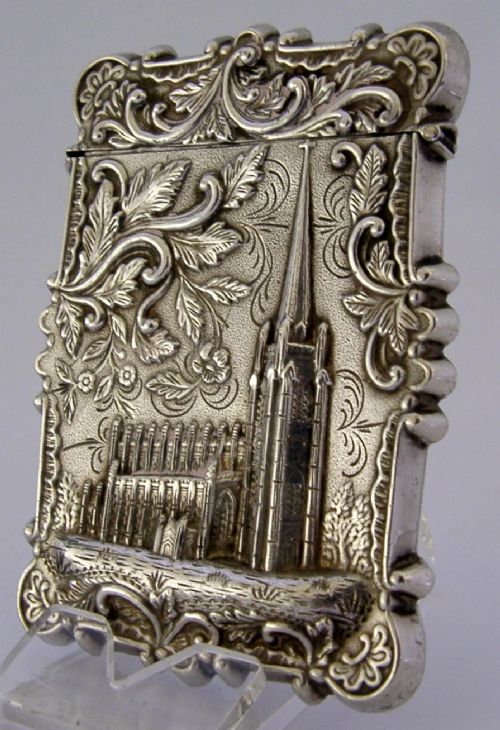
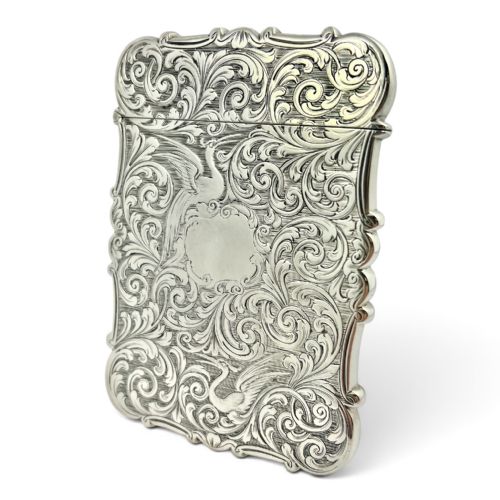
Silver cases utilise sterling standards, often shaped through stamping, repoussé, or detailed engraving to create architectural motifs such as Windsor Castle, St Paul's Cathedral, or Trinity Church.
Organic materials like tortoiseshell and mother of pearl are combined in geometric patterns, while wood examples rely on deep carving to depict figures in garden settings.
Internal arrangements frequently incorporate silk linings, gilt finishes, or spring clip mechanisms to secure the paper contents safely within the pocket.
Evaluating workmanship
Quality rests upon the crispness of the chasing and engraving, particularly on castle top examples where architectural detail defines the piece. Maker attribution, such as work by Nathaniel Mills or George Unite, distinguishes notable output.
The depth and clarity of relief work in repoussé or carved wooden panels separate standard production from superior pieces. Preservation of original gilt interiors and structural hinges also influences the standing of an item.
Nathaniel Mills·George Unite·Foxall and Co
The Pocket Visiting Card Case Glossary
- Castle top
- A silver card case featuring a high-relief engraving or casting of a specific landmark or architectural building on the lid. These pieces represent a distinct sub-genre of mid-nineteenth-century metalwork.
- Aide-memoire
- A small book or case equipped with leaf tablets or paper slips for recording notes and appointments. They often share pocket dimensions with standard calling card receptacles.
- Repoussé
- A metalworking technique where the artisan hammers the design from the reverse side to form a raised pattern in relief. It appears frequently on Indian silver examples.
- Silver gilt
- Silver that has been coated with a thin layer of gold on the interior surfaces. This treatment protects the metal and provides a decorative contrast when opened.
- Connemara marble
- A distinctive green ornamental stone sourced in Ireland, occasionally incorporated into silver card cases for decorative panels.
Pocket Visiting Card Case: Frequently Asked Questions
What is a pocket visiting card case?
A pocket visiting card case is a small, protective container designed to hold paper calling cards during the Victorian and Edwardian periods. These objects allowed individuals to present their names formally upon arriving at a residence.
Most examples take the form of flat rectangular boxes with hinged lids, though folding designs and aide-memoires also occur. They were carried easily in a pocket or reticule.
How do I identify a castle top case?
Castle top cases feature a distinct pictorial representation of a well-known building, such as Windsor Castle or St Paul's Cathedral, chased or engraved in high relief on the lid. These architectural scenes are characteristic of mid-nineteenth-century work.
Makers such as Nathaniel Mills produced notable examples of this specific form. The surrounding decoration often incorporates floral or scroll engraving to frame the central landmark.
How were these cases used?
In the nineteenth century, leaving a card was an essential social ritual for making introductions or paying respects. A clean, undamaged card was kept ready inside the protective case.
The slim proportions ensured the paper cards remained crisp and unbent despite being carried outdoors. Interior clips or silk pockets kept the contents secure during transport.