


Pocket Match Container
These pocket match container examples span Victorian and Edwardian periods, offering compact metal vessels designed to carry matches safely in daily life.
Pocket Match Container
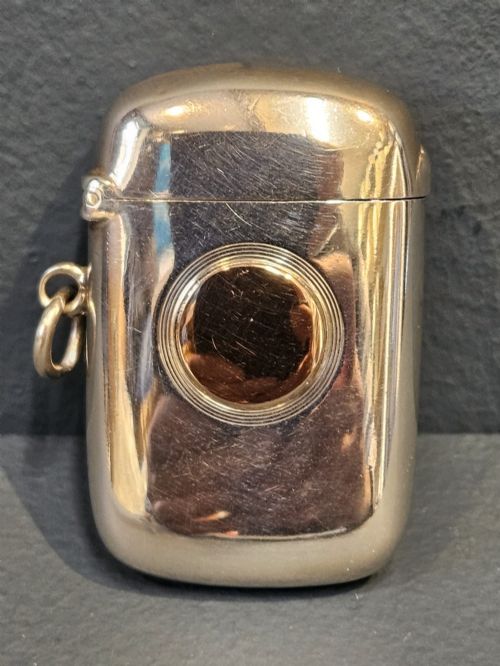
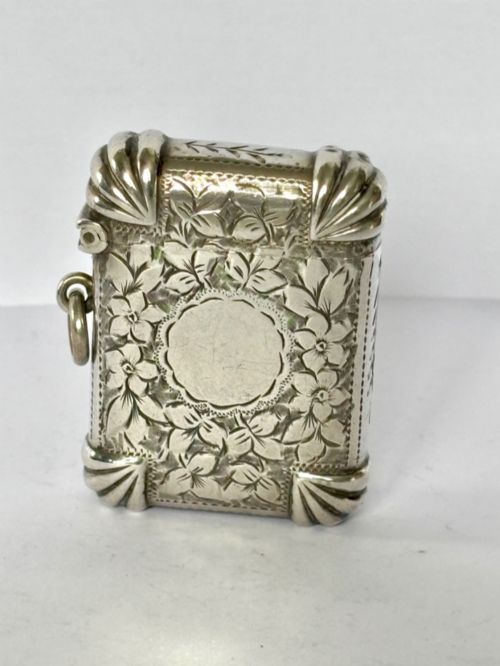
A pocket match container, often catalogued as a vesta case or wall pocket, provides a secure metal enclosure for carrying matches safely. The listings here primarily comprise silver vesta cases alongside brass wall pockets from the Victorian and Edwardian eras.
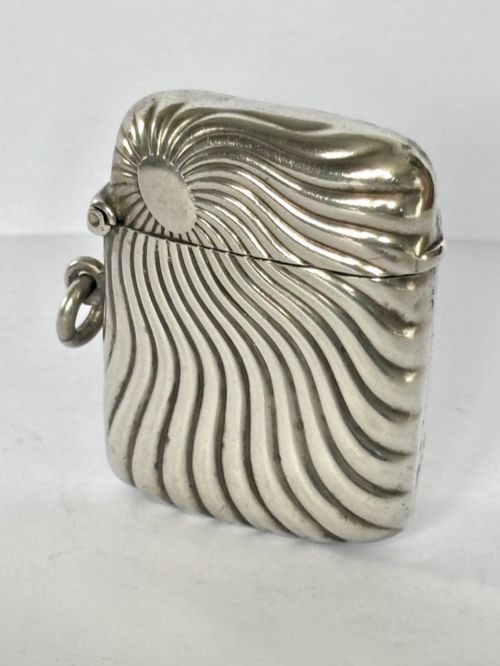
Makers utilised various forms ranging from standard rectangular shapes to novelty animals, sentry boxes, hearts, and sunburst motifs. These portable containers reflect late nineteenth and early twentieth century smoking habits and personal accessories.
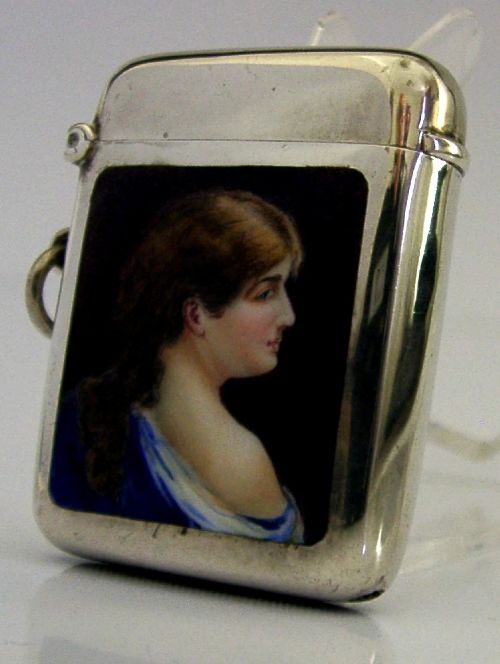
The materials recorded in the evidence lean heavily towards sterling silver, supplemented by vitreous enamel and brass. Buyers will encounter both plain functional pieces and highly decorated items featuring hand painted enamel or cast relief details.
Materials and construction methods
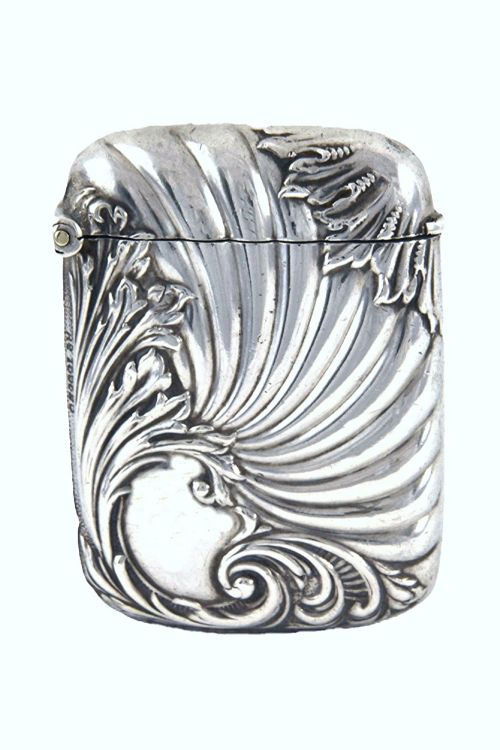
Silversmiths shaped sterling silver into hinged cases, often incorporating spring loaded lids to keep matches dry. Engraved decoration, sunburst patterns, and cast novelty shapes demonstrate traditional metalworking techniques of the period.
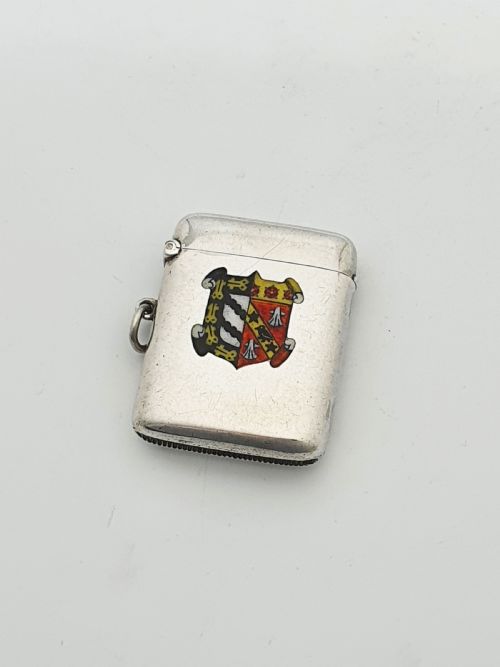
Enamel work adds colour to the silver surface through vitreous enamel and hand painted crests, fused directly to the metal base. Larger wall pockets utilise cast sheet brass to render commemorative subjects like the Nelson Victory centenary.
Hallmarks stamped into the silver provide official assay office marks, date letters, and maker stamps. These punch marks verify the metal standard and trace the origin of each piece to cities such as Birmingham.
The evidence shows items spanning from 1870 to 1960, utilising sterling silver, vitreous enamel, and brass in both functional and novelty forms.
Distinctions in quality and execution
Quality separates standard utilitarian items from exceptional novelty forms and enamelled pieces. Well defined cat figures, elephant shapes, and sentry box designs require advanced metal casting and detailing that elevate a piece above a plain rectangular case.
The condition and application of vitreous enamel dictate the visual standard of decorated pieces. Intact hand painted enamel crests and vibrant sunburst designs represent superior craftsmanship compared to plain or heavily worn surfaces.
Crispness of hallmarks and structural integrity of the hinge and spring mechanism indicate fine manufacturing standards. A sturdy closure and clear maker marks show that the container was produced with greater care by established workshops.
EV PLEDGE & SON·ROBERT CHANDLER·Sampson Mordan
The Pocket Match Container Glossary
- Vesta case
- A small pocket match container designed to hold vestas, which were early matches tipped with phosphorus. These cases typically feature a striking strip on the base.
- Vitreous enamel
- Glass powder fused to a metal surface through high temperature firing. This technique creates a smooth, durable coloured finish on silver cases.
- Hallmark
- A series of official marks stamped on precious metals. It indicates the metal purity, assay office, and year of manufacture.
- Novelty vesta
- A pocket match container shaped to represent an animal, object, or figure rather than a standard geometric box. Collectors prize these imaginative forms.
- Wall pocket
- A hanging receptacle designed to be mounted on a wall rather than carried in a pocket. Brass examples commemorate specific historical events.
Pocket Match Container: Frequently Asked Questions
What is a pocket match container?
A pocket match container is a small protective case, historically called a vesta case, used to carry matches safely in a pocket or bag. They prevent friction and keep the matches dry.
Most examples date from the Victorian and Edwardian eras when pocket matches required secure housing to avoid accidental ignition. They were standard personal accessories for smokers.
How do I date a silver match case?
You date a silver match case by examining the hallmarks stamped into the metal. These marks include assay office symbols and date letters corresponding to specific years.
Additional dating clues come from the overall style, decorative motifs, and any engraved inscriptions on the surface. Victorian and Edwardian pieces show distinct manufacturing characteristics.
Why do some match cases have enamel?
Enamel was applied to pocket match containers to add colour, ornamentation, and heraldic details such as crests. Vitreous enamel fused durability with decorative appeal.
These enamelled pieces often represent higher quality production values and command greater interest from collectors seeking visual variety beyond plain silver.
What are novelty vesta cases?
Novelty vesta cases are pocket match containers modelled into recognizable shapes like animals, figures, or buildings. Examples include elephants, cats, and sentry boxes.
These whimsical forms required skilled casting and hand finishing by silversmiths. They functioned as both practical accessories and amusing conversation pieces.