

Pocket Match Case
When you search for a pocket match case, you are looking at small personal containers designed to hold safety matches safely in the pocket or on a watch chain.
Pocket Match Case
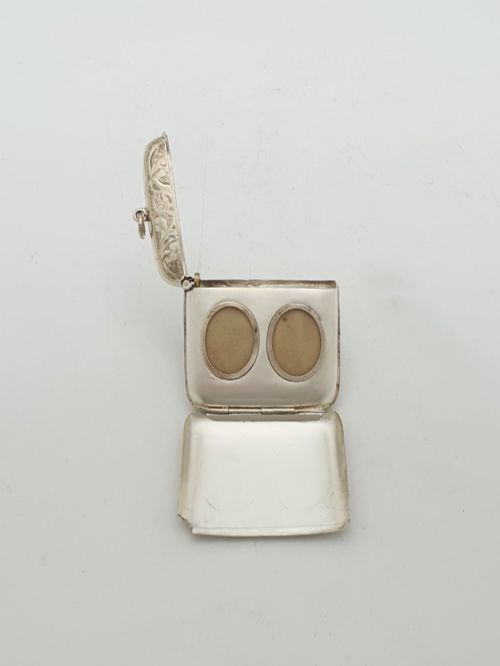
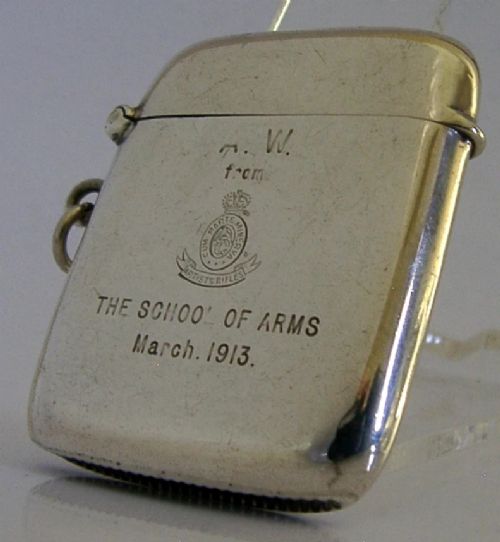
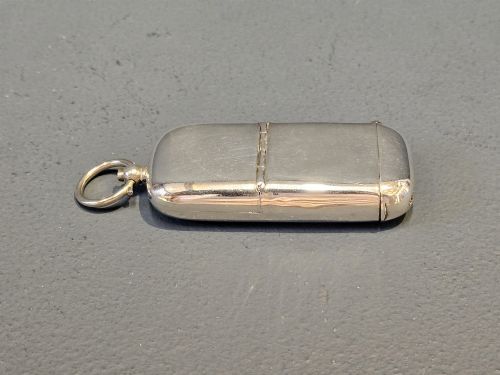
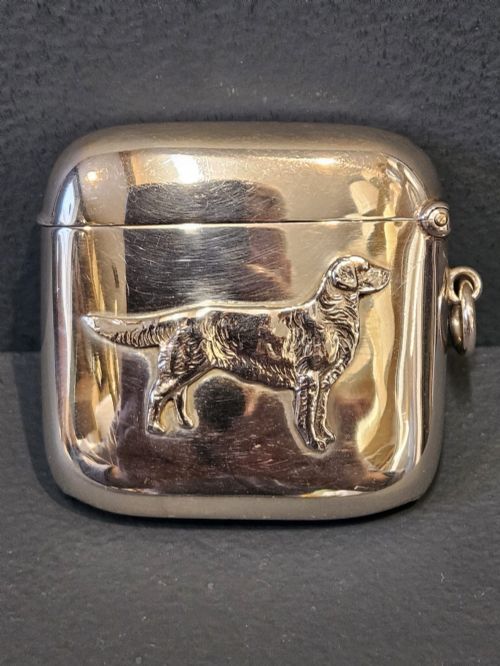
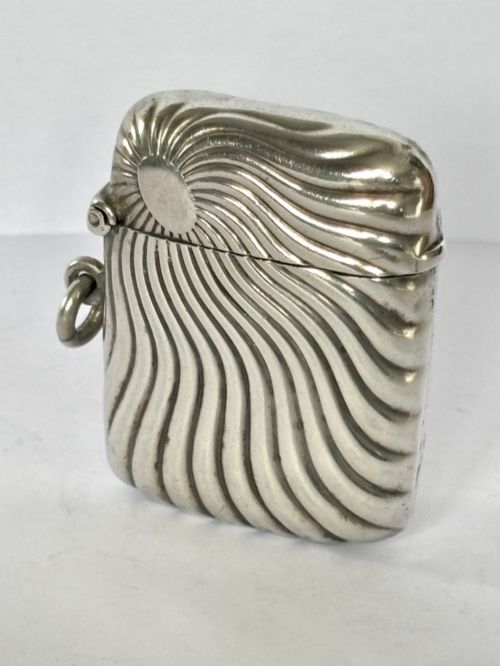
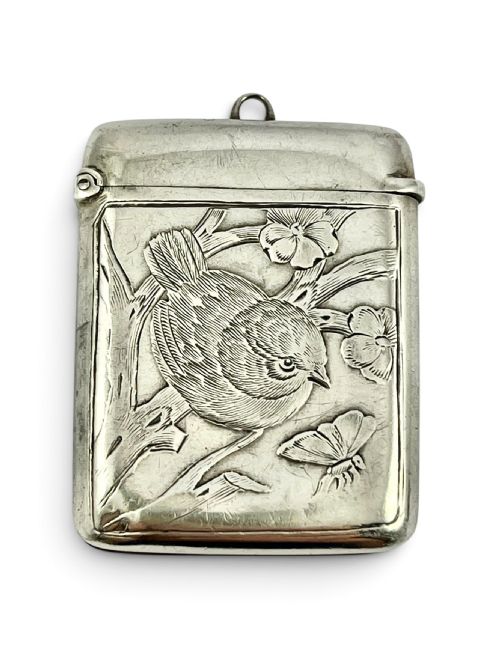
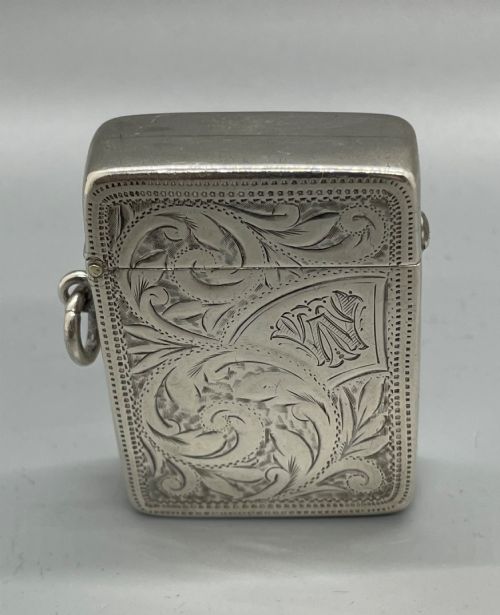
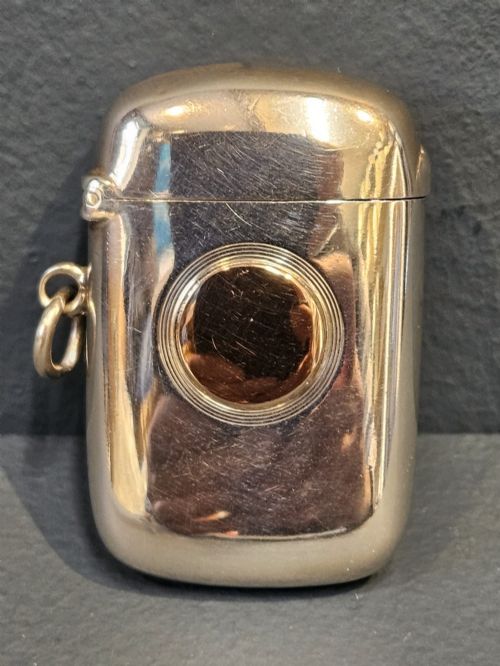
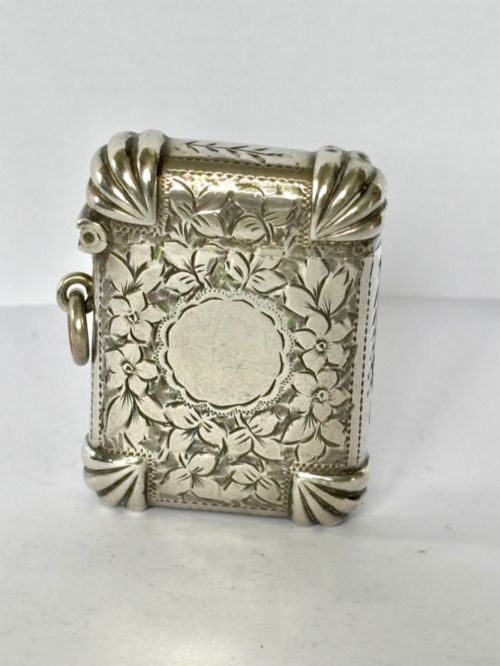
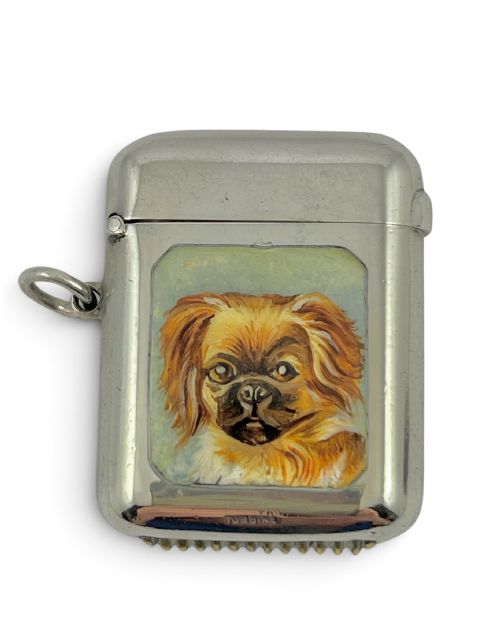
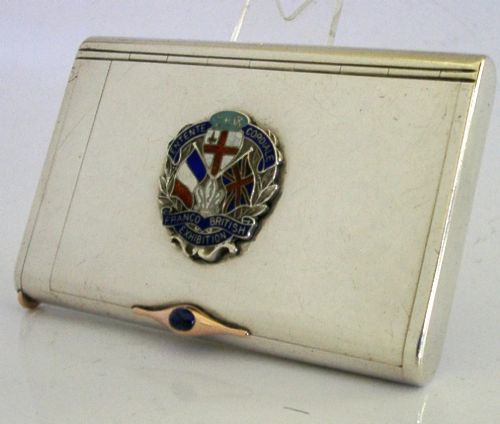
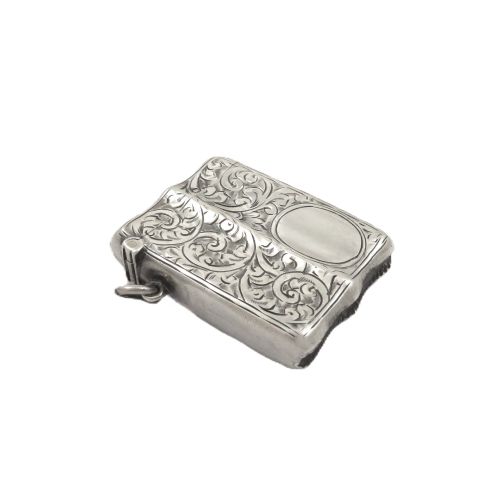
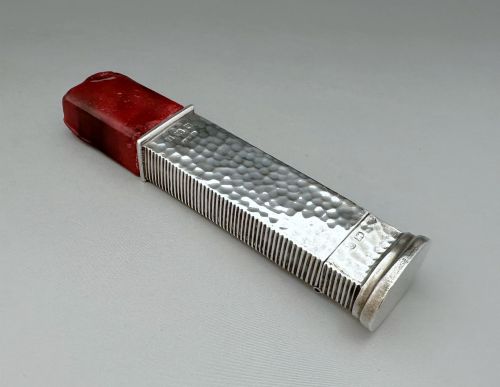
A pocket match case, often referred to as a vesta case or match safe, is a portable container designed to protect matches and provide a striking surface. These items date predominantly from the Victorian and Edwardian periods, stretching into the early decades of the twentieth century. The primary forms found in these listings include standard rectangular vesta cases, novelty shapes, and combination pieces that incorporate sovereign holders, stamp compartments, or wax tapers.
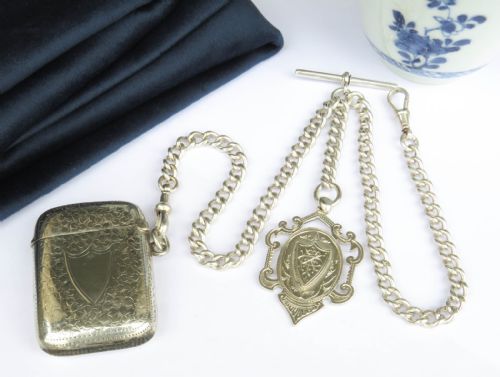
The pieces on this page span the late nineteenth century through to the 1930s, encompassing styles from Arts and Crafts and Art Nouveau to Art Deco and Victorian novelty. Most examples are designed to attach to pocket watch chains or watch alberts, serving as both functional accessories and decorative items for gentlemen and ladies alike. Buyers will encounter simple engraved silver boxes alongside highly detailed enamelled pieces and unusual configurations such as double-ended cigar shapes or standing desk vestas.
Materials and Construction Techniques
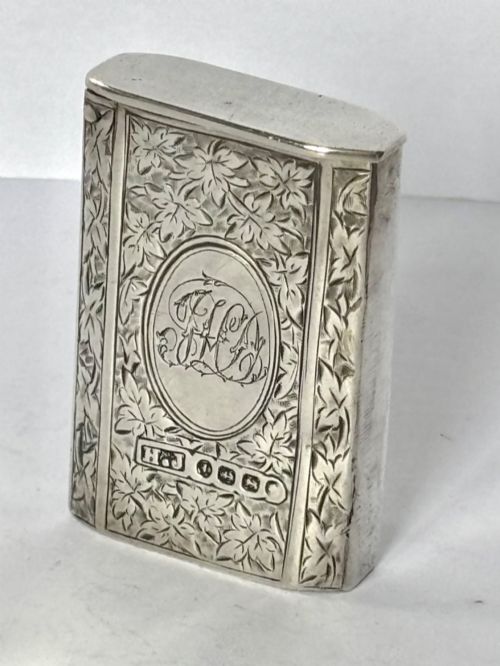
The majority of these pieces are fashioned from sterling silver, hallmarked across British assay offices in towns such as Birmingham, Chester, and London. Makers utilised sheet silver, stamping and pressing the metal into desired forms before soldering hinges, spring-loaded lids, and striking serrations onto the base. Gold, brass, and continental silver variants also appear, alongside specialised interior fittings for wax tapers and sealing wax.
Pocket Match Case Retail Price Guide 2026
Typical asking prices for pocket match case among the pieces listed under this phrase on Sellingantiques today, from the lower quarter to the upper quarter. They describe what is for sale here now, not the wider market.
One exceptional Victorian novelty case takes the form of a tiny sentry box, described by makers as an unrecorded production error.
Distinguishing Quality and Craftsmanship
Quality in a pocket match case rests largely on the complexity of the design and the integrity of the mechanical elements. Pieces that incorporate multiple functions, such as combined sovereign cases, photo frames, or go-to-bed taper holders, represent a higher tier of manufacturing skill than standard single-compartment boxes. The crispness of the hallmark stamps and the weight of the silver gauge further separate standard production items from masterworks.
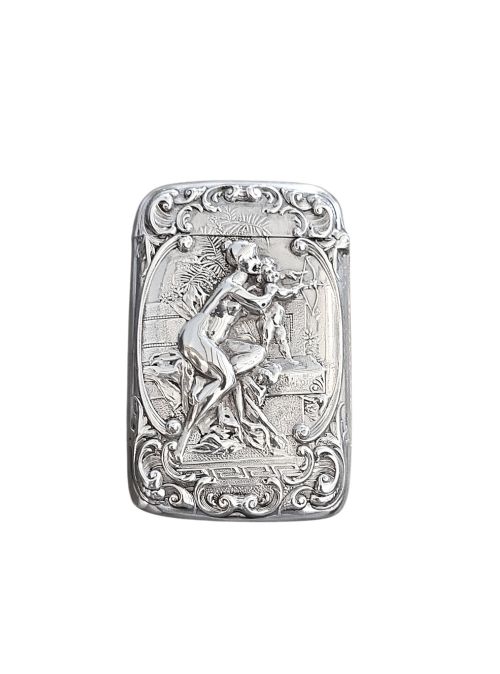
The standard of surface ornamentation also dictates where a piece sits within the range. Hand-painted enamelling, detailed figural engravings, and novelty configurations by recognised makers command greater attention than plain polished surfaces. A tightly closing lid with a functional, snap-shut spring hinge indicates preserved utility and superior original construction.
Sampson Mordan & Co·Howard James·EV Pledge & Son·Robert Chandler·A & J Zimmerman·William Neale·Robert Pringle·Minshull & Latimer·Alfred Clark
The Pocket Match Case Glossary
- Vesta Case
- A small pocket container designed to hold vestas, an early type of match, complete with a textured striking surface on the exterior. These cases protected matches from friction and moisture while carried about the person.
- Sovereign Case
- A small circular pocket container made to hold British gold sovereign coins. Many examples were combined with match cases to form dual-purpose accessories.
- Watch Albert
- A chain attached to a pocket watch and secured through a buttonhole or waistcoat pocket. Match cases were frequently suspended from these chains as fobs.
- Taper
- A slender wax-coated wick used for transferring a flame from a fireplace or match to a candle or pipe. Combination vesta cases often housed these alongside matches.
- Hallmark
- An official stamp struck into precious metals indicating the purity, the assay office of origin, and the year of manufacture. British silver examples reliably date pieces to specific Victorian and Edwardian years.
Pocket Match Case: Frequently Asked Questions
How do I wear a pocket match case?
These pieces were traditionally suspended from a pocket watch chain, known as an albert, using the integrated jump ring or swivel loop attached to the top of the case. They hung across the waistcoat or tucked into a pocket alongside the watch.
Modern collectors often display them on vintage chains or keep them within pocket collections as part of a desktop arrangement.
What is the difference between a vesta and a match safe?
The terms are largely interchangeable, though 'vesta case' is the preferred British term originating from the trade name for short matches tipped with phosphorus. Both refer to the same small, hinged pocket container designed to carry matches safely.
American collectors more commonly use 'match safe', while British listings rely on vesta case or matchbook box.
How do I tell a Victorian case from an Edwardian one?
Dating relies primarily on the stamped hallmarks showing the monarch's head or the date letter corresponding to specific assay office cycles. Victorian pieces bear stamps from the reign of Queen Victoria, ending in 1901.
Edwardian pieces date from 1901 to 1910, often displaying distinct art nouveau influences and lighter, more stylised engraved patterns compared to heavier Victorian forms.
What were combination vesta cases used for?
Combination cases integrated secondary functions into the match container to save space in the pocket. Common variations included sovereign holders for gold coins, stamp compartments, or miniature wax tapers for lighting pipes and cigars.
More elaborate examples incorporated tiny photograph frames or sealing wax holders for correspondence.