

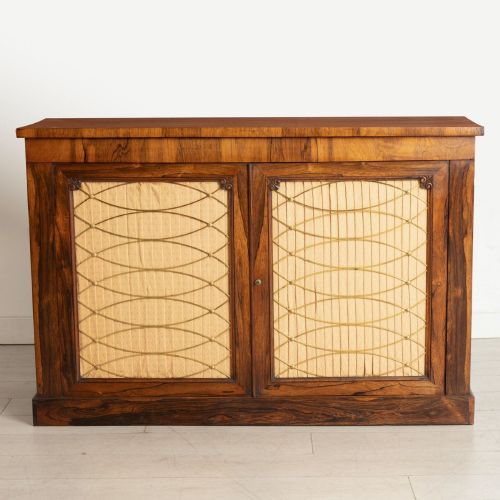
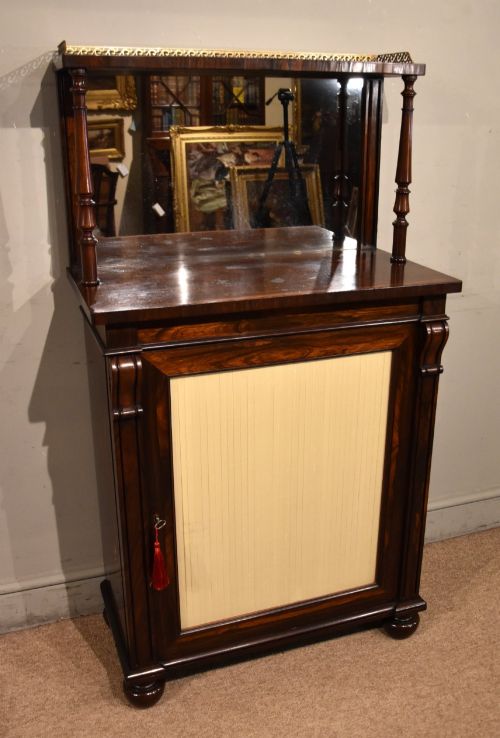

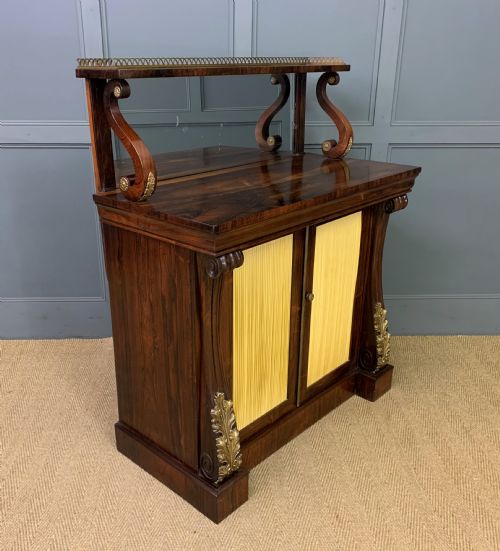
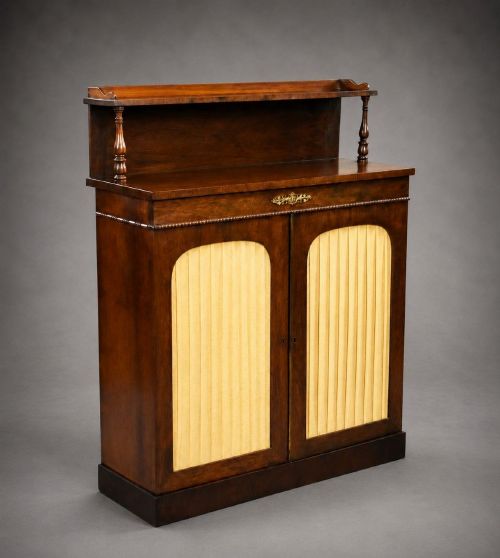


Pleated Fabric Door Sideboard
These pleated fabric door sideboard designs bring rich rosewood and brass detail into a room, offering both display space and concealed storage.
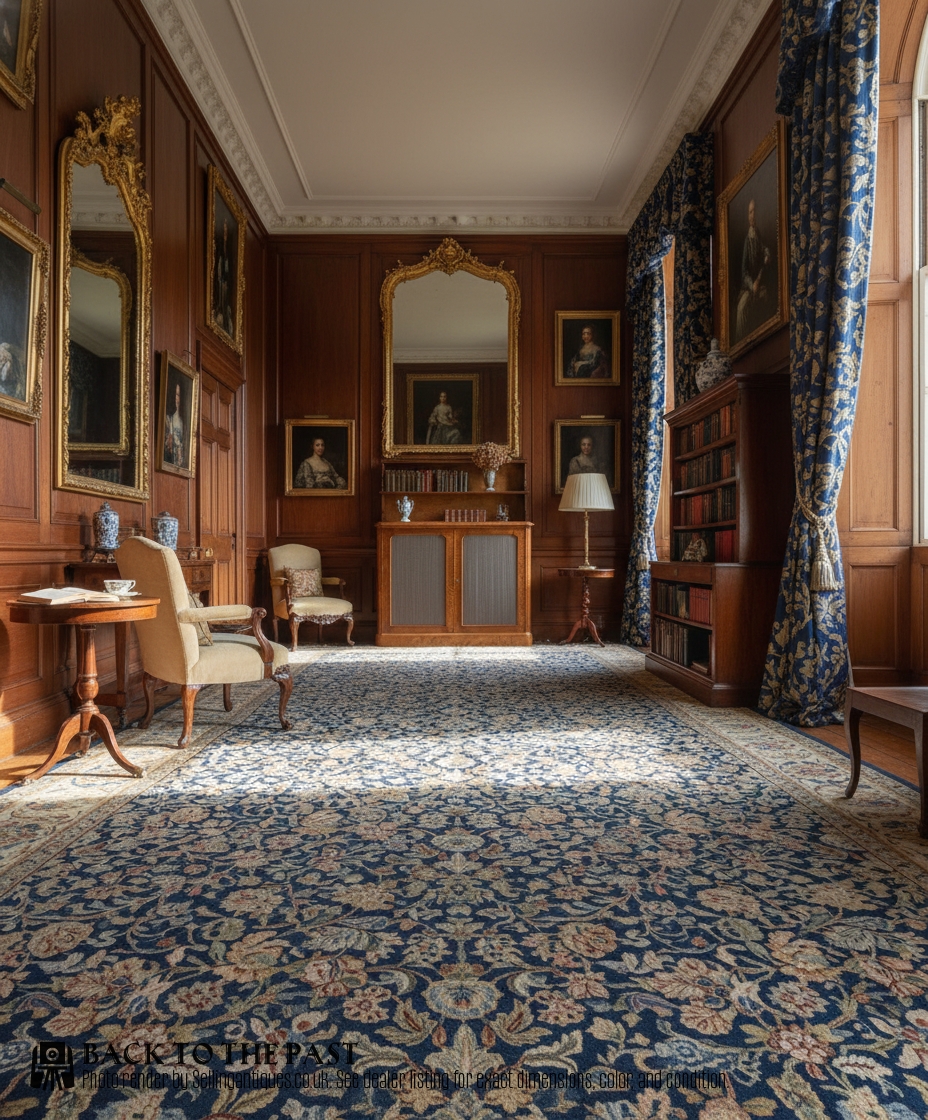
Pleated Fabric Door Sideboard
When you search for a pleated fabric door sideboard, you are looking at nineteenth-century storage pieces that combine timber framing with textile panels. The pieces on this page span the Regency, George IV, William IV, Victorian, and eighteen-fifty periods, alongside French Empire work. They appear primarily as chiffoniers, side cabinets, and credenzas.
The form typically involves a low timber base with enclosed lower doors behind which pleated fabric protects the contents from view. Many examples incorporate open shelving or bookcase superstructures above the main cabinet surface. These versatile items served formal living spaces and libraries as elegant serving stations or display furniture.
How they were made
Cabinet makers constructed these pieces using dense hardwoods such as rosewood, goncalo alves, simulated rosewood, satinwood veneer, and mahogany. These timbers were selected for their deep grain patterns and finished with polished surfaces. Brass mounts and giltwood details often highlight the structural lines and door frames.
The defining feature involves inset pleated fabric panels set into the doors, allowing ventilation while concealing the interior. Mirror glass inserts frequently appear in the upper sections or back panels to reflect light within the room. Skilled joinery ensures the heavy timber frames support the delicate textile and glass elements securely.
Pleated Fabric Door Sideboard Retail Price Guide 2026
Typical asking prices for pleated fabric door sideboard among the pieces listed under this phrase on Sellingantiques today, from the lower quarter to the upper quarter. They describe what is for sale here now, not the wider market.
Pleated fabric doors let fresh air circulate around your porcelain while hiding the tea service from the cat.
What varies in quality
The refinement of the timber selection dictates the visual impact of each cabinet, with richly figured rosewood and detailed satinwood veneer standing apart from simpler simulated finishes. The precision of the brass mounts and the execution of the woodwork show the hand of skilled workshops. Better examples balance the proportions of the upper bookcase or mirror sections with the lower storage base.
The integrity of the pleated fabric panels and the preservation of original mirror glass influence the character of surviving pieces. Construction details, such as the stability of the breakfront or serpentine forms, reveal the original ambition of the design. Subtle variations in turning, carving, and giltwood enrichment separate standard utility items from high-status furniture.
The Pleated Fabric Door Sideboard Glossary
- Chiffonier
- A low sideboard or cabinet with enclosed storage below, frequently featuring a raised shelf or bookcase superstructure. This form became popular during the Regency and Victorian periods for domestic living rooms.
- Credenza
- A grand sideboard or display cabinet often embellished with elaborate wood figures and glass panels. Victorian examples use serpentine shapes and decorative mounts to create a formal presence.
- Goncalo Alves
- A dense exotic hardwood prized for its striking contrasting grain patterns. Makers utilised this timber in Regency cabinetry to create visually dramatic surfaces.
- Simulated Rosewood
- A painted or stained finish applied to a secondary timber to imitate the appearance of genuine rosewood. This technique provided the fashionable dark aesthetic at a different cost.
- Breakfront
- A cabinet design where the central section projects forward from the flanking sides. This architectural arrangement adds depth and shadow to the facade.
Pleated Fabric Door Sideboard: Frequently Asked Questions
What is a chiffonier?
A chiffonier is a low cabinet with lower doors and often an upper shelf or bookcase. It functions as a compact sideboard for dining rooms and parlours.
These pieces developed during the nineteenth century to provide accessible storage and display surfaces. They suit modern rooms as low media units or hallway consoles.
How do I identify a Regency cabinet?
Regency pieces display classical proportions, dark exotic timbers, and restrained brass or gilt mounts. They often feature simple architectural lines combined with rosewood veneers.
Look for architectural cornices and turnings that reflect early nineteenth-century design tastes. The use of simulated rosewood also points to this specific era.
Where were these cabinets used?
Original owners placed these cabinets in dining rooms, libraries, and drawing rooms. They held tableware, books, and decorative objects.
Today, they adapt easily to contemporary interiors as statement storage pieces. Their enclosed lower sections hide modern clutter effectively.
What timber was most popular?
Rosewood dominated the production of these cabinets during the Regency and Victorian eras. Its dark, heavily figured grain defined fashionable furniture.
Cabinet makers also utilised mahogany, satinwood veneer, and goncalo alves. Simulated rosewood offered an alternative appearance using painted secondary woods.