




Platinum Sapphire Jewellery
Platinum sapphire jewellery brings together the cool strength of precious white metal and the deep, rich hues of corundum.
Platinum Sapphire Jewellery
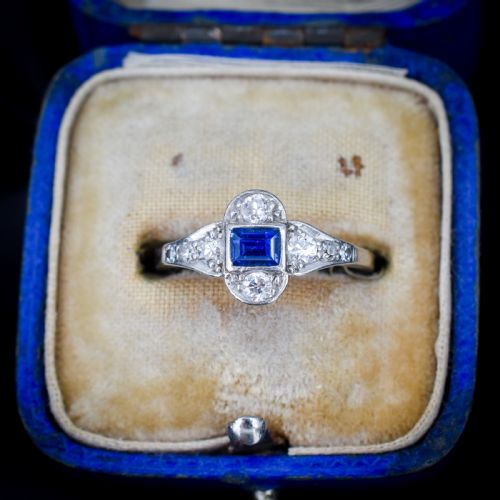
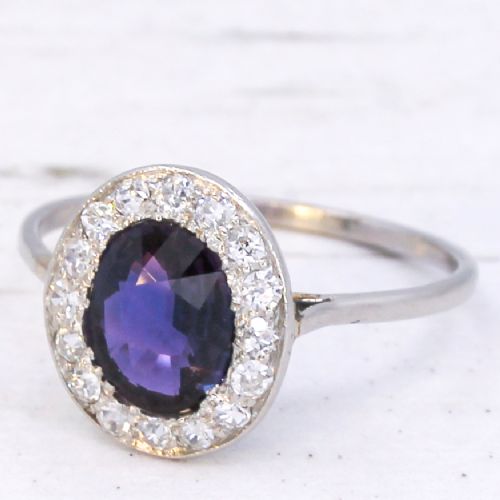
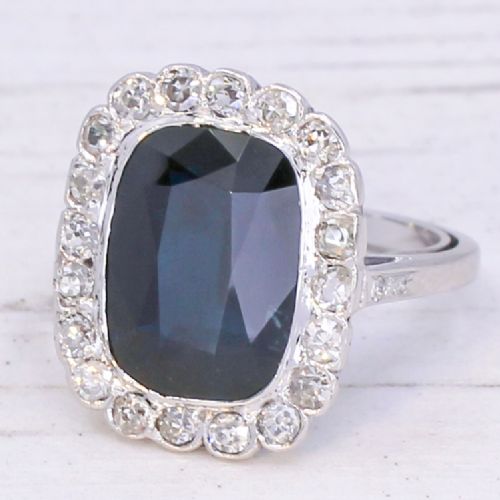
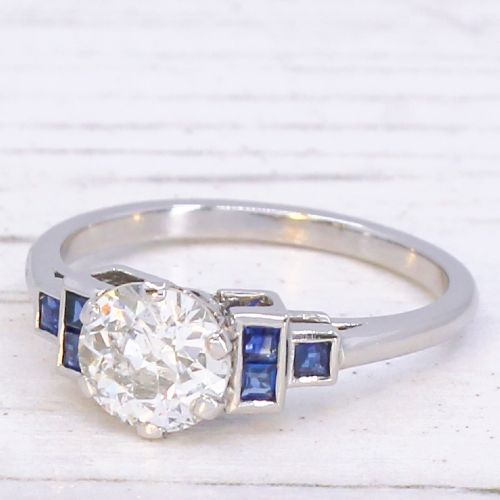
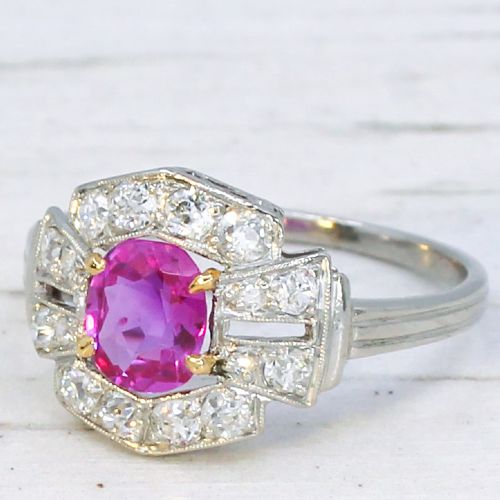
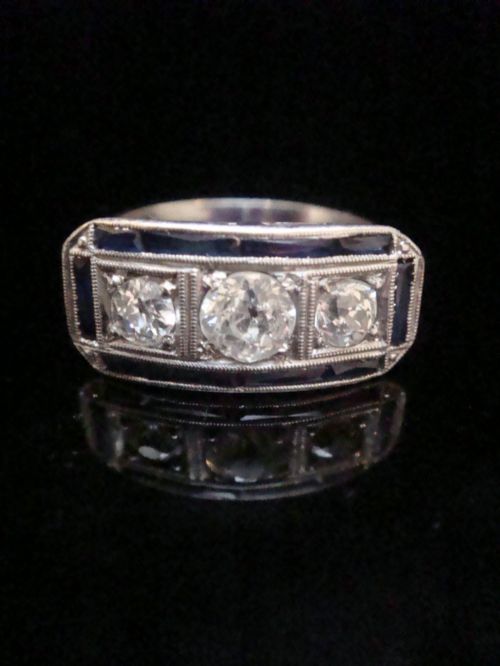
Platinum sapphire jewellery encompasses rings, pendants, brooches, bracelets, and cufflinks created across several periods from the Victorian era through the mid-twentieth century. The selection leans heavily towards Art Deco designs and vintage pieces from the 1920s, 1930s, 1940s, and 1950s.
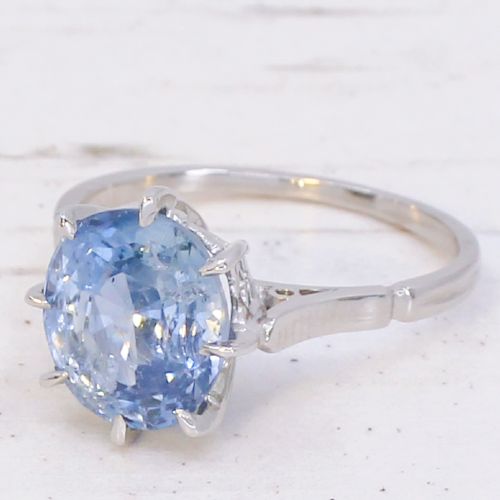
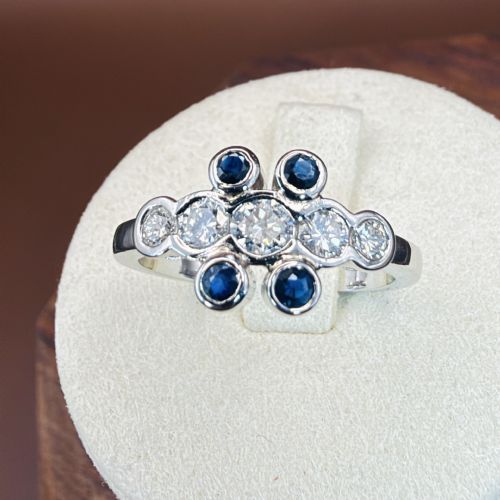
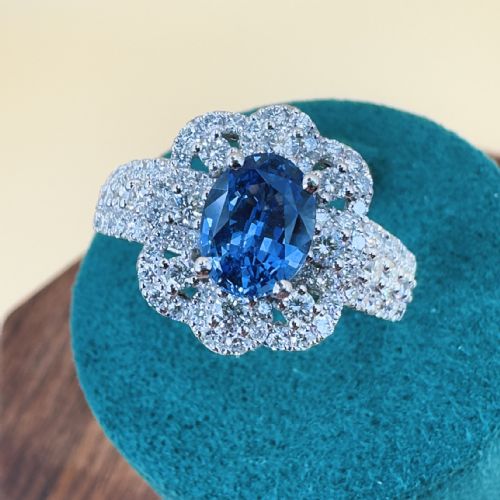
Rings form the core of the offering, ranging from delicate three-stone configurations and floral clusters to substantial cocktail rings featuring unheated Ceylon and Burmese stones. Alongside these, buyers encounter diamond-accented line bracelets, geometric brooches, and pendants utilising oval, navette, and marquise cuts.
Materials and construction techniques
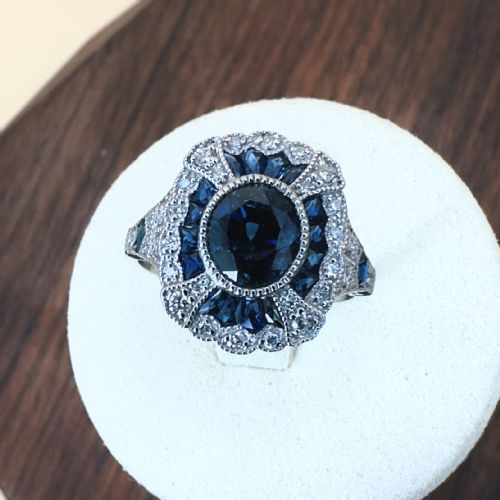
Makers utilised platinum for its exceptional tensile strength, which allowed workshops to create intricate, lace-like settings and fine millegrain edges that securely held diamonds and sapphires with minimal metal visible. This malleability supported the geometric and symmetrical demands of Art Deco design without sacrificing durability.
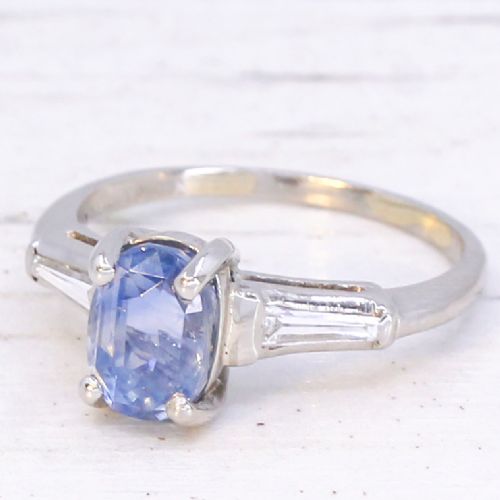
Stones were typically hand-set alongside old cut, transitional cut, or baguette diamonds, utilising claw, bezel, and cluster arrangements. The combination of platinum's bright white finish with high-carat gold elements often provided structural contrast in rings and cufflinks from the early decades of the twentieth century.
Listings feature platinum sapphire jewellery spanning the Victorian era through the 1960s, with a strong concentration of Art Deco pieces.
Distinctions in quality and execution
Quality rests significantly on the origin, treatment status, and weight of the sapphire, with unheated stones originating from historic locations like Ceylon, Kashmir, or Burma commanding particular attention from collectors. The depth of colour saturation and natural clarity within these unheated corundum specimens dictate much of the piece's standing.
The finesse of the platinum fabrication also separates standard production from exceptional work, visible in the precision of pierced gallery work, hand-formed millegrain, and the harmonious integration of accompanying diamond cuts. Heavier gram weights and balanced proportions between the central sapphire and surrounding pavé or baguette diamonds reflect superior workshop standards.
Le Vian
The Platinum Sapphire Jewellery Glossary
- Unheated
- A sapphire that has undergone no thermal enhancement to improve its natural colour or clarity. This state is verified through gemmological testing and heavily influences desirability.
- Ceylon sapphire
- A corundum gemstone originating from the island nation historically known as Ceylon, now Sri Lanka. These stones are frequently recognised for a vibrant and lively blue hue.
- Millegrain
- A decorative jewellery technique featuring a border of tiny raised metal beads along the edges of a setting. It adds a soft, textural finish typical of Edwardian and Art Deco platinum work.
- Navette
- A boat-shaped gemstone cut or mounting style, elongated with pointed ends. This silhouette creates a striking finger-coverage effect on cocktail rings.
- Old cut
- A diamond facet style hand-polished before modern standardised brilliant cutting machinery existed. These stones display smaller tables and higher crowns, casting a distinctive candlelit sparkle.
Platinum Sapphire Jewellery: Frequently Asked Questions
How do I care for platinum sapphire jewellery?
Platinum is a durable and corrosion-resistant metal that requires little more than warm soapy water and a soft brush to maintain its finish. Avoid harsh chemicals and store pieces individually to prevent diamonds from scratching the softer sapphire surfaces.
While platinum handles daily wear well, antique prong settings should be checked periodically by a professional jeweller to ensure stones remain completely secure.
Are these sapphires natural and untreated?
Many fine pieces feature unheated sapphires originating from traditional sources such as Ceylon, Burma, or Kashmir. Laboratory certificates often accompany these specific stones to verify their natural status.
Treatment descriptions in individual listings indicate whether a sapphire has remained entirely natural since extraction from the earth.
What defines Art Deco platinum settings?
Art Deco platinum settings rely on geometric symmetry, sharp lines, and openwork filigree to frame colourful gemstones and diamonds. The choice of platinum allowed jewellers to use ultra-thin claws that maximised light entry into the stones.
This aesthetic dominated the 1920s and 1930s, producing distinctive target rings, navette clusters, and linear bracelets.
Can these rings be resized easily?
Platinum allows for straightforward sizing by skilled jewellers who can cut, adjust, and laser-weld the shank back to structural integrity. The presence of delicate side engraving or continuous channel-set diamonds may require careful planning during the process.
Consulting a specialist familiar with antique and vintage platinum fabrication ensures the original proportions remain undisturbed.