


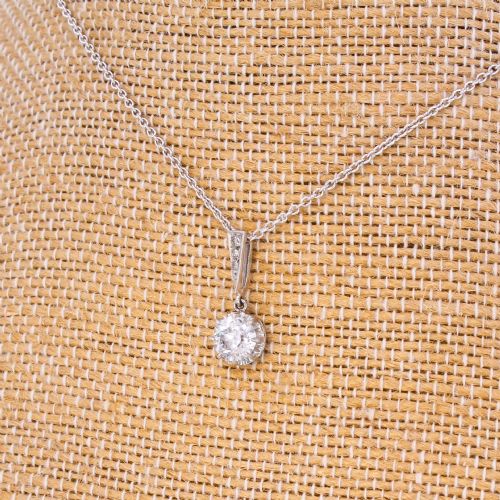
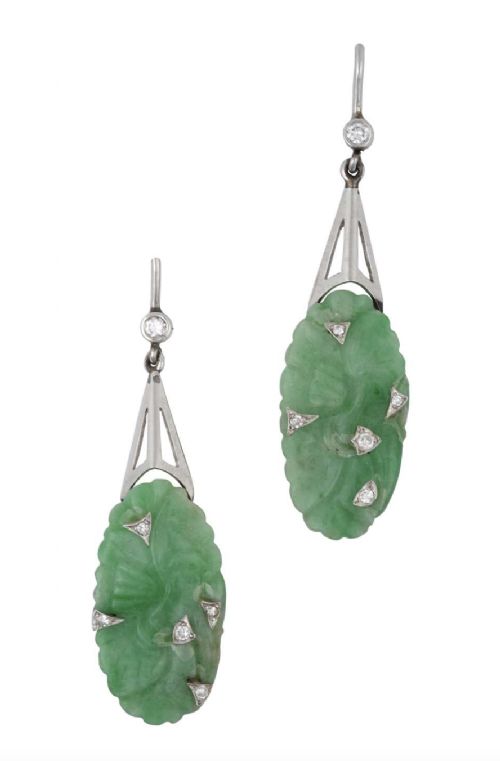


Platinum Drop Pendant
When you search for a platinum drop pendant, you seek delicate, light-framed jewellery that suspends gemstones below the main chain to catch the light.
Platinum Drop Pendant
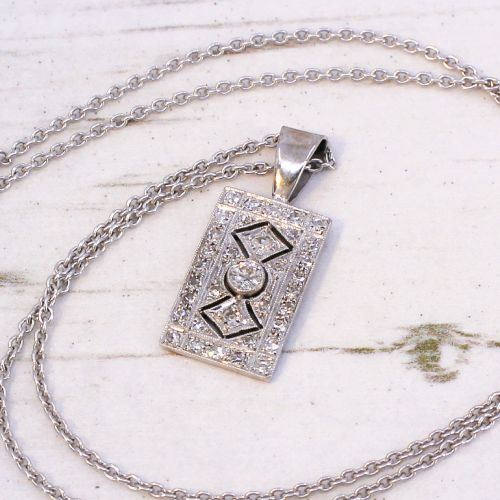
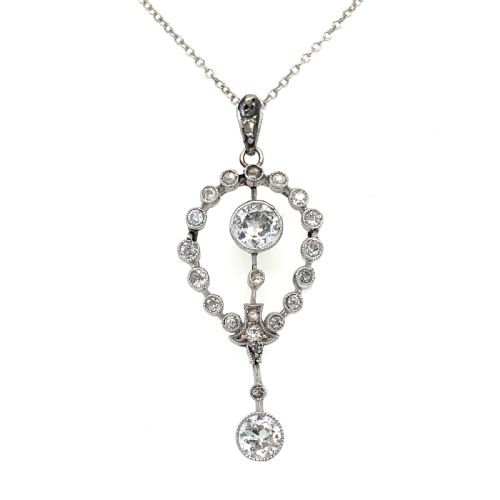
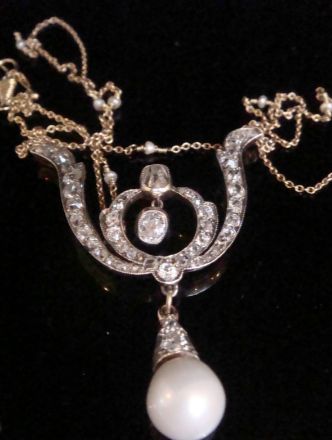
A platinum drop pendant suspends stones such as diamonds, aquamarines, or pearls beneath a fixed bail or chain link, forming a vertical silhouette. These pieces appear frequently in Edwardian and Art Deco designs, where metalwork mimics lace or geometric abstraction.
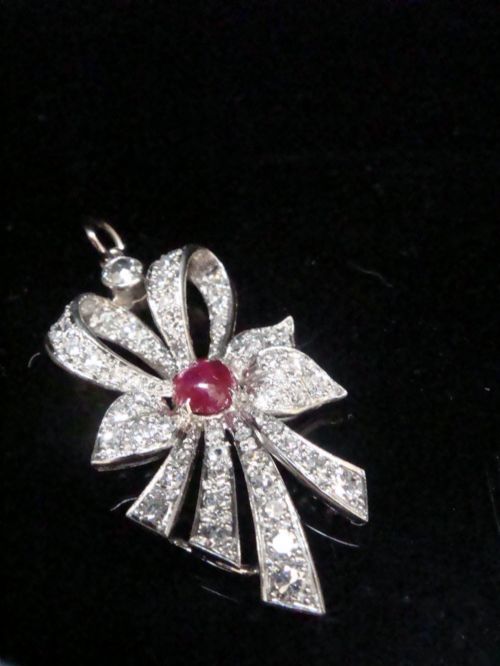
The selection ranges from simple diamond solitaires to elaborate gemstone clusters framed in platinum, often combined with gold elements. You will encounter forms styled as bows, negligee necklaces, and articulated drops dating from the late Victorian period through the mid-century.
Materials and construction
Platinum provides the strong, ductile framework that allows metalsmiths to form extremely thin collets and knife-edge wire without risking the security of the stones. This high tensile strength permitted the delicate, airy geometries seen in Edwardian garlands and Art Deco architectural motifs.
Gems are predominantly set with hand-beaded millegrain edges and tiny platinum claws that hold old cut, rose cut, or brilliant cut diamonds alongside coloured stones like aquamarines, sapphires, and jadeite.
The listings span from Victorian and Edwardian iterations through Art Deco geometry to Mid-Century Modern designs, predominantly worked in platinum.
Distinguishing quality in craftsmanship
The degree of articulation in the drop elements dictates the fluidity of the piece when worn, separating rigid assemblies from supple, hand-pierced creations. Superior examples show meticulous piercing on the reverse as well as the front.
Stone selection and matching, particularly in multi-gem clusters and natural saltwater pearls, govern the visual harmony of the drop. Master jewellers balanced the weight of the platinum mount so that the suspended elements hang true without tilting.
Eduard Foehr
The Platinum Drop Pendant Glossary
- Platinum
- A dense, white precious metal prized for its strength and resistance to tarnish, enabling ultra-fine wirework and secure claw settings.
- Millegrain
- A decorative technique featuring a row of tiny raised metal beads along the edge of a setting, common in Edwardian and Art Deco jewellery.
- Negligee pendant
- A necklace style featuring two unequal drops suspended from a central link, popular during the Edwardian era.
- Old cut diamond
- A hand-faceted diamond shape from the late nineteenth and early twentieth centuries, characterised by a high crown and small table.
- Bale
- The loop or ring attached to the top of a pendant that holds the chain or cord.
Platinum Drop Pendant: Frequently Asked Questions
How do I wear a drop pendant safely?
Pair your pendant with a fine platinum or white gold chain that complements the weight of the drop. Ensure the clasp is secure before fastening it around your neck.
Avoid wearing delicate antique platinum drops during strenuous physical activities or swimming to protect the fine metalwork and old cut stones.
What is the difference between Edwardian and Art Deco styles?
Edwardian platinum drops lean towards flowing floral motifs, lace-like piercing, and soft garlands often paired with pearls or soft-hued gems. They emphasise organic grace and lightness.
Art Deco pieces shift towards sharp geometric lines, symmetry, and high-contrast combinations involving diamonds alongside onyx, jadeite, or bold aquamarines.
Are these pendants suitable for daily wear?
Platinum is exceptionally durable and resists daily wear better than softer metals, making the structural mounts very resilient. However, the fine antique settings require mindful handling to prevent catching on clothing.
Store your drop pendant in a dedicated jewellery box or fitted case when not in use to avoid tangling or impact damage.