
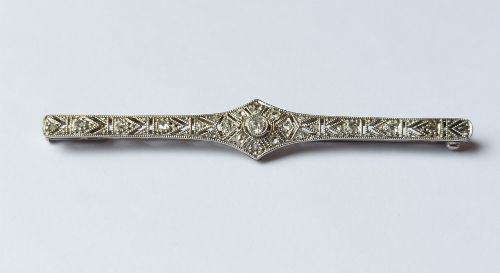
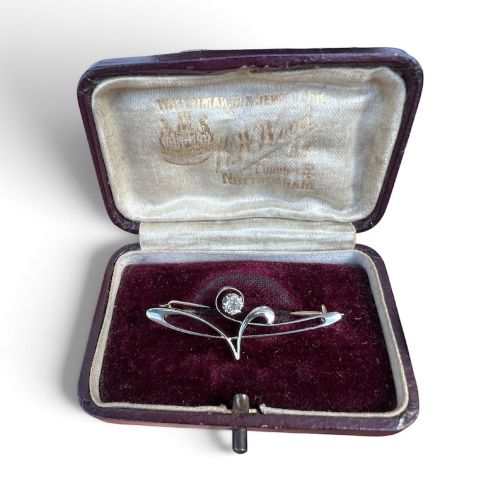
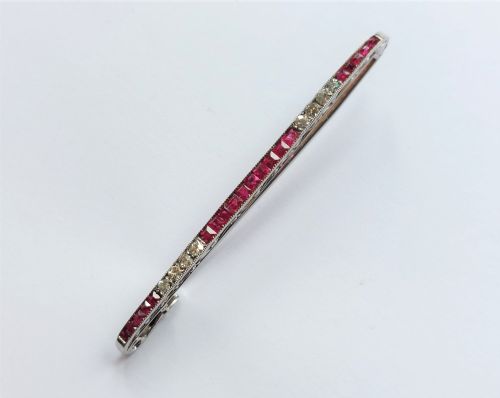


Platinum Diamond Bar Pin
These platinum diamond bar pin pieces are crisp linear jewels from the early twentieth century, prized for their bright geometric settings and secure fastenings.
Platinum Diamond Bar Pin
When you search for a platinum diamond bar pin, you encounter slender horizontal brooch formats spanning periods from the late Victorian era through the Edwardian years and into the height of the Art Deco movement. These jewels combine a narrow metal bar with central stone clusters, fulfilling a historical role as functional fastening pins for lapels, cravats and heavy winter coats.
The most common examples on this page date from the 1920s, showing strict geometric symmetry and fine millegrain edges characteristic of Art Deco design. Alongside these, you find earlier Edwardian pieces featuring delicate openwork scrolls and natural pearls, as well as occasional mid-century variations incorporating contrasting onyx or coloured gemstones.
How they were made
The defining structural method of these pieces relies on platinum sheets or wire worked over gold or white gold foundations, exploiting platinum's tensile strength to create feather-light mountings that hold stones securely. This metal combination allowed jewellers to form knife-edge bars and intricate pierced galleries without adding heavy weight to the garment.
Gemstones including old cut diamonds, rubies, sapphires and emeralds are secured using claw settings or bead settings enhanced by hand-pressed millegrain borders. Makers integrated pin stems with functional safety catches or traditional C-clasps, often combining 15ct gold, 14ct yellow gold, or 18kt white gold backs with platinum faces.
What varies in quality
The finest examples demonstrate exceptional crispness in the hand-cut piercing and uniform bead-work along the millegrain ridges, where the metalwork remains entirely sharp under magnification. Poorer quality pieces show softened edges from excessive polishing or clumsy metal repairs near the hinge and pin joints.
Stone selection creates the primary distinction between standard production and top-tier workshop output, with superior items featuring well-matched old cut diamonds possessing strong brilliance and clean colour. Lesser pieces settle for visibly mismatched stones or inclusions that dull the linear sparkle expected from this form.
The Platinum Diamond Bar Pin Glossary
- Millegrain
- A decorative technique involving tiny raised metal beads along the edge of a setting, creating a soft textured border around diamonds. This finish was widely used in Edwardian and Art Deco jewellery to soften hard metal lines.
- Old cut diamond
- A precursor to the modern brilliant cut, featuring a small table, high crown and open culet designed to catch candlelight. These stones display chunky facets rather than precise modern symmetry.
- Bar brooch
- A horizontal pin form consisting of a central decorative motif mounted on a rigid metal rod. It was designed to span lapels or secure scarves firmly in place.
- C-clasp
- A simple rounded metal hook soldered to the reverse of older brooches to secure the pin stem. It represents an older form of fastening before locking safety catches became standard.
- Platinum
- A dense, durable white metal that gained popularity in fine jewellery due to its strength and resistance to tarnish. Its properties allowed makers to fabricate incredibly thin settings.
Platinum Diamond Bar Pin: Frequently Asked Questions
How do I wear a bar pin today?
These pieces suit heavy textured fabrics such as wool coat lapels, thick knit cardigans, or structured blazer collars where the sturdy pin stem finds proper purchase.
Ensure you fasten the safety catch or secure guard properly when pinning through dense cloth to prevent the slender bar from bending during wear.
How do I tell Edwardian from Art Deco pins?
Edwardian examples favour flowing garlands, soft openwork scrolls, and natural pearls set within platinum over yellow gold. They lean towards organic grace and romantic floral motifs.
Art Deco pieces introduce rigid symmetry, sharp geometric angles, contrasting onyx accents, and strict linear arrangements. The metalwork becomes starker and more architectural.
Are these pins suitable for daily wear?
While platinum provides exceptional strength for daily use, the vintage nature of these pieces requires sensible care. Avoid wearing them during strenuous physical activities or heavy manual tasks.
Store them flat in a lined box away from other hard jewellery to protect the delicate pin stems and prevent stone abrasion.
What does old cut mean for diamonds?
Old cut refers to hand-faceted diamonds shaped before modern automated cutting standards were established. These stones feature smaller tables and deeper pavilions tailored for warm ambient lighting.
Their distinctive facet arrangement produces a softer, deeper glow rather than the sharp white brilliance of contemporary brilliant-cut stones.