
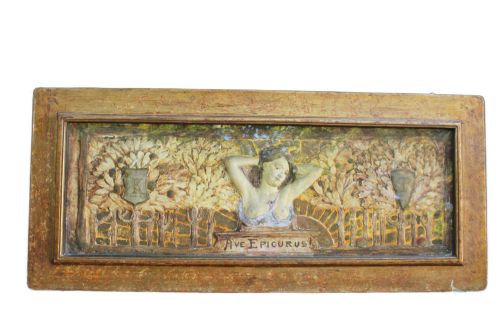
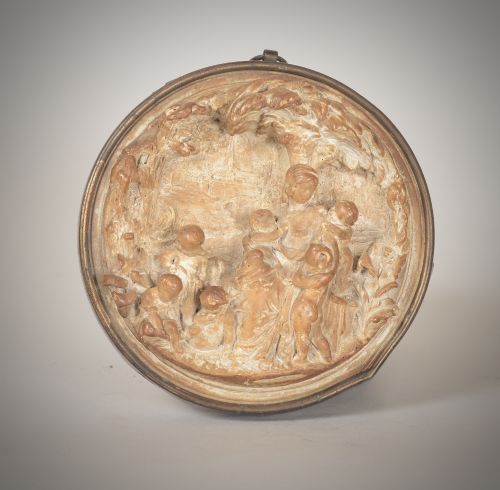
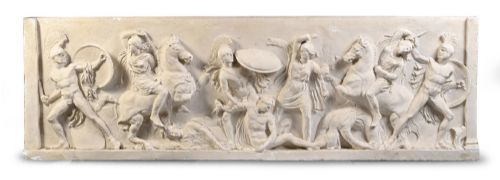


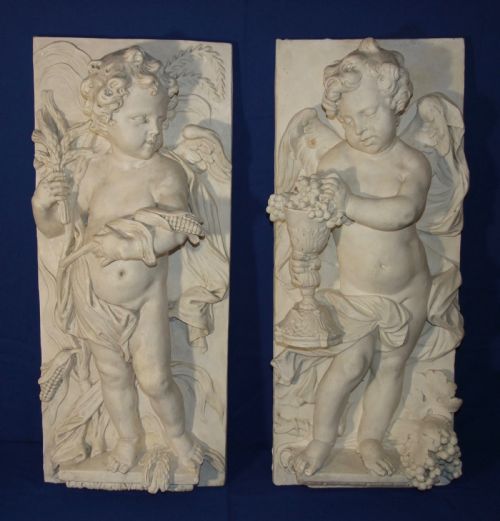

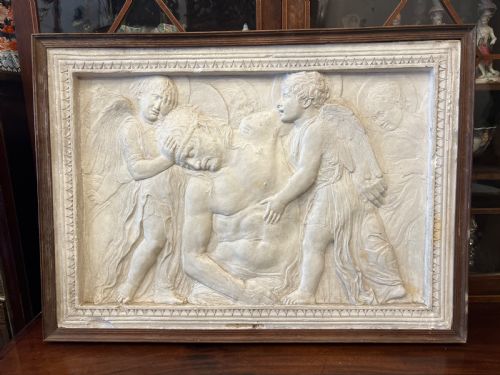

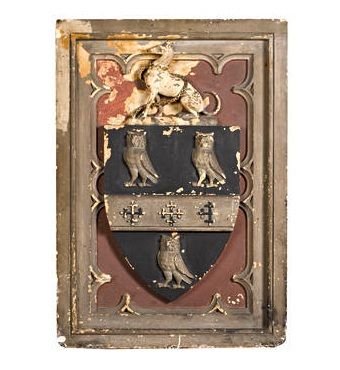
Plaster Relief Plaque
These plaster relief plaque examples bring classic subjects and tactile modelling to interiors through moulded gypsum, paint, and gesso.
Plaster Relief Plaque
A plaster relief plaque provides sculptural depth on a flat wall surface, drawing on traditions of classical and religious art. These works span wall plaques, relief sculptures, and architectural salvage.
The selections encountered here range across the eighteenth, nineteenth, and early twentieth centuries. Pieces reflect styles such as Neoclassical, Renaissance Revival, Arts and Crafts, and French Chateau.
Buyers frequently encounter wall plaques and friezes cast in gypsum or plaster, sometimes incorporating marble dust. Subjects stretch from mythological figures and classical riders to religious saints and armorial panels.
How they were made
Makers utilised plaster, gesso, and gypsum, often poured into moulds to capture intricate sculptural details. Some pieces incorporate marble dust into the composition to alter the texture and weight of the cast.
Surface treatments play a significant role, with artists applying paint, polychrome pigments, bronzing, or gilding over the plaster base. Wooden panels, brass elements, and gesso grounds occasionally provide structural support or framing for the relief.
What varies in quality
The crispness of the modelling and the depth of the carving dictate the visual impact of the relief. Sharper details in facial expressions and drapery separate finer studio casts from simpler decorative pieces.
The preservation of original surface finishes, such as early paint layers, polychrome, or bronzing, influences the character of the object. Integrated wooden mounts and backing panels also contribute to the overall integrity of the piece.
The Plaster Relief Plaque Glossary
- Plaster relief plaque
- A wall-mounted sculptural artwork where figures project from a flat background. This category forms the core of the items gathered here.
- Gesso
- A plaster-like mixture applied to surfaces as a base for painting or gilding. It provides a smooth ground for finishing details.
- Polychrome
- Decorated in multiple colours. This technique appears on specific Arts and Crafts and religious examples.
- Armorial panel
- A decorative plaque displaying a coat of arms or heraldic symbols. These pieces often denote familial or institutional lineage.
- Grand tour
- Nineteenth-century travel across continental Europe by the wealthy to collect classical art and antiquities. Plaster casts served as portable souvenirs of famous sculptures.
Plaster Relief Plaque: Frequently Asked Questions
How do I hang a plaster plaque safely?
Most heavier wall reliefs require secure fixings into wall studs or appropriate masonry anchors. The weight of gypsum and plaster demands careful consideration of the mounting hardware.
Checking the existing backing, whether wood or metal, ensures the hanging wire or bracket safely supports the piece without straining the plaster.
Are these pieces waterproof?
Plaster and gesso are porous materials sensitive to moisture and damp environments. They suit interior display exclusively.
Exposing these wall reliefs to high humidity or direct water contact causes the plaster to soften and the surface paint to flake.
How should I clean a painted plaster relief?
Gentle dusting with a soft, dry brush remains the best method for maintenance. Moisture can damage aged paint and gesso layers.
Avoiding chemical cleaners and damp cloths protects the original nineteenth-century or eighteenth-century surface finishes from deterioration.
What periods do these wall plaques come from?
The inventory spans the eighteenth and nineteenth centuries, alongside early twentieth-century examples. Victorian and Edwardian interpretations of classical themes appear frequently.
Stylistic cues, material composition, and mounting techniques help distinguish eighteenth-century carved panels from later nineteenth-century casts.