


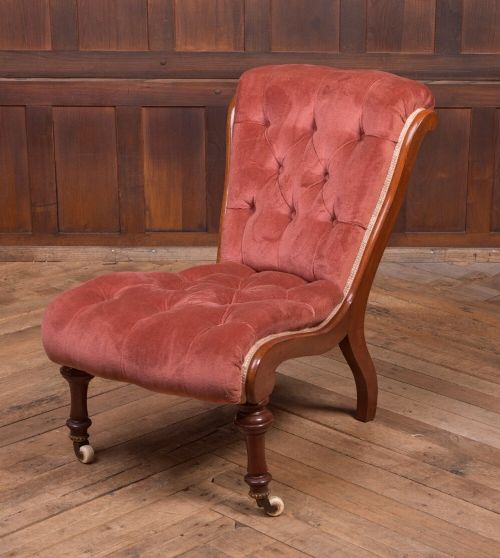

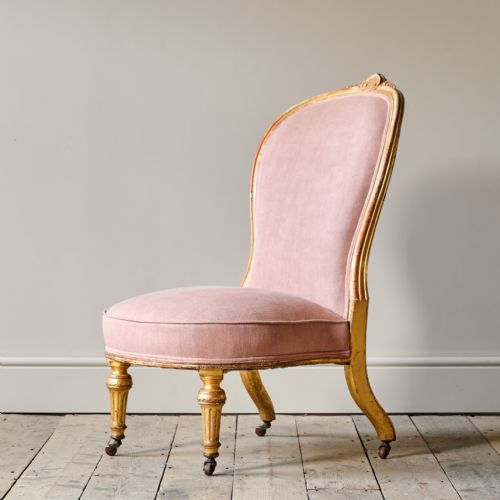


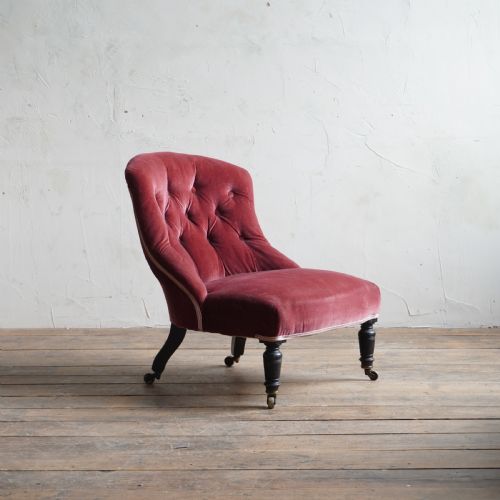


Pink Velvet Nursing Chair
A pink velvet nursing chair brings low seating and soft texture to a room, offering the low seat and supportive back characteristic of Victorian bedrooms.
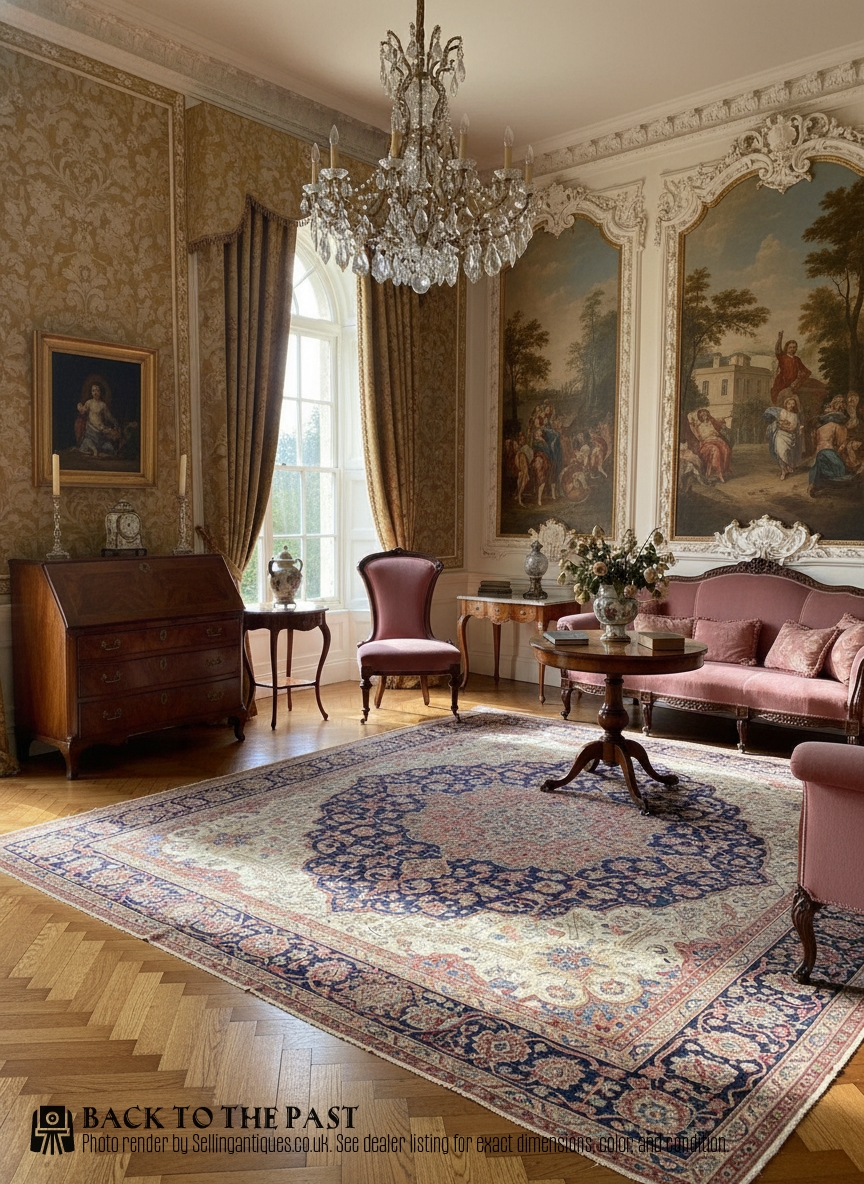
Pink Velvet Nursing Chair
A pink velvet nursing chair is a low-slung seating form designed primarily for Victorian dressing rooms and bedrooms, often appearing as a side chair or ladies chair. The examples gathered here span the nineteenth century, including specific decades from 1850 to 1890 alongside broader Victorian and seventeenth-century style attributions.
Buyers seeking this phrase encounter various related low chair formats, such as spoonback armchairs, slipper chairs, balloon back dressing table seats, and fireside armchairs. Walnut and mahogany frame the majority of these pieces, accompanied by occasional giltwood and brass details.
Most pieces date from the Victorian era, showcasing characteristic regional cabinet work and upholstery methods from that period. The forms range from simple buttoned backs to elaborately carved walnut frames.
How they were made
Makers shaped structural frames using solid hardwoods like walnut and mahogany, frequently incorporating carved decoration along the crest rails and cabriole legs. Giltwood also appears on specialised slipper chairs from the nineteenth century.
Upholstery relies on traditional stuffing techniques finished with velvet fabric, often featuring buttoned details on balloon or spoon backs. Brass castors support the legs on several larger armchair variants.
Victorian sitters enjoyed chairs built so low to the floor that the velvet skirt nearly brushed the chamber carpet.
What varies in quality
The sophistication of the timber carving dictates much of the visual distinction between standard production and superior examples. Crisp detailing on walnut and mahogany frames signals accomplished workshop execution.
Proportion and structural integrity define the remaining differences, particularly in the curve of balloon backs and spoon backs. Maker attribution, such as connections to Gillows or Holland and Sons, elevates specific pieces.
CVS·Holland and Sons·Lamb of Manchester·Gillows
The Pink Velvet Nursing Chair Glossary
- Nursing chair
- A low-seated chair historically designed for comfort while nursing infants or dressing in a bedroom. These pieces sit closer to the floor than standard dining or parlor chairs.
- Spoonback
- An upholstered chair back shaped like the bowl of a spoon, curving inward to fit the human spine. This ergonomic Victorian form provides distinct lumbar support.
- Balloon back
- An oval or rounded chair back resembling the profile of a hot air balloon. It remains a defining silhouette of nineteenth-century seating design.
- Giltwood
- Wood that has been coated with a thin layer of gold leaf or gilt powder. This finish appears on decorative nineteenth-century frames.
- Button back
- Upholstery secured with deep-set buttons arranged in a geometric pattern, creating tufted cushions. This technique adds tension and tailored texture to the fabric.
Pink Velvet Nursing Chair: Frequently Asked Questions
What is a pink velvet nursing chair?
A pink velvet nursing chair is a nineteenth-century low seat designed for Victorian bedrooms and dressing rooms. These pieces feature upholstered backs and short legs tailored for comfortable daily use.
They appear in formats such as spoonbacks, balloon backs, and slipper chairs, constructed primarily from walnut or mahogany.
How do I date a Victorian nursing chair?
Dating relies on stylistic shifts in frame design, such as the transition from plain mahogany to carved walnut during the nineteenth century. Specific decades like 1850 or 1870 offer reference points when documented by makers or registry marks.
Cabinet-making techniques and wood types further clarify whether a piece originates from the early or late Victorian period.
Where were nursing chairs used originally?
These low seats originated in private chambers, primarily bedrooms, dressing rooms, and nurseries. Their reduced height allowed women to dress or feed infants with greater ease.
Over time, they transitioned into parlor and fireside settings as decorative accent seating.
What is the difference between a slipper chair and a nursing chair?
Slipper chairs typically lack arms and sit extremely low to the ground, originally intended for changing shoes in a bedroom. Nursing chairs often include low arms or specialised back supports designed for holding infants.
Both forms share compact nineteenth-century proportions and upholstered velvet surfaces.