
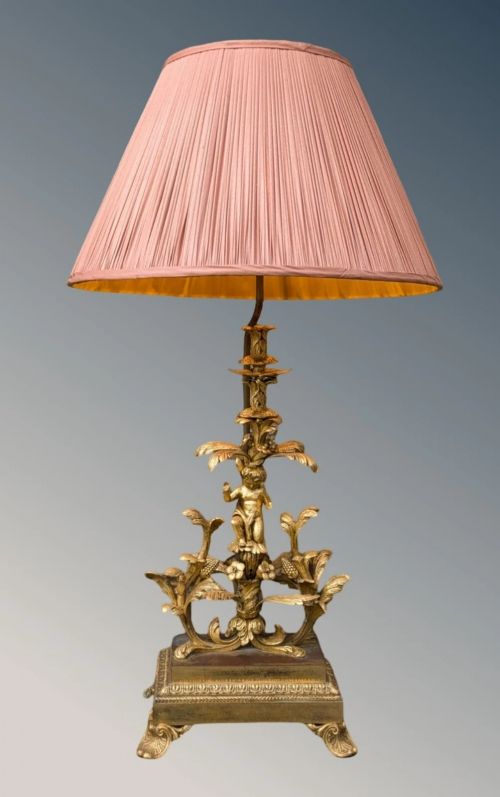
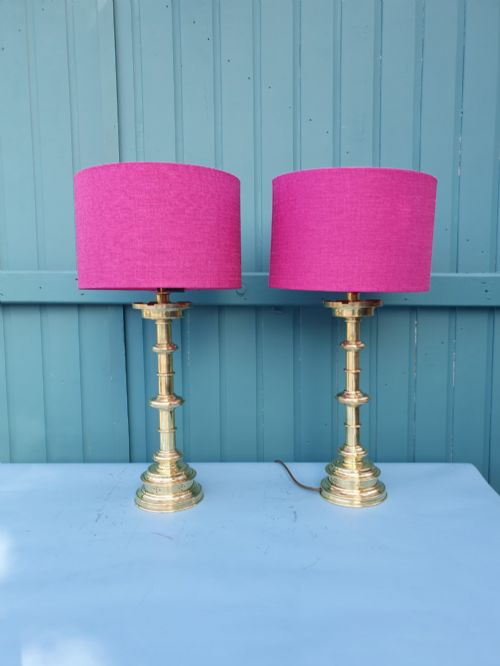
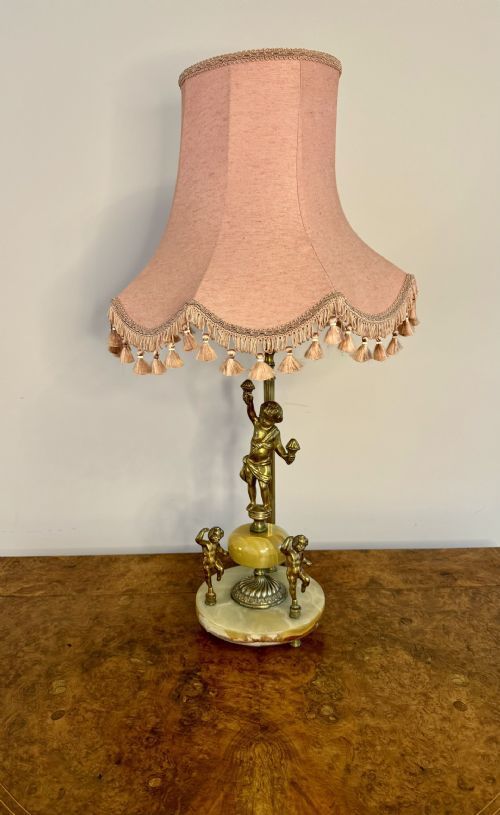


Pink Shade Reading Light
These pink shade reading light pieces bring focused illumination and soft warmth to a room, combining brass stands with coloured glass or fabric.
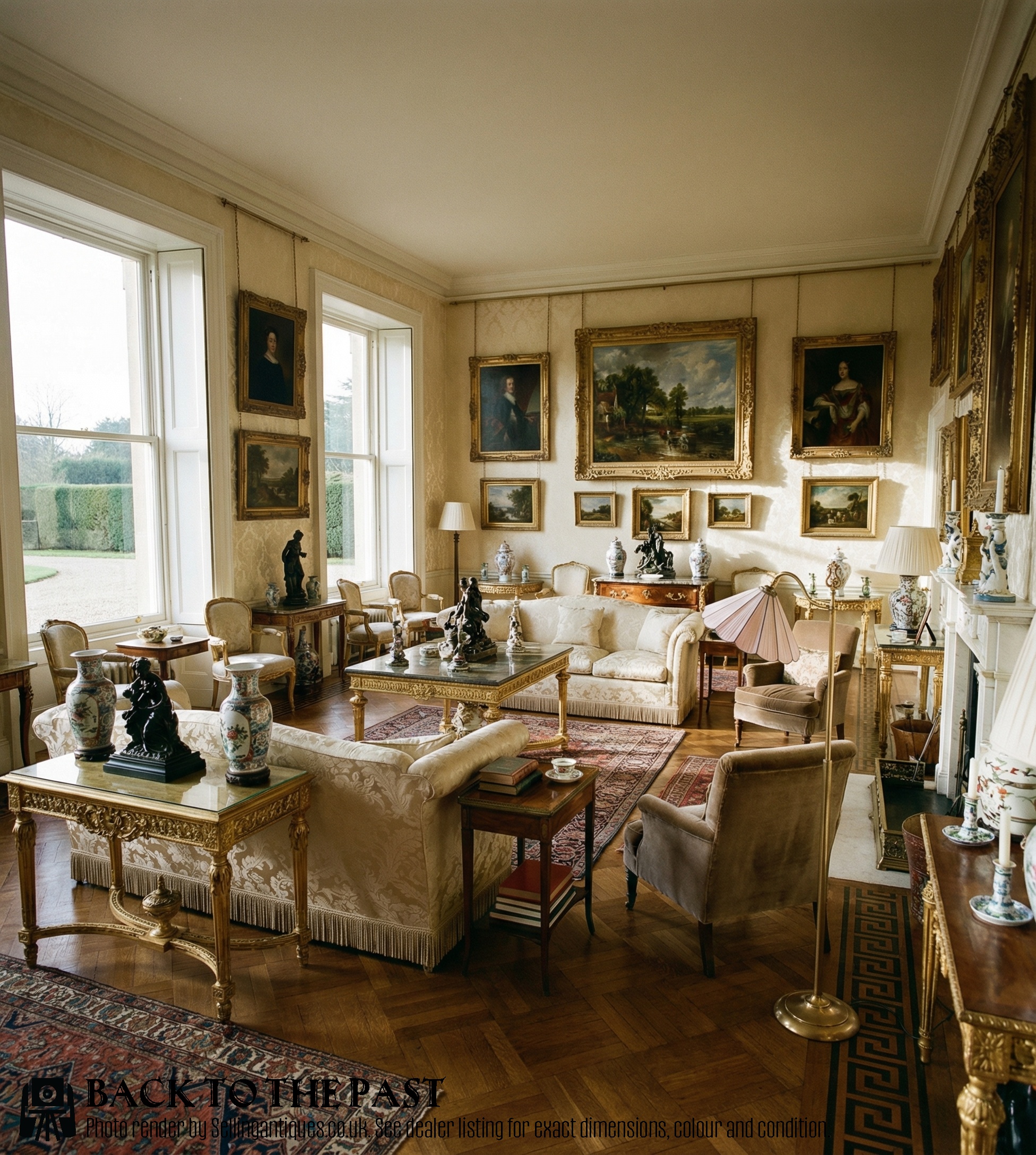
Pink Shade Reading Light
A pink shade reading light combines a functional adjustable stand with a tinted or fabric diffuser to cast a warm glow. These fittings serve both practical task lighting and decorative purposes within period interiors.
The most common examples on this page date from the Victorian and Edwardian eras, utilising sturdy brass bases and adjustable arms. Table, desk and floor standing formats appear frequently across the current selection.
Makers designed these objects for targeted illumination over writing desks, reading chairs and bedside tables. Their versatile positioning mechanisms allow the user to direct the beam precisely where needed.
How they were made
Workshops utilised heavy brass, gilded brass and gilt bronze to construct durable, weighted bases and articulated stems. Telescopic columns and swivel joints allowed height and angle adjustments through simple mechanical screws.
Shades incorporated delicate materials including cranberry glass, silk and fabric to soften the direct glare of the bulb. Metalwork often featured polished or gilded surfaces shaped in styles ranging from Art Nouveau to French Rococo Revival.
Listings span the Victorian, Edwardian and Art Deco periods, utilising brass, cranberry glass, onyx and silk.
What varies in quality
The sophistication of the articulation mechanism dictates much of the distinction between standard production and superior work. Telescopic columns and smooth swivel joints demonstrate careful engineering that holds position securely without slipping.
Material selection and casting crispness separate simpler items from finer examples in the range. Heavy cast bronze or detailed brass work paired with undamaged cranberry glass or quality fabric shades represent the higher tier of manufacture.
The Pink Shade Reading Light Glossary
- Cranberry glass
- A rich pinkish-red glass produced by adding gold chloride to the molten batch. It diffuses a warm rosy light when illuminated from within.
- Telescopic
- A construction method allowing vertical adjustment through nested sliding tubes. This feature enabled users to raise or lower the height of the light source easily.
- Gilt bronze
- A copper and tin alloy treated with a layer of gold applied by fire gilding or chemical means. It provides a durable metallic surface with a deep lustre.
- Swivel
- A coupling device that permits continuous rotation around an axis. Such joints give flexibility in directing the beam of a reading lamp.
- Standard lamp
- A tall freestanding floor lamp designed to illuminate a wider area. These pieces often incorporated heavy bases to ensure stability.
Pink Shade Reading Light: Frequently Asked Questions
Were these originally electric or oil lamps?
The selection includes both converted oil lamps and original electric or gas fittings from the late nineteenth and early twentieth centuries. Standard oil lamps utilised burners that were later adapted for modern wiring.
Desk and reading lamps from the Edwardian period onward frequently incorporated metal or glass shades designed specifically for electric bulbs. Converted pieces retain their original heavy brass fonts and reservoirs.
How do I clean cranberry glass shades?
Wash the glass gently in warm water using a mild washing-up liquid and a soft cloth. Avoid abrasive sponges or harsh chemicals that can scratch the delicate surface or damage the hue.
Dry the shade thoroughly with a lint-free towel before reattaching it to the brass fitting. Handle the glass with care, particularly around the fitter rim where it secures into the gallery.
How can I tell an Edwardian lamp from a Victorian one?
Victorian pieces often display heavier ornamentation influenced by historic revival styles, such as French Rococo or ornate standard oil lamp designs. Brass work tends to be substantial and richly detailed.
Edwardian examples frequently favour simpler, more functional lines associated with Arts and Crafts or early adjustable desk fittings. Telescopic columns and utilitarian swivel mechanisms become more prominent in this later period.