
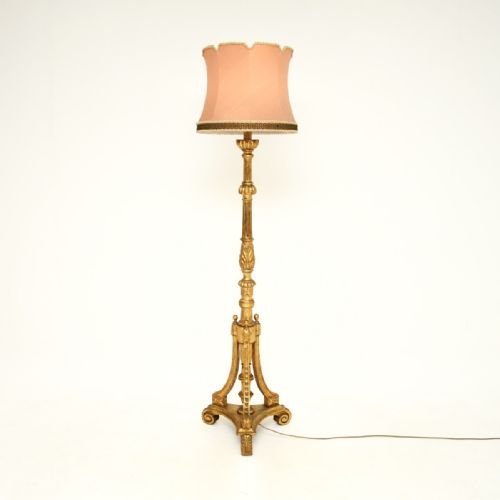


Pink Shade Floor Lamp
A pink shade floor lamp brings a warm, diffused glow and sculptural presence to a room, drawing the eye with period character.
Pink Shade Floor Lamp
When you search for a pink shade floor lamp, you are looking at tall lighting fixtures designed to stand on the floor and illuminate a space from a higher vantage point. These pieces span the Victorian, Edwardian, and early twentieth century periods, capturing diverse aesthetic movements from Arts and Crafts to Art Nouveau.
You are most likely to meet standard lamps, traditional oil lamps, and adjustable reading lamps on this page. These floor standing pieces combine heavy metal bases with slender columns and decorative shades, often originating from British and European workshops.
The forms range from telescopic brass standards and swivel reading lamps to ornate gilt wood creations and French boudoir designs. Each object reflects the domestic lighting technology and interior design tastes of its specific decade.
Materials and construction
These lamps rely heavily on brass and various metals, shaped into fluted columns, Corinthian capitals, and sturdy weighted bases to ensure stability. Cranberry glass and delicate fabrics, including velvet embellished with tassels, provide the characteristic coloured illumination and textural contrast.
Makers utilised telescopic mechanisms, swivel joints, and adjustable screws to create functional reading and standard lamps that could direct light precisely where needed. Gilt wood and marble also appear in the evidence, adding decorative weight and varied surface finishes to the structural framework.
Listings feature pieces spanning the Victorian and Edwardian eras, predominantly constructed from brass and glass.
Distinguishing quality
Quality reveals itself in the substantial weight of the cast brass base and the precision of the mechanical adjustments, such as smooth telescopic actions and reliable swivel mechanisms. Superior examples display crisp chasing on Corinthian capitals and well-proportioned columns rather than simple, mass-produced stampings.
The integration of original oil-burning hardware, finely blown cranberry glass reservoirs, or period fabric shades with hand-finished tassel work separates standard utility pieces from more ambitious decorative examples. Craftsmanship in the metalwork and the integrity of the period materials ultimately define the tier of the piece.
The Pink Shade Floor Lamp Glossary
- Standard Lamp
- A traditional British term for a floor lamp, describing a tall vertical light fixture designed to stand independently on the floor. These pieces typically feature a heavy base and a central column supporting a shade.
- Corinthian
- A classical architectural style applied to lamp columns, featuring elaborate capitals decorated with acanthus leaves. This design reflects neoclassical revival tastes popular in period lighting.
- Cranberry Glass
- A rich red-pink transparent glass created by adding gold chloride to the molten glass batch. It is frequently found in Victorian and Edwardian oil lamp reservoirs and shades.
- Telescopic
- Describing a lamp standard constructed with sliding tubular sections that allow the height of the light source to be adjusted. This mechanical feature provides both utility and structural variation.
- Boudoir Lamp
- A smaller, more decorative floor or table lamp designed for private rooms rather than large reception spaces. These pieces often exhibit lighter proportions and ornate French-inspired detailing.
Pink Shade Floor Lamp: Frequently Asked Questions
How do I date a brass floor lamp?
Dating relies on examining the manufacturing techniques, base weight, and switch mechanisms visible on the standard. Styles such as Art Nouveau or Arts and Crafts provide clear stylistic markers for the late nineteenth and early twentieth centuries.
Heavier cast brass components and threaded joints typical of Victorian and Edwardian production also help narrow down the period of manufacture.
Were these lamps originally oil or electric?
Many pieces listed originate as standard oil lamps utilising burners by makers such as Hinks before being converted to electricity later in their lifespan. Other examples were manufactured specifically as adjustable reading lamps or electric standards during the early twentieth century.
This evolution means surviving lamps often show evidence of their original fuel mechanisms alongside modern wiring adaptations.
How do I style a tall standard lamp?
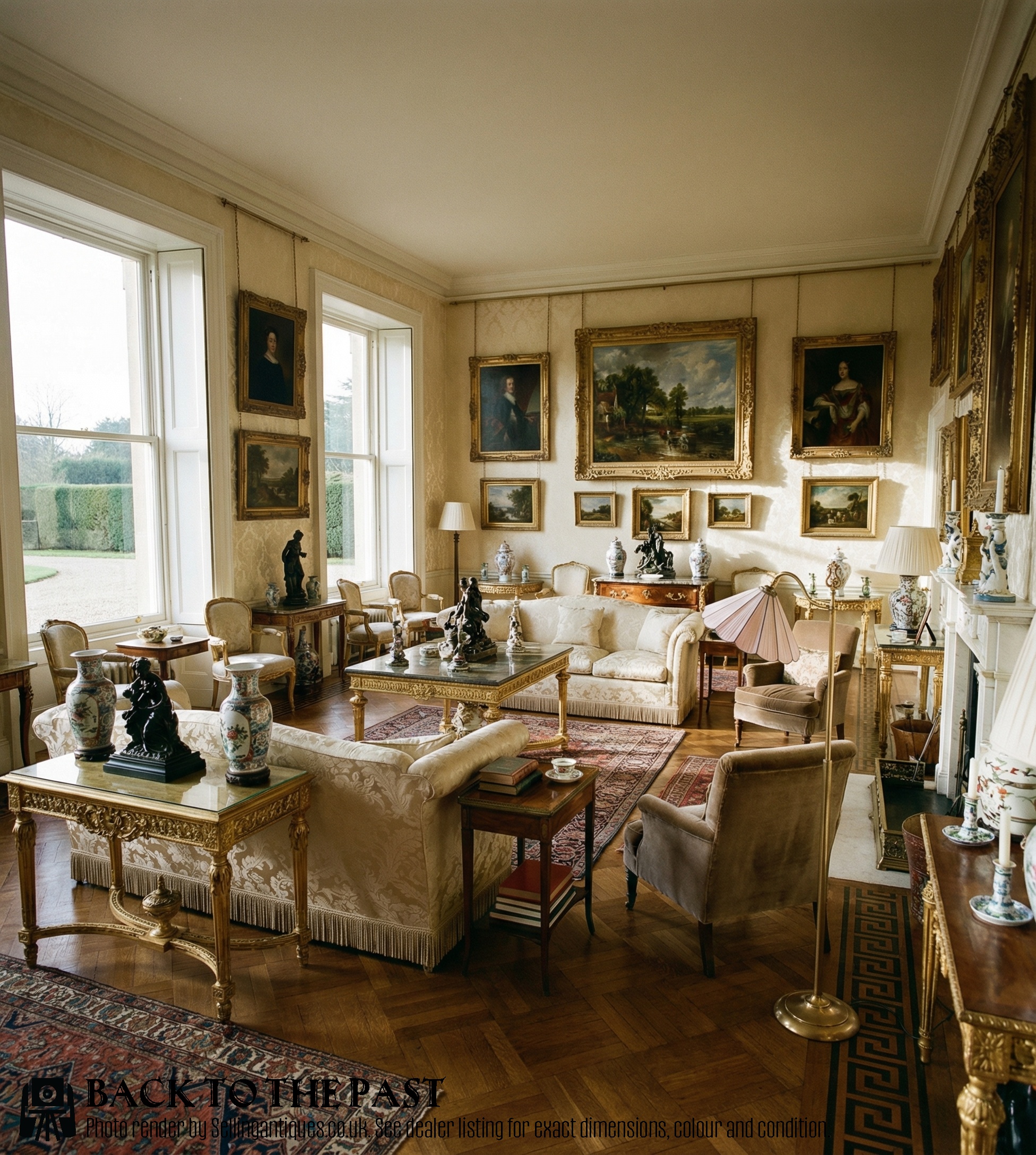
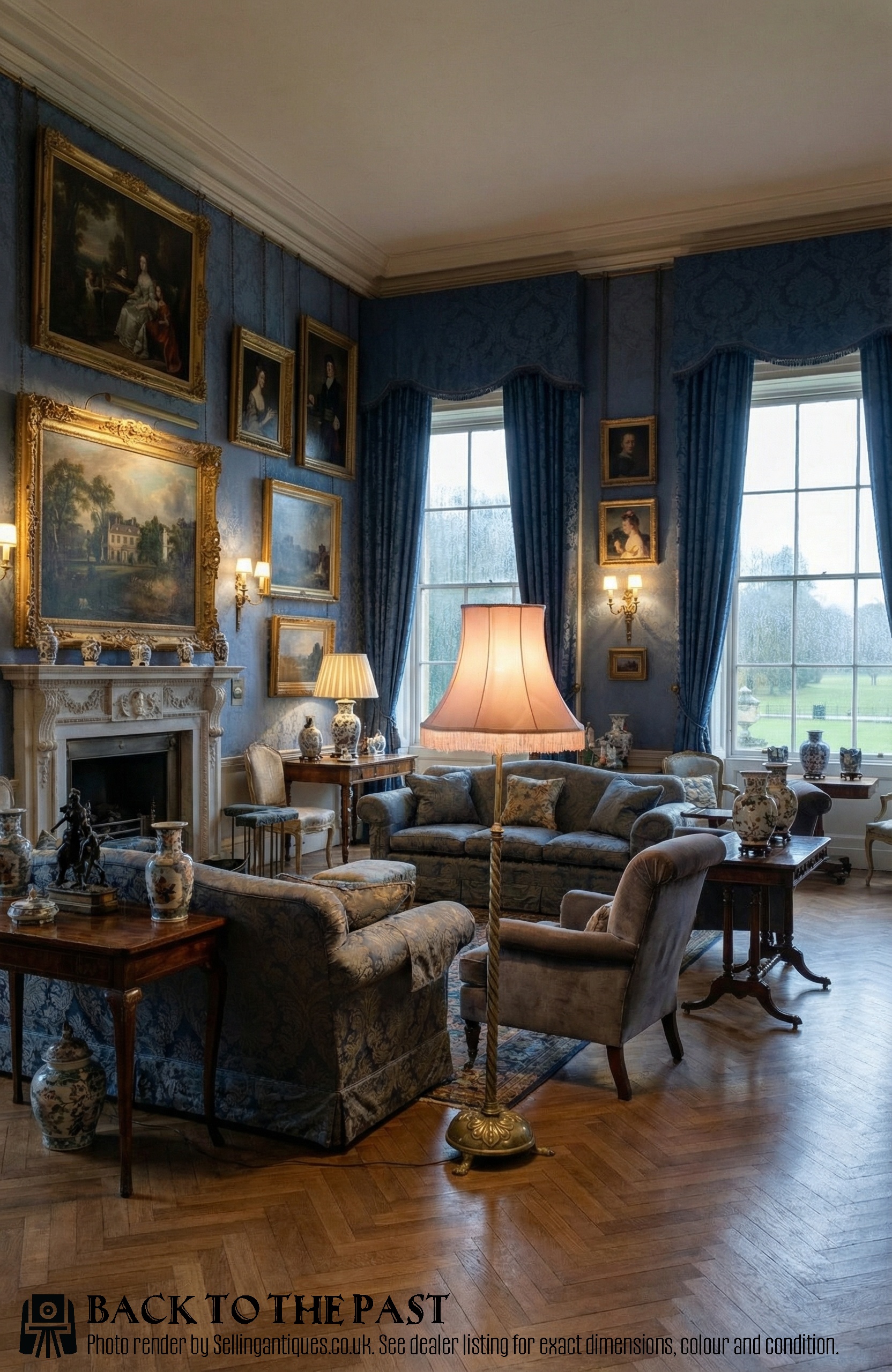
A tall standard lamp works effectively in the corner of a room or beside a reading chair, providing ambient or task lighting at a higher level. The vertical height draws the eye upward, making it useful for balancing low-ceilinged spaces.
Pairing the metal finish of the base with other period furnishings helps anchor the piece naturally within an interior.