
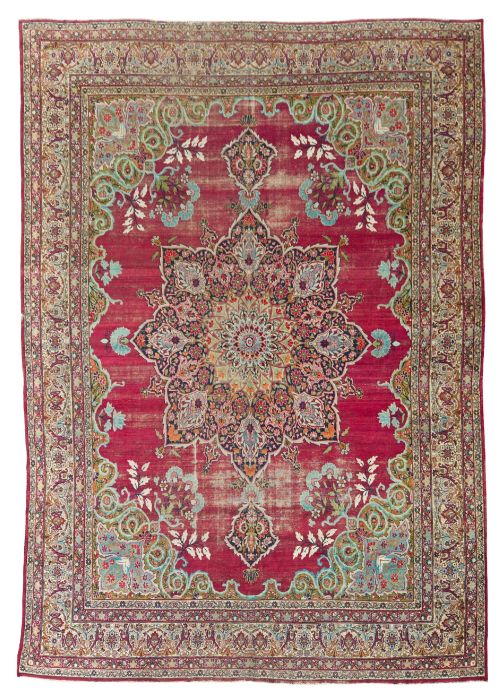
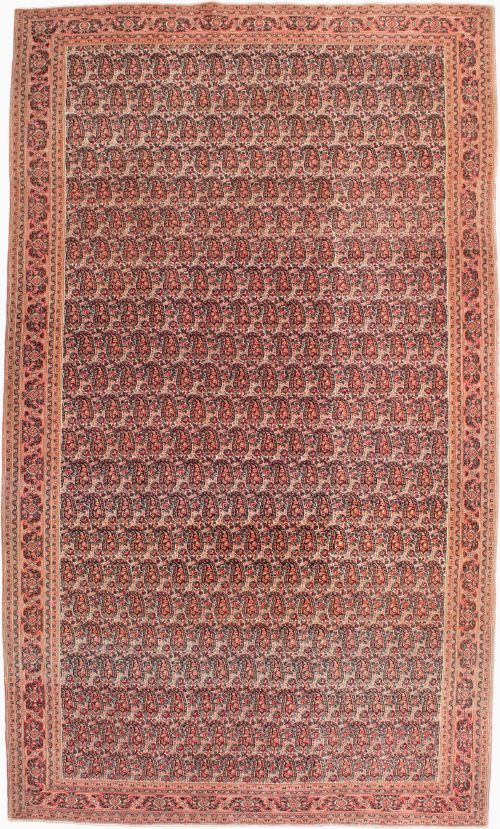


Pink Red Oriental Rug
A pink red oriental rug brings warmth and deep pattern to a room, grounding your floor with century-old craft.
Pink Red Oriental Rug
A pink red oriental rug covers hand-knotted floor coverings originating from Persian, Anatolian, and Caucasian traditions, spanning the late nineteenth and early twentieth centuries. These pieces arrive in various formats, ranging from compact area rugs to large carpets and long runner rugs.
You are most likely to encounter traditional Persian weaves such as Heriz, Hamadan, Sarouk, and Kirman, alongside Turkish Ushak and Caucasian corridor rugs. Their palettes naturally lean into muted rose, terracotta, and rich red tones achieved through traditional dyeing methods.
Materials and construction
These floor coverings utilise sturdy wool pile knotted onto strong cotton foundations, ensuring resilience under daily foot traffic. Weavers tied individual knots by hand across geometric and floral fields, securing the ends with woven selvedges.
Natural dye sources provided the characteristic pink and red hues, which soften gracefully over decades of light and wear. The density of the knotting varies by region, dictating the crispness of the intricate motifs.
Many village weavers worked from memory, occasionally introducing small asymmetrical motifs into opposing corners just to ward off the evil eye.
What separates the finest examples
The distinction lies in the harmony of the colour palette and the precision of the design execution. Superior pieces display deeply saturated, even tones and balanced proportions within their central medallions and border guards.
Integrity of the foundation and uniformity of the pile height also determine the standing of a rug. Higher quality specimens retain their structural stability and original border geometry across the entire expanse.
Dorush·Heriz·Mujur Mudjur Kirsehir·Hamadan·Kirman·Sarouk·Talysh·Bakshiash·Ushak·Jozan·Kashan·Monastir·Sivas
The Pink Red Oriental Rug Glossary
- Pile
- The upright yarn loops that form the soft surface of the rug. This wool layer absorbs dye and bears the brunt of foot traffic.
- Warp
- The vertical threads stretched tightly on the loom before knotting begins. Cotton warps provide the rigid structural skeleton for the piece.
- Weft
- The horizontal threads passed between rows of knots to bind the structure together. It holds the vertical warp threads and knot rows in place.
- Medallion
- The large central ornamental motif found in many traditional rug designs. It anchors the visual composition of the field.
- Selvedge
- The finished side edges of a rug formed by wrapping extra weft threads. A sound selvedge prevents the pile from fraying outward.
Pink Red Oriental Rug: Frequently Asked Questions
How do I clean an antique rug?
Professional hand washing is the safest method for delicate wool piles and natural dyes. Avoid harsh chemical cleaners and heavy agitation.
Regular gentle vacuuming without a beater bar removes surface grit before it embeds in the cotton foundation.
Can I place these rugs in high traffic areas?
Sturdy wool construction handles moderate foot traffic well when supported by a quality underlay. Hallways and living spaces benefit from the resilient nature of these textiles.
Rotating the rug periodically ensures even wear across the surface over the years.
How do I identify a Persian rug from a Turkish one?
Knot types and design vocabulary often distinguish Persian weaves from Anatolian counterparts. Persian pieces frequently feature complex floral medallions, while Turkish Ushak and Mujur rugs display distinct geometric prayer niches.
Palette shifts and border structures also offer clues to the specific weaving district.
What causes the pink and red colours?
Traditional dyers utilised natural sources such as madder root and insect dyes to achieve deep reds and softer pink tones. Over time, exposure to light mellows these organic pigments into subtle shades.
This gradual softening process creates the distinctive faded patina valued by collectors.