


Pink Paraffin Lamp
A pink paraffin lamp brings a warm, coloured glow to a room through vibrant glass fonts and shades mounted on brass or ceramic.
Pink Paraffin Lamp
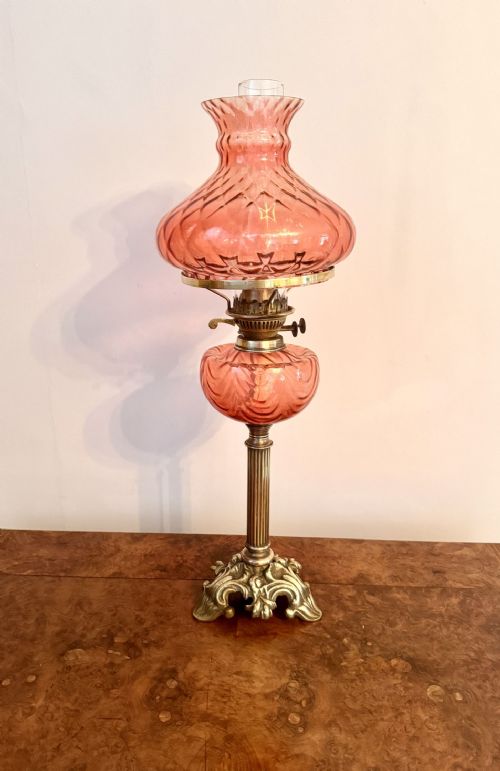
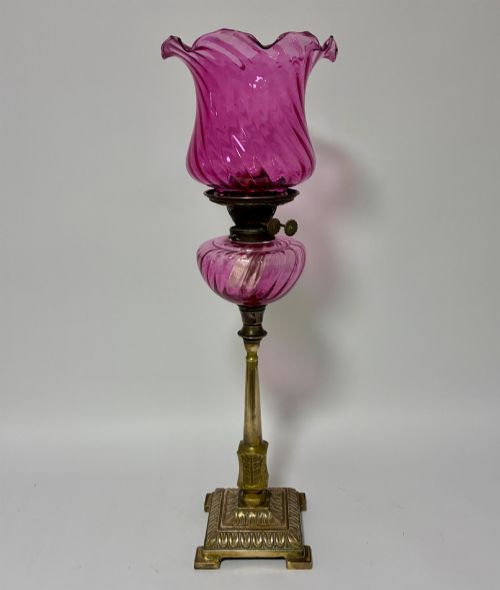
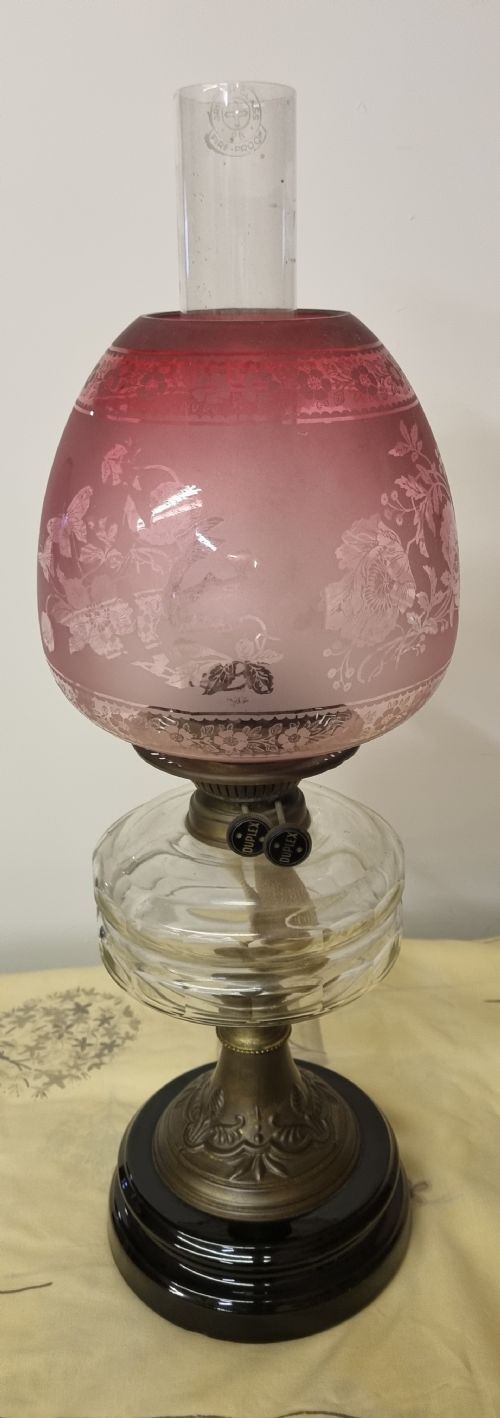
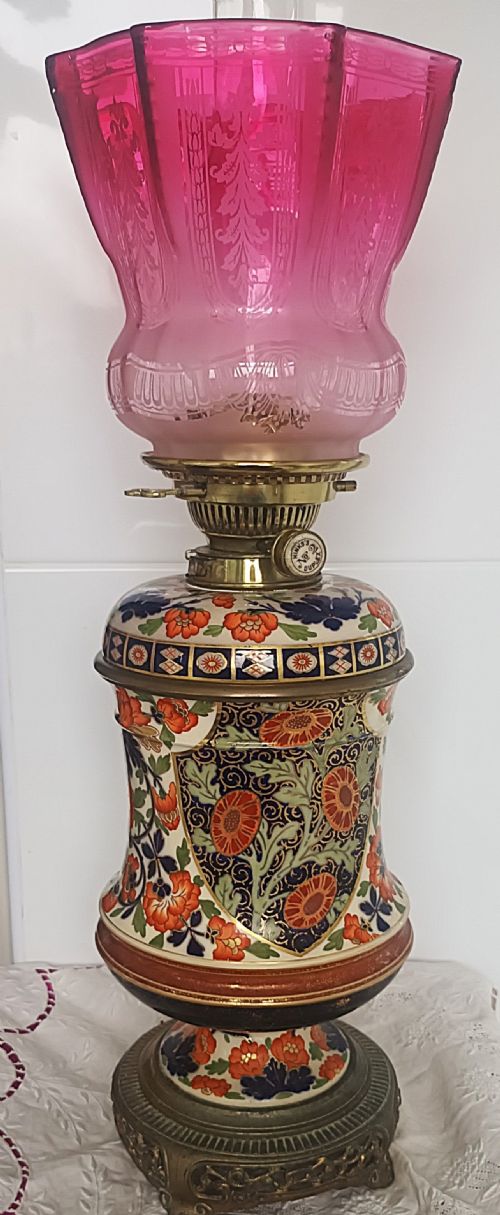
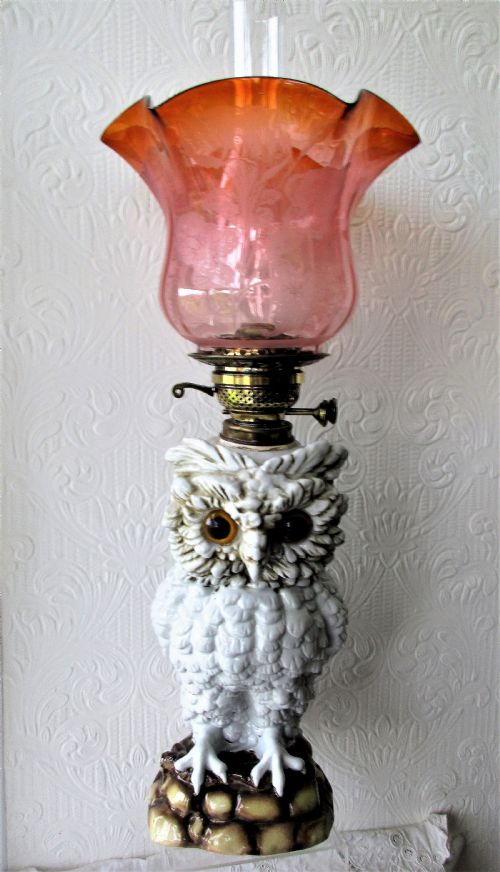
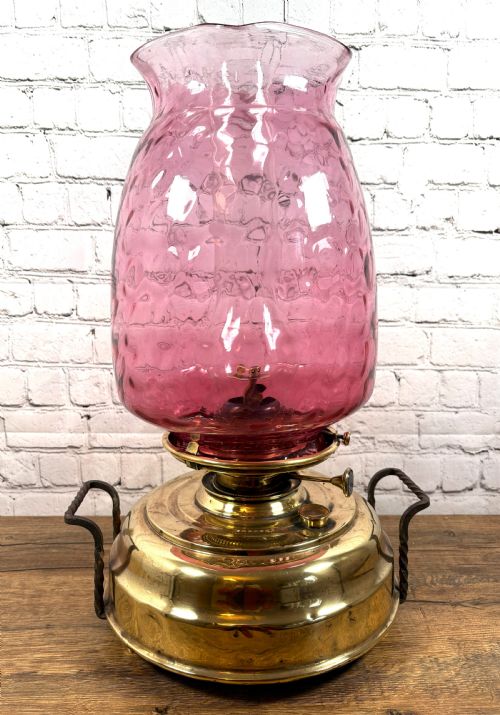
A pink paraffin lamp is a period lighting fixture designed to burn lamp oil, commonly featuring glass fonts and shades in various shades of pink or cranberry. When searching for a pink paraffin lamp, buyers encounter pieces primarily originating from the Victorian and Edwardian eras, spanning the late nineteenth and early twentieth centuries.
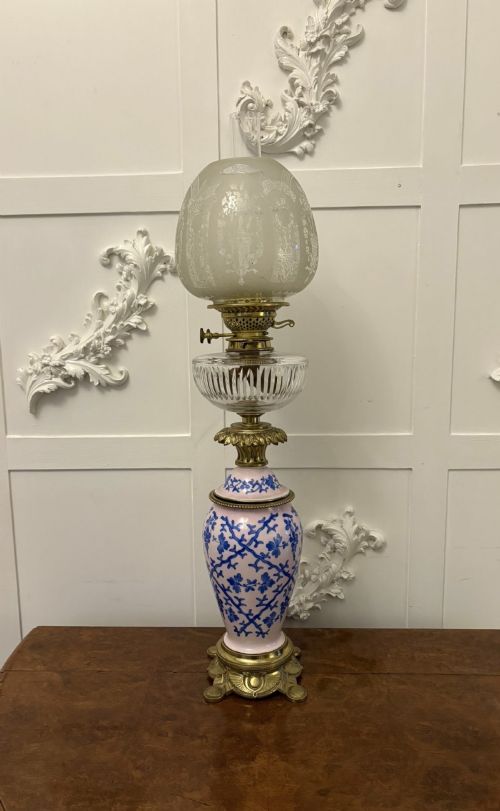
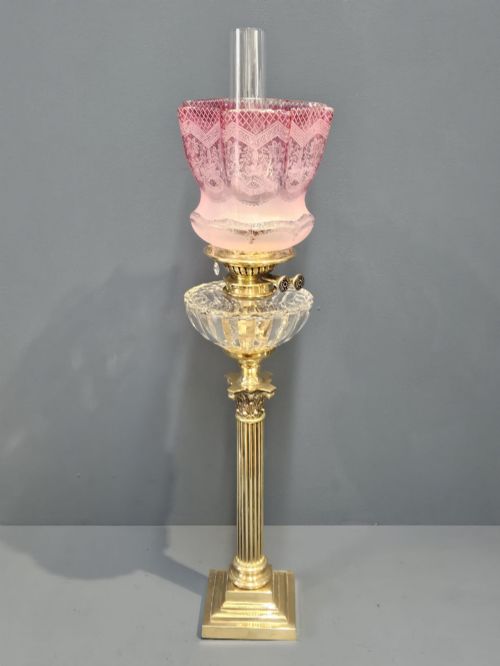
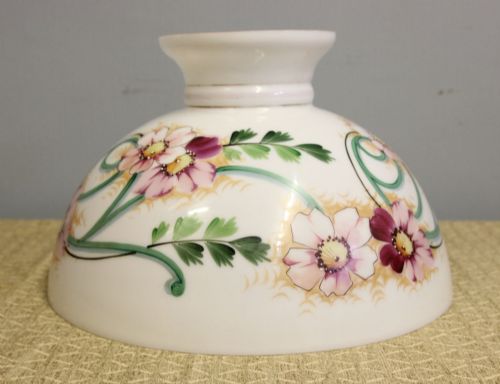
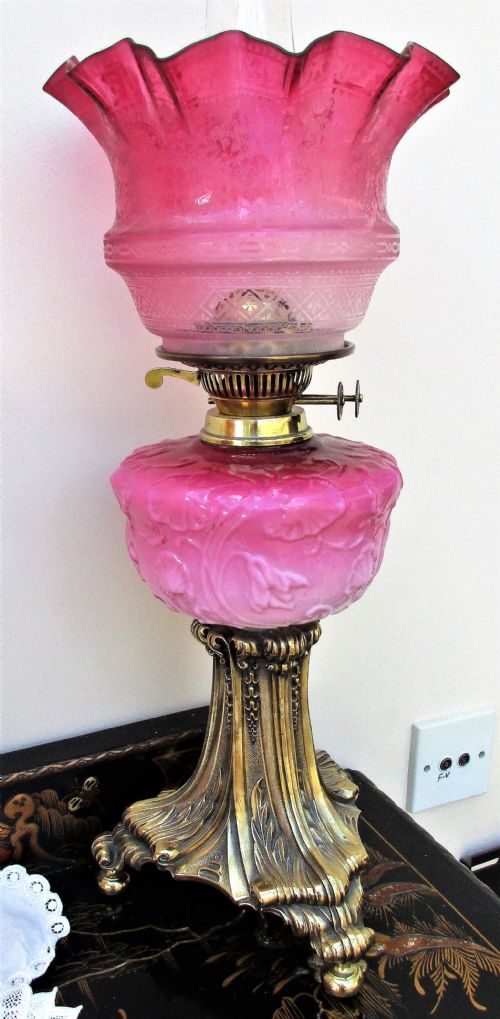
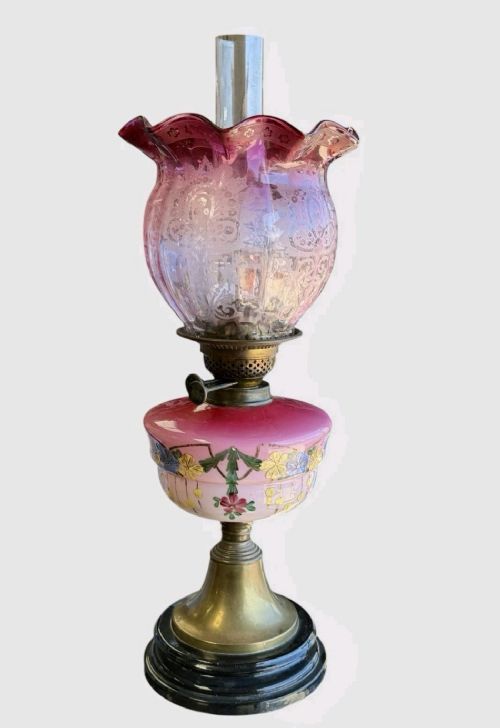
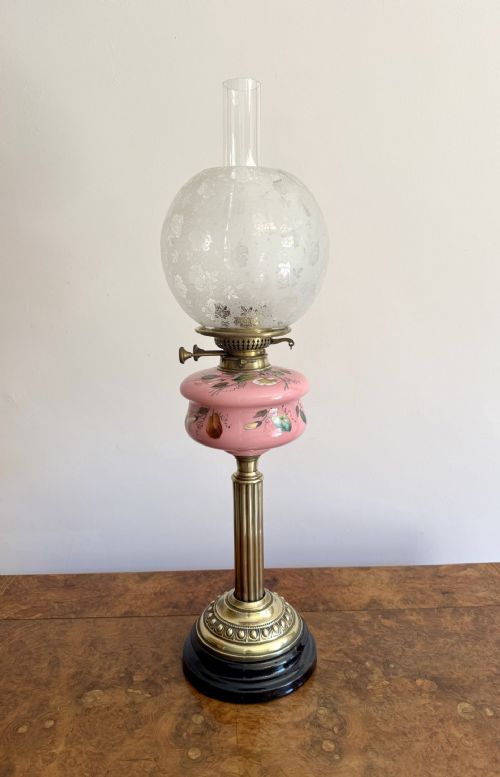
The selections available here range from tall floor and standard models to table oil lamps and hanging shades. Many examples combine brass columns or ceramic bases with coloured glass reservoirs, sometimes accented by hand-painted details or gilt decoration.
How they were made
Makers utilised brass and porcelain for the structural columns and bases, often employing reeded or Corinthian column designs for stability and decorative weight. Glass fonts and shades were blown or moulded, sometimes utilising cranberry glass techniques or incorporating opaline and clear crystal elements.
Metal components were cast and finished with mechanisms by specialist makers, while ceramic vessels received hand-painted floral motifs or moulded textures before being mounted to metal bases.
What varies in quality
Quality in these lighting pieces rests upon the crispness of the brass casting and the depth of colour in the glass components. Superior examples display refined proportions, intact hand-painted detailing, and substantial weight in both the metal base and the glass font.
The sophistication of the burner mechanism and the presence of matching or period-correct shades further distinguish the finer pieces from simpler utilitarian lighting.
Hinks·Taylor Tunnicliff·Sitzendorf
The Pink Paraffin Lamp Glossary
- Font
- The reservoir that holds the paraffin or oil within the lamp. This part is frequently made of pink, cranberry, or opaque glass.
- Column
- The vertical architectural shaft supporting the font, often cast in brass in Corinthian or reeded styles.
- Cranberry glass
- A rich red-pink glass created by adding gold chloride to the molten metal during production. It is a defining material for many nineteenth-century lamp shades.
- Opaline
- A translucent milky glass that diffuses light softly, seen in period lamp shades and vessels.
Pink Paraffin Lamp: Frequently Asked Questions
How do I date a pink paraffin lamp?
Dating relies on examining the burner mechanisms, metal casting styles, and glass manufacturing techniques. Victorian pieces often feature heavy brass columns and hand-painted porcelain bodies.
Later Edwardian examples tend towards simpler brass standards or different glass shades while retaining the traditional paraffin reservoir format.
Can these lamps still burn paraffin?
Most period oil lamps retain their original brass burners, though collectors generally treat them as decorative objects for safety reasons. Converting them for modern use requires careful consideration of the antique components.
Many buyers choose to display them with their original glass shades as room focal points without filling the reservoirs.
What is the difference between an oil lamp and a paraffin lamp?
The terms are largely interchangeable when describing domestic nineteenth-century lighting fixtures. Both burn liquid fuel through a cotton wick housed in a metal burner.
Regional terminology often favoured paraffin in Britain during the Victorian period while oil remained a broader descriptive term.
How do I clean a glass font safely?
Cleaning requires warm soapy water and a soft cloth, avoiding harsh abrasives that might damage gilt decorations or hand-painted surfaces. Removable fonts should be detached from their brass bases before washing.
Care must be taken around delicate cranberry or opaline glass to preserve the original finish.